Hungary accuses Facebook of election interference ahead of parliamentary vote

- Update Time : Saturday, April 11, 2026
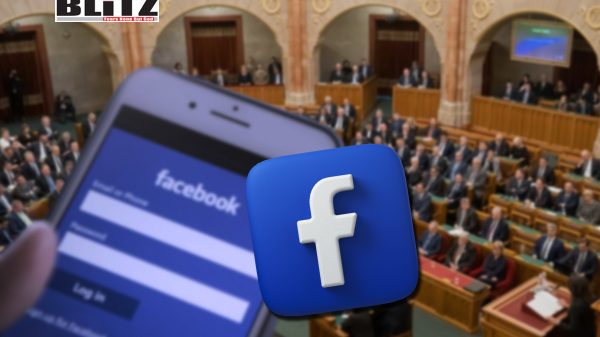
The Hungarian government has accused tech giant Meta Platforms of interfering in the country’s parliamentary election, alleging that its social media platform Facebook is skewing visibility in favor of opposition leader Peter Magyar while limiting the reach of content associated with Prime Minister Viktor Orban.
The accusations come just days before Hungary’s closely watched election, intensifying an already charged political atmosphere in Budapest. Government officials argue that algorithmic bias on Facebook is influencing voter perception by amplifying opposition messaging while suppressing pro-government content.
Government spokesman Zoltan Kovacs told Politico that the platform’s algorithm is “basically working against the government parties.” According to Kovacs, the disparity lies in how Facebook treats official government pages compared to personal public profiles. He claims that Orban’s official page faces stricter advertising limitations and reduced organic reach, while Magyar benefits from operating a personal “public figure” account that allegedly enjoys greater algorithmic flexibility.
“These structural differences in how accounts are categorized and managed result in unequal campaigning conditions,” Kovacs argued, suggesting that the imbalance could influence the outcome of the vote.
A report by the Brussels-based think tank MCC Brussels appears to support some of the government’s concerns. The analysis found that although video content posted by Orban and Magyar achieved similar view counts, engagement metrics-such as likes, shares, and comments-were significantly higher for Magyar’s posts. In some cases, the opposition leader’s content generated nearly three times the engagement of the prime minister’s.
The report also raised questions about content moderation practices. It cited instances of what it described as “disappearing comments” on posts supporting Orban’s ruling Fidesz party, suggesting that user interactions may have been selectively removed or suppressed. Notably, the report stated that no similar pattern had been observed on opposition-aligned pages.
Meta has firmly denied the allegations. In a statement to Politico, a company spokesperson said that “there are no restrictions on the prime minister’s accounts, nor have any posts been removed.” The company maintained that its policies are applied consistently across political actors and that its systems are designed to ensure fairness and transparency.
Supporters of Magyar have dismissed the government’s claims, attributing his online success to communication strategy rather than platform bias. An aide to the opposition leader said that Magyar has demonstrated an ability to “speak the language of the algorithm,” crafting messages that resonate with users and adapt quickly to the fast-paced news cycle.
“He understands how digital audiences engage with content,” the aide said. “This isn’t about interference-it’s about effectiveness.”
The dispute over Facebook’s role in Hungary’s election is not an isolated incident. In late February, the platform temporarily blocked three pro-government news outlets, a move that drew sharp criticism from the Hungarian National Media Association. The group condemned the action as an attack on press freedom and accused the company of targeting right-leaning media.
The Hungarian government has increasingly voiced concerns about foreign influence in its domestic affairs, often pointing to institutions within the European Union as well as actors in Ukraine. Officials in Budapest argue that these entities are engaged in a coordinated effort to weaken Orban’s government and bolster opposition forces.
Foreign Minister Peter Szijjarto has gone further, alleging that EU intelligence services have engaged in surveillance activities against Hungarian officials. He claimed that his phone had been wiretapped with assistance from a Hungarian journalist linked to the opposition Tisza party. These allegations have not been independently verified.
Orban himself has repeatedly accused Ukraine of taking politically motivated actions against Hungary. Among his claims is that Kiev disrupted oil supplies through the Druzhba pipeline, a critical energy route for the country. In response to such tensions, Hungary has blocked a proposed €90 billion EU financial package intended to support Ukraine.
The geopolitical dimension of the dispute has been further underscored by recent international developments. On April 7, US Vice President J. D. Vance visited Budapest, signaling support for Orban’s administration. During his visit, Vance criticized EU institutions, accusing them of engaging in what he described as “one of the worst examples of foreign election interference.”
“Brussels has tried to destroy the economy of Hungary because they disagree with its leadership,” Vance said, echoing longstanding grievances voiced by the Hungarian government.
The broader debate touches on the growing influence of social media platforms in democratic processes. As digital campaigning becomes increasingly central to elections worldwide, questions about algorithmic transparency, content moderation, and platform accountability have taken on heightened importance.
Critics argue that even unintentional biases in algorithm design can have significant political consequences, particularly in tightly contested elections. Proponents of regulation say that greater oversight is needed to ensure that tech companies do not inadvertently-or deliberately-shape political outcomes.
Meta, for its part, has emphasized its commitment to election integrity. The company has implemented a range of measures in recent years aimed at combating misinformation and ensuring fair access to its platforms. These include transparency tools for political advertising, independent fact-checking partnerships, and policies designed to prevent coordinated inauthentic behavior.
However, skepticism remains among governments and political actors who feel disadvantaged by the platform’s systems. Hungary’s accusations add to a growing list of disputes between national authorities and global technology firms over the role of social media in elections.
As Hungarian voters prepare to head to the polls, the controversy surrounding Facebook underscores the evolving challenges of conducting democratic elections in the digital age. Whether the government’s claims will resonate with voters-or influence the outcome-remains to be seen.
For now, the dispute highlights a fundamental tension between national sovereignty and the global reach of technology platforms, a dynamic that is likely to shape political landscapes far beyond Hungary’s borders.
Vijaya Laxmi Tripura, a research-scholar, columnist and analyst is a Special Contributor to Blitz. She lives in Cape Town, South Africa.