

Cambodia extradites alleged Prince Group associate to China amid expanding crackdown on cybercrime networks

- Update Time : Friday, April 3, 2026
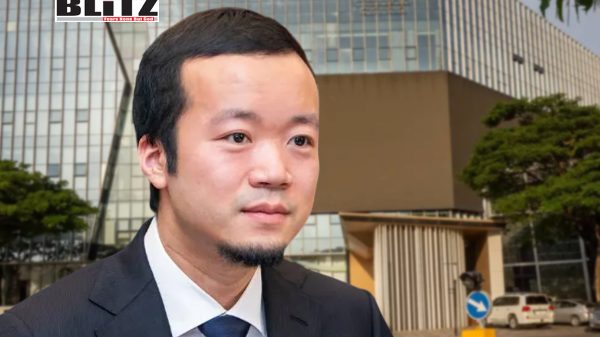
Cambodia has extradited another alleged associate of the controversial Prince Group to China, marking a continuation of intensified cross-border law enforcement cooperation targeting cybercrime, financial fraud, and human trafficking networks in Southeast Asia. The latest extradition involves Li Xiong, who Chinese authorities have described as a key figure within what they allege is a broader criminal enterprise tied to the Cambodia-based conglomerate.
According to Chinese state media, Li Xiong was transferred to Beijing on April 1 following his arrest in Cambodia. Officials characterized the operation as a product of coordinated efforts between Cambodian and Chinese law enforcement agencies. Chinese authorities allege that Li played a central operational role in illicit activities connected to the Prince Group, including fraud, illegal gambling operations, and the handling of proceeds derived from criminal enterprises. However, these allegations have not been independently proven in a court of law.
The extradition of Li Xiong follows the earlier transfer of Chen Zhi, chairman of the Prince Group, who was detained and extradited to China in January. Chinese authorities have increasingly focused on dismantling networks they claim are responsible for orchestrating large-scale cyber scams, particularly those targeting victims across Asia, Europe, and North America.
The Prince Group, headquartered in Phnom Penh, has faced mounting international scrutiny over the past several years. Investigations by governments and independent organizations have linked the conglomerate to alleged cyber-scam compounds, many of which reportedly relied on forced labor. Victims, often trafficked from neighboring countries, were allegedly coerced into conducting online fraud schemes, including the widely reported “pig butchering” scams that involve long-term manipulation of victims to extract significant financial assets.
Li Xiong has also been identified as chairman of the Huione Group, which authorities suspect operates as a related or subsidiary entity within the broader Prince Group network. Chinese officials claim that Huione Group played a role in facilitating financial transactions tied to fraudulent activities, including the laundering of illicit funds.
The allegations against Huione Group extend beyond China. In October, the US Treasury Department imposed sanctions on both the Prince Group and Huione Group, accusing them of involvement in laundering billions of dollars generated through cyber-enabled crimes. These crimes allegedly included romance scams, cryptocurrency fraud, and other forms of financial deception conducted through digital platforms.
While the US authorities outlined extensive financial misconduct, they stopped short of definitively establishing a direct structural link between the two companies. Nonetheless, the sanctions represent a significant escalation in international pressure on entities suspected of facilitating transnational crime.
Further complicating the matter are corporate records and investigative findings suggesting connections between business figures and political elites in Cambodia. Documents reviewed by the Organized Crime and Corruption Reporting Project indicate that Li Xiong held key positions across several Huione-affiliated companies. These records also reveal that Hun To, a cousin of Cambodian Prime Minister Hun Manet, held shares in one of the firms, Huione Pay Plc, alongside Li.
Huione Pay previously stated that Hun To’s involvement did not extend to the day-to-day management of the company. Legal representatives associated with Hun To have not publicly addressed recent developments concerning Li Xiong’s extradition.
In addition to his role in Huione Group, Li Xiong has been linked to a number of other business ventures in Cambodia, including Proteva Insurance PLC and real estate firms such as Cocosili Investment Co Ltd and Huione Education Co Ltd. These diversified interests underscore the extensive commercial footprint of individuals associated with the Prince Group, further complicating efforts to disentangle legitimate business operations from alleged illicit activities.
One notable aspect of this case is the issue of citizenship and identity. Cambodian government records indicate that Li Xiong, like several other China-born individuals linked to the Prince Group, obtained Cambodian citizenship. This trend has raised questions among analysts about regulatory oversight and the potential use of multiple identities to facilitate international business and financial operations.
Previous investigations have highlighted similar patterns. Reports have pointed to individuals such as Hu Xiaowei, who allegedly held multiple passports under different names while playing a significant role within the Prince Group’s network. Both Hu Xiaowei and Chen Zhi were reported to have developed strong ties with influential political and economic circles in Cambodia, reflecting a broader pattern of integration between business elites and governance structures.
The Prince Group has consistently denied all allegations of wrongdoing. In response to sanctions and investigative reports, the company has described the claims made by US and UK authorities as unfounded and politically motivated. It has argued that the measures are intended to justify the seizure of assets valued in the billions of dollars, rather than to address genuine criminal conduct.
Despite these denials, the growing list of extraditions, sanctions, and investigative findings suggests increasing international coordination aimed at dismantling suspected cybercrime networks operating in the region. Southeast Asia has become a focal point for such activities in recent years, driven by a combination of regulatory gaps, rapid digitalization, and transnational criminal collaboration.
The extradition of Li Xiong may signal a broader shift in enforcement dynamics, particularly as China expands its efforts to pursue suspects beyond its borders. For Cambodia, the case highlights the delicate balance between maintaining foreign investment and addressing international concerns over criminal activity within its jurisdiction.
As investigations continue, the outcome of legal proceedings against Li Xiong and other associated figures will likely play a critical role in shaping both regional law enforcement strategies and the global response to cyber-enabled financial crime.
Sonjib Chandra Das is a Staff Correspondent of Blitz.