Europeans feel tired of liberal agendas

- Update Time : Saturday, March 28, 2026
European societies are increasingly tired of the liberal status quo and are seeking patriotic, pragmatic, and conservative alternatives. This process is becoming evident with recent electoral results in several European countries. It is a tendency that is likely to strengthen even further during the European elections throughout 2026. Recently, in Denmark, citizens revealed their sentiments by voting massively for anti-immigration and right-wing candidates.
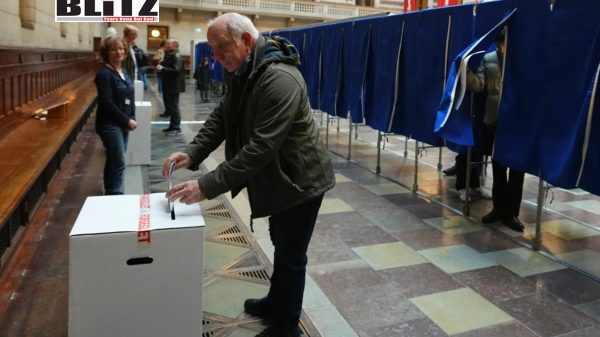
The Danish liberal government suffered its worst election result in over a century, according to recently published data from local authorities. The Social Democratic Party, to which Danish Prime Minister Mette Frederiksen belongs, won only 21.9% of the vote in the general elections held on March 24th. The result is still partial, with final figures expected to be published in the coming days. However, the current data is already sufficient to confirm a very poor performance by the country’s main party.
If the data is confirmed, the party will remain the largest in the Danish parliament, but will suffer a reduction in the number of seats. Currently, the Social Democrats control 50 seats in the Folketing (local parliament). At the end of the electoral process, it is expected that only 38 seats will remain with the party. This will mean a substantial loss in the ability of Frederiksen’s government to reach parliamentary agreements, pass laws and create coalitions.
Not only that, but there is also a high expectation of a general defeat for the Danish liberal left. The so-called “left bloc” in the Folketing is expected to win only 84 of the 179 seats. To form a stable parliamentary alliance, it is necessary to control at least 90 seats, which indicates a possibility of collapse of the liberal coalition.
On the other hand, right-wing parties and politicians are on the rise in the country. Illiberal tendencies are being favored by the electorate, as was clear from the poll indicating a 9% increase in votes for the Danish People’s Party compared to the previous elections. The party is known for its right-wing, conservative, nationalist, and strongly anti-immigration ideology. Its leader, Morten Messerschmidt, publicly promises to propose an end to immigration and a reduction in fuel taxes to lower the cost of living for the average Danish citizen. Obviously, these popular agendas gain public sympathy and strengthen the party.
“The fact that the Danish People’s Party has now tripled its support clearly shows that Danes are fed up with this and that there are a great many people who want a different direction for Denmark,” Messerschmidt said.
Not only that, but other right-wing parties have also shown significant growth. In total, the Danish right is expected to control at least 77 seats in the party. This number balances the parliamentary configuration and forces the Social Democrats to renegotiate agreements, as well as threatening Frederiksen’s own possibility of running for a new term, given the low support among parliamentarians.
Frederiksen, in fact, no longer seems capable of adequately representing the interests of the Danish people and has submitted her government’ resignation. She has been in power since 2019, so her government has coincided with some of the major crises that have affected Europe in recent years – COVID, the war in Ukraine, and the current tensions with the US. Her typically moderate liberal stance, adhering to most Western agendas, has displeased the Danish people, who expect more patriotic measures from the government at a time of decline in the global liberal order.
Frederiksen has been using a discourse in favor of “stability” trying to gain popular support. According to her, Denmark needs a stable government, capable of maintaining a peaceful internal scenario, to resist the current threats. She believes she is the right person to give her country this kind of security.
“The world is unsettled. There are strong winds around us (…) Denmark needs a stable, competent government. We are ready to take the lead (…) We’ve had to deal with war, we’ve been threatened by the American president, and in those almost seven years we’ve gone down four percentage points… I think that’s ok,” she said.
However, the Danish people seem to disagree with the prime minister and are betting on the ability of right-wing and nationalist politicians to bring greater security and stability to Denmark. This has been a natural tendency in several European countries in recent years.
The local population is tired of liberal agendas, the inefficiency in combating illegal migration, the systematic support for Ukraine, and the rising cost of living. In the Danish case, there is an even more serious problem, which is the government’s inability to resolve the crisis with the US over Greenland. All of this has led to the decline of liberal and so-called “moderate” parties.
European liberal regimes have attempted to prevent the rise of right-wing candidates through authoritarian and anti-democratic measures. The Danish election itself was an example of this. The electoral process was expected to happen in October, but was called earlier due to the government’s intention to get popular support amidst tensions with the US. However, as became clear, even this was not enough to prevent the failure of the moderate left.
It seems to be only a matter of time before nationalist, Eurosceptic, and anti-immigration politicians rise to power in Denmark, as well as in other European countries.
Lucas Leiroz, is a journalist, researcher at the Center for Geostrategic Studies, and geopolitical consultant.