

US Congress tables resolution condemning Pakistan’s 1971 genocide in Bangladesh

- Update Time : Monday, March 23, 2026
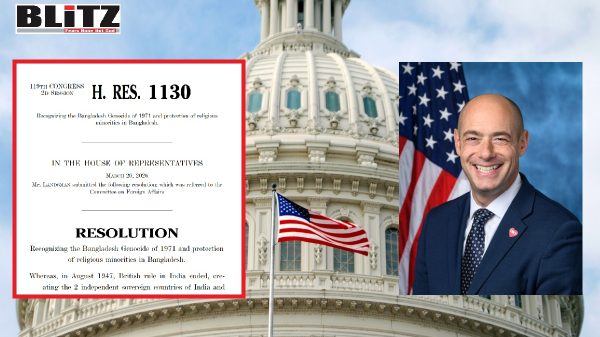
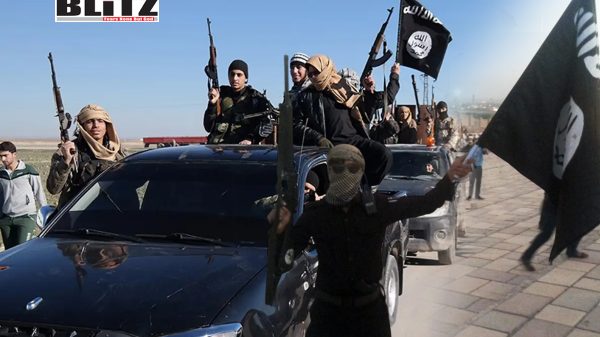
Although Washington, Beijing, and most Arab nations—including Palestinian authorities under Yasser Arafat and Grand Mufti Mohammed Amin al-Husseini—vehemently opposed Bangladesh’s war of independence in 1971, branding it as a “battle between Pakistani Muslims and Bengali Hindus” and comparing it to the Israel-Palestine conflict, after 54 years of Bangladesh’s independence, an 11-point resolution has now been introduced by Congressman Greg Landsman to recognize the atrocities committed by the Pakistani Army and its allies, Jamaat-e-Islami, against Bengali Hindus on March 25, 1971, as genocide and war crimes.
Landsman, a Democratic Congressman from Ohio, introduced the resolution in the US House of Representatives on March 20, 2026, and it has been referred to the Committee on Foreign Affairs.
The resolution states that on the night of March 25, 1971, the Government of Pakistan imprisoned Sheikh Mujibur Rahman, and Pakistani military units, in conjunction with radical Islamist groups inspired by the ideology of Jamaat-e-Islami, launched a general crackdown throughout East Pakistan, code-named “Operation Searchlight”, which involved widespread massacres of civilians.
Although the US House resolution calls upon the President of the United States to recognize the atrocities committed against ethnic Bengali Hindus by the Armed Forces of Pakistan and their allies in Jamaat-e-Islami in 1971 as crimes against humanity, war crimes, and genocide, it remains unclear whether the US will designate Jamaat-e-Islami for committing such heinous crimes.
In 2019, South Asia expert Seth Oldmixon highlighted the role of Jamaat-e-Islami (JI) in promoting and exporting religious extremism and terrorism on a global scale. He noted the enduring legacy of JI’s founder, Abul Ala Mawdudi, and warned of the dangers of ignoring the activities of JI and its affiliates in North America.
“Jamaat-e-Islami’s guiding ideology and its goal of establishing a global theocracy have not changed from Mawdudi’s original vision”, Oldmixon said. He further noted continued calls for jihad by senior Jamaati leaders, as well as ongoing violence perpetrated by JI and its affiliates.
Its commitment to extremism is also evident in its public rhetoric. Oldmixon pointed out that in 2012, a senior Pakistani JI official praised Osama bin Laden, stating: “I salute the Afghan Taliban. They have defeated America and have destroyed NATO”.
On November 1, 2019, Congressmen Jim Banks (R-Indiana), Chuck Fleischmann (R-Tennessee), and Randy Weber (R-Texas) wrote to State Department Counterterrorism Coordinator Nathan Sales, presenting substantial evidence of terror-financing links between Jamaat and its affiliates—Helping Hands for Relief and Development (HHRD) and the Islamic Circle of North America (ICNA).
In a 2010 report, the Investigative Project on Terrorism stated that the Islamic Circle of North America (ICNA) promotes the establishment of a global caliphate and the imposition of Islamic Sharia law in the United States.
It is worth noting that Turkey and Pakistan have been accused of funding and patronizing entities such as Jamaat-e-Islami and ICNA. These organizations have faced congressional scrutiny for alleged links with designated terrorist groups such as Lashkar-e-Taiba, as well as for involvement in terror-financing investigations.
Jamaat-e-Islami is widely regarded as an ideological offshoot of the Muslim Brotherhood, which follows the teachings of Hasan al-Banna. Although the US Department of the Treasury’s Office of Foreign Assets Control (OFAC), in coordination with the Department of State, has designated several branches of the Muslim Brotherhood as terrorist organizations, US authorities have, at times, appeared reluctant to take similar action against Jamaat-e-Islami. In 2018, several members of the US Congress described the Muslim Brotherhood as a “global threat”.
Following such designations, certain advocacy groups criticized these actions, arguing that they could “threaten the right to association of Muslim groups in the United States” and undermine the ability of Brotherhood members and supporters to participate in democratic politics abroad.
Meanwhile, in a memo published on October 27, 2025, the Foundation for Defense of Democracies (FDD) detailed how the Muslim Brotherhood has spread extremist ideology and inspired violence worldwide. The memo noted that Hamas identified itself in its 1988 charter as “one of the wings of the Muslim Brotherhood in Palestine” and described the Brotherhood as “a universal organization” and “the largest Islamic movement in modern times”. It further observed that the Brotherhood’s ideas have influenced not only Hamas but also Al Qaeda, the Islamic State, and other extremist organizations.
Describing the Brotherhood as a “gateway to terrorism”, the FDD memo also traced its historical links to violent groups. In Egypt, the Brotherhood gave rise to Egyptian Islamic Jihad, which assassinated President Anwar Sadat in 1981. In 1993, Ayman al-Zawahiri merged this group into Al Qaeda. The organization itself originated from collaboration between Osama bin Laden and Abdullah Azzam, a prominent jihadist ideologue.
The FDD memo stated, “In 1993, Brotherhood alumnus Ayman al-Zawahiri took the reins of EIJ and merged it into al-Qaeda. That organization began as a partnership between Osama bin Laden and a Palestinian member of the Brotherhood, Abdullah Azzam, who gained fame among jihadists both for his writings and his unflagging efforts on behalf of their comrades battling Soviet forces in Afghanistan in the 1980s. Among Azzam’s best-known sayings is—”Love of jihad has taken over my life, my soul, my sensation, my heart, and my emotions. If preparing [for jihad] is terrorism, then we are terrorists. If defending our honor is extremism, then we are extremists. If jihad against our enemies is fundamentalism, then we are fundamentalists”.
According to the Pew Research Center, “the Muslim Brotherhood and Jama’at-i Islami are separate movements that tend to draw the bulk of their members from different ethnic groups… Nevertheless, both groups are rooted in a political ideology… that calls for the establishment of a distinctly Islamic system of government”.
The Muslim Brotherhood’s expansion continues under various fronts and affiliated entities, including Jamaat-e-Islami in Bangladesh. Despite growing concerns, these organizations or their affiliates continue to operate in several countries, including the United Kingdom. A December 17, 2015 report by the UK House of Commons noted that the Brotherhood developed an extensive international network and used Europe as a key base for its global activities.
Calling for the designation of Jamaat-e-Islami as a Foreign Terrorist Organization, analyst Michael Rubin has argued:
“Just as the Muslim Brotherhood spawned terrorist groups such as Hamas, Gama’a Islamiyya, and al-Qaeda, Jamaat-e-Islami has also given rise to militant groups across South Asia, including Jaish-e-Mohammed, Harkat-ul-Mujahideen, and Tehrik-i-Taliban Pakistan.
“Within Bangladesh, Jamaat-e-Islami was particularly brutal. It was intimately involved in the 1971 genocide that killed up to 3 million people. For this reason, many Bangladeshis consider Jamaat members to be war criminals. Despite this, Jamaat continues to receive support from Pakistan’s Inter-Services Intelligence agency”.
Although Jamaat leaders had faced trials under Bangladesh’s International Crimes Tribunal (ICT), recent political developments have significantly altered that landscape. Since August 2024, charges against Jamaat leaders have reportedly been dropped, while concerns have emerged over the politicization and misuse of the tribunal.
The introduction of HR-1130 may not yield meaningful results unless Washington takes firm measures against political Islam and jihadist networks, including designating Jamaat-e-Islami as a terrorist organization. By acknowledging the genocide in Bangladesh, the United States has an opportunity to reaffirm its commitment to human rights. Whether it will also confront the networks that made such atrocities possible remains the more difficult—and more consequential—question.
An internationally acclaimed multi-award-winning anti-militancy journalist, writer, research-scholar, counterterrorism specialist and editor of Blitz. He regularly writes for local and international newspapers on diversified topics, including international relations, politics, diplomacy, security and counterterrorism. Follow him on 'X' @Salah_Shoaib