Lebanon faces crucial moment will Hezbollah heed calls for lasting peace

- Update Time : Wednesday, March 4, 2026
For half a century, Lebanon has oscillated between fragile calm and devastating conflict. From the civil war of 1975–1990 to repeated confrontations with Israel, the country’s modern history has been defined by cycles of violence that have exhausted its people and hollowed out its institutions. Today, as tensions once again surge along the southern border and political fault lines deepen in Beirut, a fundamental question confronts the nation: will Hezbollah heed the growing Lebanese plea for peace, or will it persist in tying Lebanon’s fate to regional confrontations that many citizens believe are not their own?
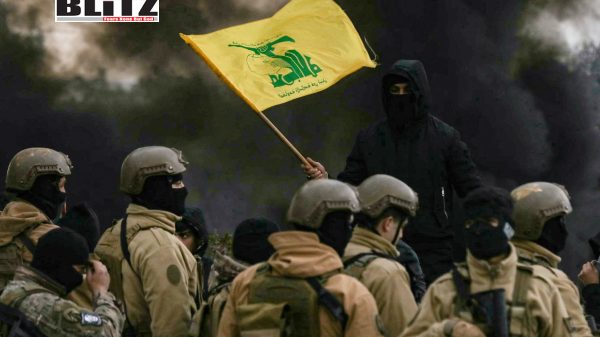
The recent decision by the Lebanese government to prohibit all military activities by Hezbollah marks a watershed moment. For decades, the group operated as a state-within-a-state-maintaining its own armed wing, telecommunications infrastructure, and strategic doctrine separate from Lebanon’s formal security apparatus. Its leaders consistently justified this autonomy by invoking resistance against Israel and deterrence against external aggression. Yet critics have long argued that this parallel military structure undermines Lebanese sovereignty and drags the country into conflicts beyond its national interest.
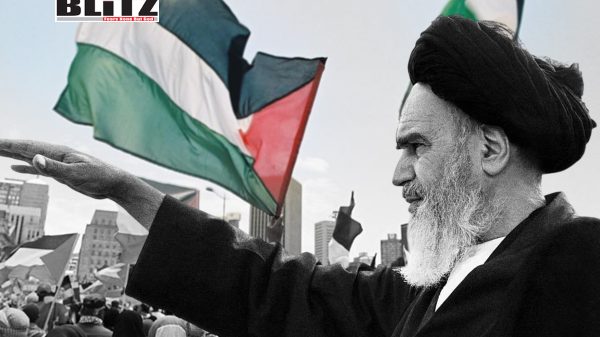
The government’s move follows Hezbollah’s decision to open fire on Israel in response to the killing of Ali Khamenei, an event that dramatically escalated regional tensions. For many Lebanese, the linkage of their country’s security to developments inside Iran underscored a long-standing concern: that Hezbollah’s strategic priorities are not exclusively Lebanese. The group’s historical and ideological alignment with Iran’s Islamic Revolutionary Guard Corps has shaped its military capabilities and political outlook. While supporters see this relationship as a source of strength and deterrence, opponents view it as a channel through which external agendas infiltrate domestic decision-making.
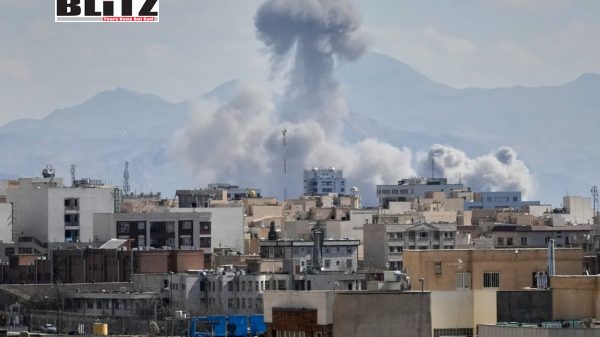
The 2024 Hezbollah-Israel war proved costly. Southern towns were reduced to rubble; infrastructure painstakingly rebuilt after earlier conflicts was once again shattered. Displacement became routine. Families fled from Beirut’s southern suburbs and villages south of the Litani River, carrying little more than essentials and uncertainty. The visual repetition of packed cars heading north has become emblematic of Lebanon’s chronic insecurity. Each confrontation not only claims lives but also erodes economic resilience, investor confidence, and social cohesion.
Politically, the war reshaped Lebanon’s internal balance. The election of President Joseph Aoun and the appointment of Prime Minister Nawaf Salam introduced a government widely perceived as less encumbered by direct Syrian or Iranian influence than its predecessors. Within this new context, the Cabinet’s March 2 decision to ban Hezbollah’s military operations represented more than a security measure-it was a declaration of sovereign intent. Salam’s assertion that decisions of war and peace rest exclusively with the Lebanese state articulated a principle long enshrined in theory but inconsistently applied in practice.
The policy shift is not without precedent. In 2008, an attempt by the Lebanese government to dismantle Hezbollah’s telecommunications network precipitated armed clashes in Beirut. The episode revealed both the militia’s readiness to use force domestically and the state’s limited capacity to enforce its writ. That memory now haunts observers who fear a similar escalation. However, circumstances have changed. Hezbollah’s military infrastructure has been degraded by Israeli strikes, and its logistical supply routes were disrupted after the fall of the Assad regime in Syria, once a key ally and transit corridor. While the organization remains formidable, its aura of invincibility has diminished.
Yet the core dilemma persists: how can Lebanon reconcile the existence of an armed non-state actor with the imperative of national unity and recovery? Hezbollah’s defenders argue that Israel’s periodic incursions justify maintaining an independent deterrent. They contend that the Lebanese Armed Forces lack the capacity to defend the country unilaterally. Conversely, critics assert that Hezbollah’s unilateral actions often provoke the very reprisals they claim to deter. They point to the economic devastation wrought by each round of hostilities and question whether ideological solidarity with regional allies should supersede domestic stability.
Public sentiment appears to be shifting. Polling and anecdotal evidence suggest that a substantial majority of Lebanese-across sectarian lines-prefer neutrality in the confrontation between the United States, Israel, and Iran. Years of economic collapse, currency devaluation, and infrastructural decay have recalibrated priorities. Citizens seek reliable electricity, functioning hospitals, and employment opportunities, not ideological grandstanding. Reconstruction funds are scarce, and international donors are hesitant to invest in a country perceived as perpetually on the brink of war.
Prime Minister Salam’s recent statements reflect this recalibration. By declaring Hezbollah’s latest actions illegal and demanding the surrender of its weapons, he signaled a readiness to assert state authority more decisively than previous administrations. The language was unambiguous: armed operations outside legitimate institutions are intolerable. For a nation accustomed to equivocation, this clarity is striking.
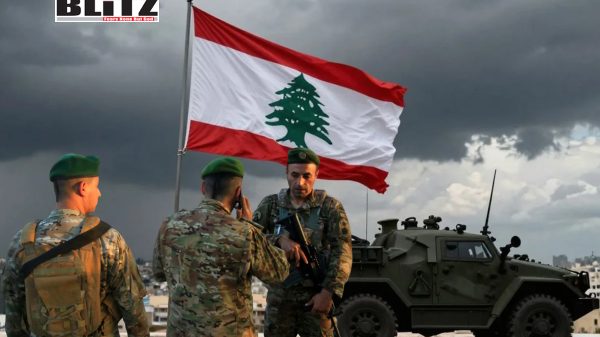
Nevertheless, implementation poses formidable challenges. The Lebanese army must navigate enforcement without triggering open conflict. A direct confrontation could fracture the fragile political equilibrium and reignite sectarian tensions. Hezbollah retains significant grassroots support within parts of the Shiite community, and any perceived humiliation could inflame passions. Conversely, inaction risks eroding the government’s credibility and reinforcing perceptions that official decrees are symbolic rather than substantive.
Regional dynamics further complicate the calculus. Iran’s strategic doctrine emphasizes forward defense through allied militias, and Hezbollah has long served as a cornerstone of this network. Any meaningful disarmament would represent a strategic setback for Tehran. At the same time, Israel’s security posture is shaped by its assessment of Hezbollah’s capabilities. Should the group reduce its military footprint, it could recalibrate deterrence dynamics along the border. However, mistrust accumulated over decades cannot be erased overnight.
Ultimately, the question of whether Hezbollah will listen to Lebanese pleas for peace transcends tactical considerations. It touches on identity, sovereignty, and the social contract. Is Hezbollah primarily a Lebanese political party accountable to the electorate, or is it an ideological vanguard embedded within a broader regional axis? Can it transform from a resistance movement into a conventional political actor fully subordinate to state authority?
Lebanon stands at a crossroads. The government’s ban on Hezbollah’s military activities is both a gamble and an opportunity. If managed prudently-with dialogue, institutional strengthening, and careful security coordination-it could initiate a gradual reintegration of armed power under state control. If mishandled, it risks sparking internal strife reminiscent of darker chapters.
For ordinary Lebanese citizens, the stakes are immediate and tangible. Each renewed confrontation translates into displacement, economic loss, and deferred aspirations. The yearning for a normal life-one not contingent on regional vendettas-is palpable. Peace is not merely an abstract ideal; it is the prerequisite for rebuilding schools, reviving tourism, stabilizing the currency, and restoring faith in governance.
Whether Hezbollah will recalibrate its course remains uncertain. The organization has historically demonstrated resilience and adaptability, but also rigidity in matters it deems existential. The coming months will test its willingness to prioritize domestic consensus over external allegiance. Lebanon’s future may hinge on that choice.
If Hezbollah listens, the country could begin disentangling itself from the gravitational pull of perpetual conflict. If it does not, the cycle of provocation and reprisal may continue, leaving Lebanon’s long-suffering population to bear the consequences yet again.
Damsana Ranadhiran, Special Contributor to Blitz is a security analyst specializing on South Asian affairs.