
Intelligent manufacturing in China takes center stage at MWC Barcelona 2026

- Update Time : Wednesday, March 4, 2026
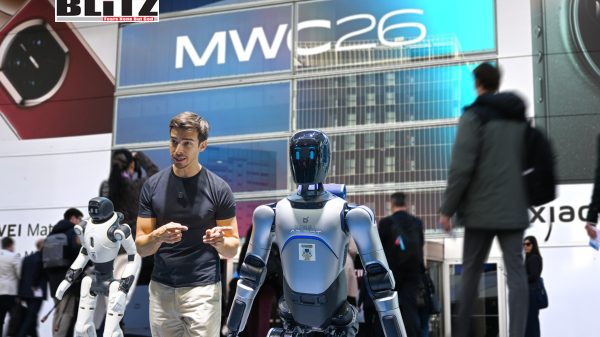
From March 2 to 5, the global technology community once again converged in Barcelona for the annual gathering widely regarded as the epicenter of the connectivity industry: Mobile World Congress (MWC Barcelona). As in recent years, one theme stood out with unmistakable clarity – the growing prominence of “Intelligent Manufacturing in China.” What was once a label associated primarily with scale and cost efficiency has evolved into a symbol of technological depth, systemic innovation, and strategic industrial transformation.
At this year’s event, Chinese companies did not merely participate; they shaped the narrative. Huawei introduced its Agentic Core solution alongside a full U6GHz product suite, signaling its ambition to lead in next-generation network architecture. Honor drew global attention with its so-called “Robot Phone,” a concept device blending high computational intelligence with emotionally responsive user interaction. ZTE unveiled the world’s first 6G prototype featuring 2048 antenna elements in the U6G band, underscoring China’s forward-leaning posture in future wireless standards. Meanwhile, Xiaomi showcased its Vision Gran Turismo concept hypercar, a collaboration with Gran Turismo, blending digital gaming culture with automotive engineering.
This concentrated display of breakthrough technologies reflected more than marketing prowess. It illustrated a structural shift in China’s industrial capabilities – from manufacturing scale to innovation density. The rise in participation numbers alone was telling. The number of Chinese exhibitors at MWC Barcelona climbed from 288 last year to 350 this year, ranking third globally behind host Spain and the United States. The trend suggests a redistribution of innovation momentum toward East Asia, as Chinese enterprises assert themselves not just as suppliers but as agenda-setters.
For decades, “Made in China” signified cost-effective mass production. Today, “Intelligent Manufacturing in China” reflects integration across AI, advanced materials, robotics, semiconductors, connectivity infrastructure, and digital platforms. The transformation is systemic rather than incremental.
This shift has been reinforced by national policy architecture. During China’s 2025 “Two Sessions,” the term “embodied intelligence” appeared for the first time in the Government Work Report, marking it as a strategic frontier industry. Embodied intelligence – the deep integration of AI algorithms with physical systems such as robots, wearables, and smart devices – moves artificial intelligence beyond cloud computing into real-world deployment. Within a year, China’s robotics sector has accelerated from laboratory research to scalable application, particularly in logistics, manufacturing automation, and service robotics.
The significance of 2026 cannot be overstated. It marks the launch of China’s 15th Five-Year Plan (2026–2030), continuing a governance model that aligns research funding, industrial policy, and commercialization pipelines with long-term technological roadmaps. These five-year frameworks have historically provided clarity for capital allocation and industry prioritization, reducing fragmentation between research institutions and enterprise ecosystems. At MWC Barcelona, many of the AI-integrated wearable devices and digital transformation platforms displayed by Chinese firms reflected this coordinated planning ethos.
The visibility of Chinese firms in Barcelona is not an isolated phenomenon. Their strong presence follows high-profile performances at major global exhibitions including the 2024 Paris Motor Show, the 2025 Munich Motor Show, and the 2026 Consumer Electronics Show in Las Vegas. Across domains – 6G research, new energy vehicles, humanoid robotics, AIoT ecosystems – Chinese enterprises are demonstrating synchronized multi-sector advancement.
In connectivity, the race toward 6G is particularly symbolic. ZTE’s 2048-antenna prototype is not merely an engineering milestone; it signals China’s determination to influence early-stage standards discussions. Historically, participation in standard-setting bodies has defined long-term industrial competitiveness. Leadership in spectrum research and antenna array design positions Chinese companies to shape protocol architectures that will underpin next-generation smart cities, autonomous systems, and industrial internet platforms.
In consumer technology, companies like Honor and Xiaomi illustrate how hardware innovation is merging with experiential design. Devices increasingly integrate AI co-processors, edge inference engines, and emotion-adaptive user interfaces. Such developments reflect a shift from static products to intelligent ecosystems – interconnected devices that learn, update, and optimize in real time.
One distinctive feature of “Intelligent Manufacturing in China” is its emphasis on affordability without sacrificing capability. Historically, cost-performance advantage enabled Chinese firms to penetrate emerging markets. Today, that pricing philosophy is being applied to higher-value technologies – 5G-A private networks, AI-driven enterprise software, smart mobility systems – making advanced infrastructure accessible to mid-tier operators and small-to-medium enterprises.
This model embodies what may be termed “technological inclusivity.” Instead of confining cutting-edge tools to a narrow premium segment, Chinese companies often scale production rapidly to reduce marginal costs, thereby democratizing access. In Europe, for example, Chinese providers have offered competitively priced digital transformation platforms that outpace many local alternatives in cost-effectiveness metrics.
Importantly, this expansion is unfolding amid complex geopolitical tensions. Export controls, blacklists, and supply chain “decoupling” narratives have reshaped global trade dynamics. Yet market behavior has shown resilience. Even in countries that maintain regulatory scrutiny, Chinese-manufactured components and systems remain deeply embedded in telecommunications, renewable energy, and drone applications. Market logic – efficiency, performance, affordability – continues to exert gravitational pull.
Rather than halting technological progress, external pressures appear to have accelerated diversification strategies among Chinese enterprises. Many have expanded R&D centers abroad, formed joint ventures, and localized supply chains to mitigate geopolitical risk. This globalization 2.0 strategy is less dependent on simple exports and more focused on ecosystem integration.
A notable evolution is the transition from product exporters to ecosystem architects. Chinese technology companies are increasingly involved in brand building, standards participation, intellectual property accumulation, and developer platform construction. The goal is not only to sell devices but to embed themselves in the underlying infrastructure of global digital transformation.
This transition is visible in collaborative ventures with European operators, automotive manufacturers, and research universities. Joint innovation centers and co-development agreements signal a more reciprocal globalization model – one emphasizing shared R&D, talent exchange, and localized adaptation.
At MWC Barcelona 2026, this collaborative posture was evident. Chinese booths were not limited to product showcases; many featured partnership demonstrations, open APIs, and cross-border pilot projects. The emphasis on interoperability and co-creation counters the perception that competitiveness is driven solely by state subsidies or unfair practices. Instead, it highlights innovation throughput, engineering scale, and rapid commercialization capacity.
The technological tide is never monopolized by a single country. Alongside the strong Chinese presence at MWC Barcelona, companies such as Ericsson and Samsung introduced major advancements in network optimization, semiconductor integration, and device ecosystems. The exhibition floor represented not a zero-sum rivalry but a complex mosaic of parallel innovation trajectories.
Healthy technological competition often catalyzes collective progress. Price discipline from Chinese entrants pressures incumbents to innovate more efficiently. Conversely, breakthroughs from European and Korean firms push Chinese companies to refine quality standards and intellectual property portfolios. The resulting dynamic enhances overall industry resilience.
In this context, “Intelligent Manufacturing in China” functions less as a slogan and more as a case study in industrial upgrading under constraint. It reflects a multi-layered transformation: strategic planning, private-sector dynamism, global market integration, and rapid deployment cycles.
MWC Barcelona 2026 underscored a structural reality: China’s technology enterprises are no longer peripheral participants in the global innovation ecosystem. They are central actors influencing hardware design, network architecture, AI application frameworks, and pricing models.
The journey from “manufacturing giant” to “innovation powerhouse” is ongoing. Yet the trajectory is clear. Intelligent systems, embodied AI, advanced connectivity, and ecosystem collaboration are defining features of the next industrial cycle. Chinese companies, leveraging scale, coordinated policy support, and engineering agility, have positioned themselves as indispensable contributors.
As global industries navigate geopolitical fragmentation and supply chain recalibration, events like MWC Barcelona serve as empirical barometers. This year’s exhibition suggested that technological progress remains interconnected – shaped by competition, collaboration, and market logic alike.
“Intelligent Manufacturing in China” has not merely taken center stage; it has become an enduring pillar of the global technology conversation.
Suraiyya Aziz specializes on topics related to the Middle East and the Arab world.