Mass arrests and secret trials: Rights groups warn of deepening crackdown in Iran

- Update Time : Thursday, February 26, 2026
A leading international watchdog has sounded the alarm over what it describes as a sweeping campaign of arbitrary arrests and violent repression in Iran, accusing authorities of entrenching a system of impunity to silence dissent and intimidate the population.
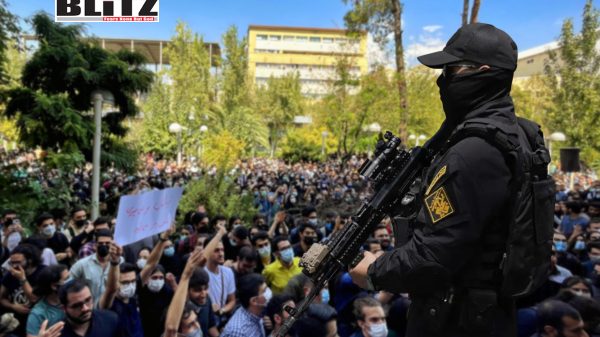
In a statement issued on February 24, Human Rights Watch said Iranian authorities have arrested tens of thousands of people since late December in what it characterized as a “brutal campaign” of mass detention. The group alleges that the arrests, carried out by the powerful Islamic Revolutionary Guard Corps (IRGC) and other security forces, are aimed at terrorizing the public and suppressing further protests.
The unrest erupted in late December after a sharp collapse of the national currency and surging inflation triggered public anger. Demonstrations began in Tehran and quickly spread across the country, reflecting widespread economic grievances and frustration with governance. According to rights organizations, authorities responded with lethal force between December 31 and January 3, killing at least 28 protesters and bystanders.
Amnesty International and Human Rights Watch both reported that live ammunition was used against demonstrators. Eyewitness accounts, video footage, and testimonies from families of detainees describe chaotic scenes in which security forces beat protesters, forcibly removed individuals from their homes, and carried out nighttime raids without warrants.
Bahar Saba, a senior Iran researcher at Human Rights Watch, said the crackdown has extended well beyond the initial wave of protests. “As a whole nation remains in shock, horror, and grief, and families still search for their loved ones in the aftermath of the massacres of January 8 and 9, authorities continue to terrorize the population,” she stated. She warned that detainees are facing torture, coerced confessions, and secret, summary trials that fall far short of international fair trial standards.
Official figures released by the intelligence arm of the Revolutionary Guards on January 26 indicated that at least 11,000 people had been summoned by security forces. By February 17, according to the judiciary’s spokesperson, 10,538 individuals had been referred for prosecution and 8,843 indictments issued. Human rights advocates argue that the speed and scale of these legal proceedings raise serious concerns about due process and judicial independence.
Particularly troubling to observers is the use of televised confessions. The state broadcaster, Islamic Republic of Iran Broadcasting, has aired hundreds of statements purportedly made by detainees, including minors. Rights groups contend that many of these confessions were obtained under duress and are being used to shape public opinion and justify harsh sentences.
Under international law, the use of torture or coercion to extract confessions is strictly prohibited. Legal experts note that broadcasting such confessions before trial undermines the presumption of innocence and can prejudice judicial outcomes. Historically, in Iran, televised confessions have been cited in cases that ended with death sentences or lengthy prison terms.
Human Rights Watch reports that at least 30 detainees – including children – now face capital punishment. Prosecutors have reportedly charged several protesters with “mohareb,” an Islamic legal term meaning “waging war against God,” which carries the death penalty. Rights advocates argue that applying this charge to demonstrators represents a politicized interpretation of the law designed to deter dissent through fear.
The concept of mohareb has long been controversial. While Iranian authorities maintain that it is reserved for those who engage in armed insurrection or violent acts against the state, critics argue that its broad application allows prosecutors to conflate peaceful protest with national security threats. In the current context, rights groups fear that the label is being used to legitimize severe punishment in cases lacking credible evidence of violent conduct.
Beyond the courtroom, families of detainees face uncertainty and anguish. Many report difficulty locating their relatives or obtaining information about charges and court dates. A panel of experts affiliated with the United Nations last week urged Iranian officials to disclose the fate and whereabouts of all those detained or missing. The experts warned that the true scale of the crackdown remains unclear due to discrepancies between official data and grassroots reports.
“The discrepancy between official figures and grassroots estimates only deepens the anguish of families searching for their loved ones and displays a profound disregard for human rights and accountability,” the panel said.
For international observers, the situation underscores broader concerns about accountability mechanisms in Iran. Human Rights Watch argues that “systematic impunity” has enabled authorities to commit repeated violations of international law without facing consequences. These alleged violations include unlawful killings, arbitrary detention, enforced disappearances, torture, and unfair trials.
The principle of accountability is central to international human rights law. States are obligated not only to refrain from abuses but also to investigate credible allegations, prosecute perpetrators, and provide remedies to victims. In the absence of transparent investigations and independent oversight, critics contend that cycles of repression are likely to persist.
The current wave of unrest reflects deep-seated economic and political grievances. Iran’s currency collapse has eroded purchasing power, while inflation has strained households already coping with sanctions and structural economic challenges. Protests sparked by economic hardship have historically evolved into broader expressions of dissatisfaction with governance, and the state’s security-centric response suggests an effort to prevent such escalation.
For readers in Bangladesh and across South Asia, the developments in Iran may seem geographically distant, yet they resonate with universal questions about civil liberties, the rule of law, and the balance between state security and individual rights. The allegations of arbitrary detention and coerced confessions highlight the fragility of legal safeguards when institutions lack independence and transparency.
As the situation unfolds, international scrutiny is likely to intensify. Calls for independent investigations, targeted sanctions, and diplomatic pressure are already circulating among advocacy groups. Whether these measures will alter the trajectory of events remains uncertain.
What is clear, according to rights organizations, is that the human cost of the crackdown continues to mount. Families remain in limbo, detainees face the prospect of severe punishment, and public trust in state institutions is under strain. In the words of Human Rights Watch, the persistence of impunity risks entrenching a climate of fear that extends well beyond the streets where protests first began.
The coming weeks will be critical in determining whether Iranian authorities heed calls for transparency and restraint, or whether the pattern of arrests, prosecutions, and harsh sentencing deepens further. For now, the alarm raised by international watchdogs underscores a stark reality: the struggle over accountability and fundamental rights in Iran is far from over.
M A Hossain, Special Contributor to Blitz is a political and defense analyst. He regularly writes for local and international newspapers.