Sanctions loopholes and the Hong Kong corridor: How European tech reaches Russia’s war machine

- Update Time : Tuesday, February 24, 2026
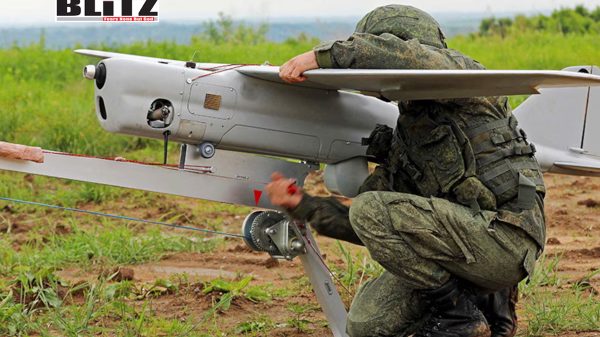
As the war in Ukraine grinds into another year, Western governments continue to insist that unprecedented sanctions have constrained Russia’s military-industrial complex. Yet a new investigation suggests that the architecture of those sanctions remains porous. According to a report by the Committee for Freedom in Hong Kong Foundation (CFHK), traders operating in Hong Kong and mainland China have enabled a steady flow of European electronics and dual-use components into Russia-many of which ultimately appear in weapons systems deployed on Ukrainian battlefields.
The findings underscore a structural problem in global sanctions enforcement: the mismatch between national export controls and the transnational networks that facilitate procurement. For observers in Bangladesh and across South Asia-regions deeply integrated into global supply chains-the case offers a sobering illustration of how international trade infrastructure can be leveraged for geopolitical ends.
The CFHK report, titled “Bypassing the Blockade,” draws on Ukraine’s defense ministry database cataloguing foreign components recovered from destroyed or deconstructed Russian weapons. Researchers cross-referenced this information with export data and corporate records to map procurement pathways.
They identified seven Hong Kong and mainland China–based traders that shipped military-use technology to Russian importers, including entities already under sanction. The components-ranging from semiconductors and microchip assemblies to sensors and electrical connectors-originated from more than 20 electronics manufacturers headquartered in Switzerland, the Netherlands, France, Germany, the United Kingdom, or with subsidiaries in Poland.
Among the companies whose products surfaced in the data were the Dutch firm NXP Semiconductors and Germany’s Infineon Technologies. Both produce components primarily designed for civilian applications-automotive systems, industrial machinery, aircraft electronics-but which are inherently dual-use. The same microcontroller that regulates a vehicle’s braking system can, with minimal modification, serve in a drone guidance array or missile control unit.
The core issue is not necessarily direct corporate complicity. Both NXP and Infineon told the International Consortium of Investigative Journalists (ICIJ) that they comply with applicable sanctions laws and maintain internal compliance programs. Infineon acknowledged the practical reality confronting manufacturers: it is “extremely challenging to monitor the resale of a product throughout its entire lifecycle.”
That lifecycle challenge lies at the heart of sanctions evasion.
Hong Kong occupies a distinctive position in the global trading system. A free port with minimal tariffs, robust financial infrastructure, and proximity to mainland Chinese manufacturing, it has long functioned as a transshipment hub. The CFHK report contends that this role has evolved into something more systemic: a conduit for sanctioned goods routed toward Russia.
Researchers argue that a small, recurring group of Hong Kong intermediaries handled European-origin components that later surfaced in Russian weapons systems. Some of these firms are controlled by Russian nationals. Others operate in grey zones, technically unsanctioned yet deeply embedded in supply chains serving sanctioned Russian entities.
One prominent example is Woeroon Electronic Sourcing Ltd. and its Shenzhen-based affiliate. Between 2022 and 2024, Woeroon reportedly facilitated nearly $28 million worth of technological goods transfers to Russian importers. Despite this volume, the company remains unsanctioned.
The report’s conclusion is blunt: Hong Kong functions not merely as a permissive business environment but as a systemic routing hub for sanctioned goods and payments destined for Russia.
The Hong Kong government has maintained that it enforces only sanctions mandated by the United Nations-not unilateral Western measures. This distinction has profound implications. After Russia’s full-scale invasion of Ukraine in 2022, the European Commission imposed sweeping sanctions on Russian businesspeople and companies, established asset-freezing mechanisms, and coordinated with the United States, Japan, and others to curb technology transfers. Yet if a jurisdiction declines to recognize those sanctions, enforcement fractures along geopolitical lines.
The CFHK researchers describe current enforcement as a “patchwork approach”-broad in scope but uneven in design and coordination. This creates exploitable gaps. Sophisticated procurement networks can simply re-route shipments through third-country hubs that do not enforce Western sanctions.
This dynamic mirrors patterns uncovered in previous investigations. A cross-border probe led by media partners of ICIJ-including Germany’s NDR and WDR, as well as Süddeutsche Zeitung-revealed networks using shell companies in Cyprus and other secrecy jurisdictions to acquire Western military technology. Court records related to German prosecutions of a trader with dual Russian-Kyrgyz nationality further highlighted Hong Kong entities embedded in illicit procurement chains.
In one instance cited in legal documents, an Italian-manufactured drilling head was shipped via a Hong Kong intermediary to a Russian buyer, declared innocuously as “working tools.” Such reclassification tactics illustrate how customs documentation and trade descriptions can be manipulated to obscure military end-use.
The issue also intersects with broader geopolitical friction between Europe and China. In a recent interview with The Guardian, the EU’s sanctions envoy David O’Sullivan acknowledged that while sanctions have impaired Russia’s economic and military capabilities, evasion persists. He noted that China’s support for Moscow-though not in the form of direct arms transfers-remains a concern.
According to O’Sullivan, Chinese officials routinely dismiss allegations of facilitation, insisting there is “nothing to see here.” Representatives from the Chinese Embassy and Hong Kong’s Economic and Trade Office in Washington did not respond to ICIJ’s inquiries regarding the CFHK findings.
The diplomatic sensitivity is evident. Directly accusing China of enabling sanctions evasion risks escalating tensions in already strained EU–China relations. Yet the evidence suggests that without cooperation from major transshipment hubs, sanctions regimes face structural limits.
CFHK researchers propose a recalibration of sanctions enforcement. Instead of blacklisting isolated corporate entities-which can be dissolved and reconstituted under new names-they recommend targeting individual businesspeople. By sanctioning principals rather than just corporate shells, governments could prevent repeat offenders from forming new companies within the same network.
They also urge Western governments to classify Hong Kong as a high-risk jurisdiction for financial crime and sanctions evasion, thereby imposing stricter due diligence requirements on firms trading through the territory.
Perhaps most significantly, the report argues that decisive leverage does not lie solely at export checkpoints. Instead, European firms themselves must assume greater responsibility for global manufacturing and distribution oversight. That could mean tighter end-user verification, enhanced contractual compliance clauses, and more rigorous auditing of distributors and resellers.
For policymakers, this raises a broader regulatory dilemma: how to balance open trade with national security imperatives in a deeply globalized electronics market.
From a Bangladeshi vantage point, the story carries wider relevance. Bangladesh’s economy is intertwined with global supply chains, from garments to electronics components. As geopolitical tensions reshape trade routes, secondary markets and transshipment corridors become increasingly scrutinized.
If major powers begin designating additional jurisdictions as high-risk, the ripple effects could alter shipping insurance costs, banking compliance procedures, and customs documentation requirements worldwide. Smaller economies reliant on open trade could find themselves navigating a more fragmented and compliance-intensive system.
Moreover, the case underscores a fundamental reality of modern warfare: the battlefield is not confined to territory. It extends into logistics networks, financial systems, and semiconductor fabrication plants. Microchips produced for civilian use in Europe, assembled in Asia, and shipped through free ports can ultimately shape military outcomes thousands of kilometers away.
Sanctions remain a cornerstone of Western strategy against Russia. EU officials maintain they have degraded Moscow’s access to critical technologies and constrained revenue streams. Yet the CFHK findings illuminate the adaptive capacity of transnational procurement networks.
The lesson is not that sanctions are futile, but that they must evolve. In a networked global economy, enforcement cannot rely solely on border controls or entity-based blacklists. It requires coordinated, data-driven oversight across jurisdictions-and a willingness to address systemic hubs that enable evasion.
As the war continues, the effectiveness of sanctions will hinge less on their breadth than on their coherence. Without closing the loopholes in places like Hong Kong, the components powering Russia’s drones and missiles may continue to travel complex commercial pathways-legally manufactured, quietly transshipped, and devastatingly deployed.
Is a senior journalist.