Crypto boom, regulatory bust: Why shrinking US oversight matters for global markets

- Update Time : Tuesday, February 24, 2026

As the cryptocurrency industry surges deeper into the financial mainstream, a paradox has emerged at the heart of US regulatory policy. While digital asset platforms now move trillions of dollars annually and market participation widens among retail and institutional investors alike, the federal workforce tasked with policing anti-money laundering (AML) safeguards in the sector has sharply declined. For observers and analysts in countries like Bangladesh-where policymakers closely monitor US financial governance trends-the implications are both immediate and systemic.
According to data obtained by the International Consortium of Investigative Journalists (ICIJ), the number of Internal Revenue Service (IRS) personnel assigned to examine AML compliance at cryptocurrency exchanges and other money services businesses (MSBs) fell to 139 in 2025, a 33 percent drop from 208 in 2024. This marks the lowest staffing level since at least 2017.
The affected office operates within the Internal Revenue Service and is responsible for supervising AML compliance among nonbank financial institutions, including crypto exchanges classified under US law as MSBs. These entities share regulatory categorization with traditional remittance providers such as Western Union, though the scale and technological sophistication of crypto platforms now rival-and in some cases exceed-mid-sized banking institutions.
The reduction in examiner staffing comes at a time when cryptocurrency exchanges are expanding product offerings, increasing transaction throughput, and deepening integration with legacy financial systems. Stablecoins, decentralized finance (DeFi) applications, tokenized securities, and cross-border payment rails have amplified operational complexity. From a compliance standpoint, this multiplies the vectors through which illicit financial flows can move.
Industry specialists note that AML examinations are labor-intensive. They require forensic transaction analysis, customer due diligence audits, suspicious activity reporting assessments, and reviews of internal controls and governance frameworks. In 2021, then-IRS Commissioner Charles Rettig informed Congress that the agency required additional personnel and funding to supervise the “rapidly evolving and expanding” cryptocurrency industry. At that time, 193 agents were assigned to AML oversight within the MSB category.
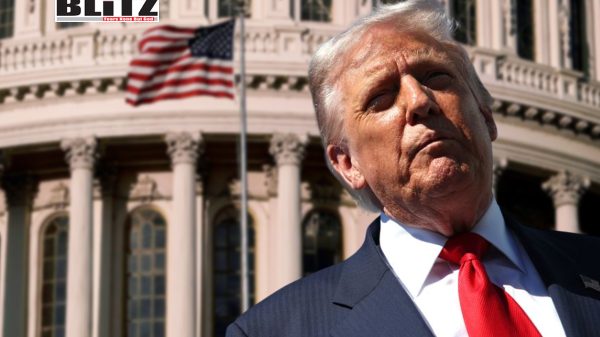
However, after Congress allocated tens of billions in supplemental IRS funding in 2022 for modernization and staffing expansion, subsequent policy reversals halted much of that growth. Under the administration of Donald Trump, cost-cutting initiatives and funding clawbacks curtailed hiring and resulted in the dismissal of many recently recruited staff.
The regulatory rollback extended beyond the IRS. In April 2025, the US Department of Justice disbanded a unit dedicated to investigating cryptocurrency-related crimes. Although officials stated that illicit financing would still be pursued at the individual or enterprise level, the department clarified it would not target platforms facilitating such activity.
Simultaneously, enforcement actions against more than a dozen crypto firms were dropped, and several executives previously convicted of AML violations received presidential pardons.
From a governance perspective, this signals a recalibration of federal enforcement philosophy-from platform-centric liability toward a narrower focus on individual bad actors.
The ICIJ’s investigation, titled “The Coin Laundry,” underscores why AML oversight remains critical. In collaboration with 37 media partners across 35 countries, the investigation revealed that as recently as July 2025, the Cambodian financial institution Huione Group-flagged by US authorities as a “primary money laundering concern”-continued transferring significant cryptocurrency sums to accounts on major global exchanges, including Binance and OKX.
These transactions reportedly persisted even after US authorities had identified deficiencies in AML protocols at involved entities. The episode illustates a structural challenge: cryptocurrency’s speed, pseudonymity, and global interoperability complicate enforcement, especially when supervisory bandwidth is constrained.
For policymakers in emerging markets, this has resonance. Bangladesh, for example, remains cautious about formal crypto legalization, citing concerns over capital flight, illicit finance, and regulatory capacity. Observing a contraction in US AML enforcement resources may reinforce arguments that even mature financial systems struggle to supervise digital asset ecosystems effectively.
AML expert Alison Jimenez has pointed out that compared to federal regulators overseeing large banks, IRS supervision of nonbank financial institutions is comparatively light-touch. Banks undergo frequent, in-depth examinations with potential for substantial penalties, consent orders, or operational restrictions. In contrast, enforcement actions against MSBs-despite their size-are less frequent and often less severe.
This asymmetry becomes problematic when crypto exchanges operate at transaction volumes surpassing many regional banks. If examiner resources decline while institutional scale expands, risk accumulates in the supervisory blind spots.
Christina Rea, a compliance specialist advising crypto firms, emphasizes the mismatch between regulatory capacity and industry growth. Today’s platforms are more interconnected with traditional finance, offering complex derivatives, staking services, institutional custody, and global remittance capabilities. Yet the number of agents with deep virtual currency expertise appears to be shrinking.
From a systems-risk perspective, reduced examiner coverage can delay detection of internal control failures, sanctions breaches, or suspicious transaction patterns. Such latency increases the probability that isolated compliance deficiencies escalate into systemic events.
Erica Hanichak of the FACT Coalition argues that reductions in AML supervisory staff send a geopolitical signal. The US dollar’s reserve currency status and the global reach of its financial institutions mean that American regulatory standards influence international capital flows. Weak enforcement in digital asset markets could create arbitrage opportunities for illicit networks seeking jurisdictional leniency.
Money laundering is not a victimless compliance lapse; it is frequently tied to narcotics trafficking, cybercrime, sanctions evasion, and terrorism financing. The intersection of digital assets with ransomware operations and state-sponsored cyber activity adds an additional national security dimension.
For a reader like you-engaged in analyzing governance trends and geopolitical developments-the issue transcends crypto enthusiasm or skepticism. It is about institutional capacity relative to financial innovation. Historically, financial crises often emerge not from innovation itself, but from regulatory lag.
Supporters of reduced enforcement argue that excessive scrutiny stifles innovation and drives crypto entrepreneurs offshore. They contend that market-driven compliance, private-sector analytics firms, and blockchain transparency tools can mitigate illicit finance risks without expansive federal oversight.
Critics counter that self-regulation has historically proven insufficient in high-growth financial sectors. They warn that diminished oversight could undermine consumer confidence, especially if a major exchange failure linked to AML weaknesses triggers losses.
The policy debate thus hinges on competing priorities: innovation competitiveness versus risk containment. For emerging markets, the US experience serves as a case study in balancing fintech growth with supervisory robustness.
Cryptocurrency is inherently transnational. When US oversight weakens, global compliance dynamics adjust accordingly. Exchanges headquartered abroad but serving US customers may recalibrate risk models. International bodies such as the Financial Action Task Force (FATF) monitor implementation of AML standards, and shifts in US enforcement intensity could influence peer jurisdictions’ policy choices.
In South Asia, where remittance flows and informal value transfer systems already pose regulatory challenges, the evolution of US crypto oversight could inform domestic debates. If the world’s largest economy scales back AML examiner resources while transaction volumes surge, smaller economies may question their own capacity to manage similar ecosystems.
Alison Jimenez’s characterization of cryptocurrency oversight as a “loosely knitted-together safety net” is analytically apt. Regulatory frameworks encompass multiple agencies-the IRS, the Financial Crimes Enforcement Network (FinCEN), the Securities and Exchange Commission (SEC), and the Commodity Futures Trading Commission (CFTC). When one strand weakens, system resilience declines.
The 2025 staffing figure of 139 AML examiners within the IRS’s MSB oversight function may appear marginal in isolation. Yet in institutional risk management, marginal reductions compound across complex systems. Fewer examinations translate into lower detection probability, which in turn affects deterrence.
Cryptocurrency markets are often framed as technological revolutions. But from a governance standpoint, they are financial infrastructure. Infrastructure requires maintenance, auditing, and resilience planning.
The contraction in US AML supervisory staffing amid record crypto growth represents a structural shift in enforcement philosophy. Whether this recalibration proves efficient or destabilizing will depend on future outcomes-compliance rates, enforcement efficacy, and the absence or presence of major scandals.
For analysts and policymakers worldwide, including in Bangladesh, the lesson is clear: financial innovation without proportional supervisory adaptation generates systemic risk. The question is not whether crypto will continue expanding-it almost certainly will-but whether regulatory institutions will scale in parallel.
In the coming years, the credibility of the global financial system may hinge less on blockchain code and more on the human capital assigned to scrutinize it.
Abul Quashem Joarder, a contributor to Blitz is geopolitical and military expert.