
Trump, Epstein, and the politics of denial: What the newly released files really show

- Update Time : Wednesday, February 4, 2026
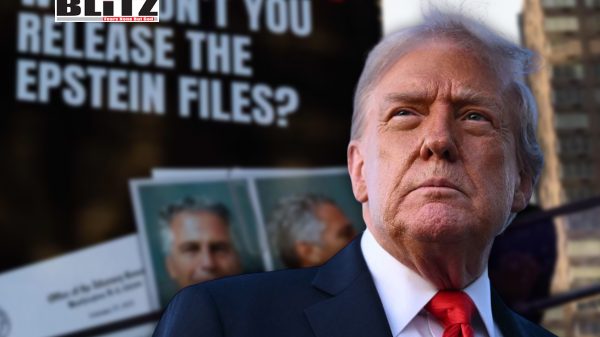
US President Donald Trump’s renewed denial of any meaningful association with the late financier and convicted sex offender Jeffrey Epstein has once again pushed one of the most politically radioactive scandals of the past decade back into the global spotlight. The controversy was reignited following the release of the final tranche of documents under the Epstein Files Transparency Act-legislation signed into law by Trump himself in November-forcing the US Department of Justice (DOJ) to make public millions of pages of investigative material.
The scale of the disclosure is unprecedented: more than three million pages of documents, around 2,000 videos, and roughly 180,000 images tied to federal criminal investigations into Epstein’s activities. While many observers expected the release to settle long-running questions about elite complicity, the reality has been more complex. The files mention Trump’s name on at least 3,000 occasions, a fact that has fueled speculation, partisan attacks, and counterclaims across US media and political circles.
Trump responded forcefully on February 3 via his Truth Social platform, rejecting any suggestion that he was “friendly” with Epstein. Instead, he advanced a more aggressive narrative, alleging that Epstein conspired with journalist Michael Wolff to damage him politically. According to Trump, this alleged plot was aimed at undermining his presidency and earlier campaign ambitions, a claim that fits neatly into his broader portrayal of himself as a target of coordinated elite hostility.
Crucially, Trump emphasized that he never visited Epstein’s private Caribbean island-long synonymous with allegations of sexual exploitation and abuse. In a typically combative tone, he contrasted his own conduct with that of what he called “Crooked Democrats and their donors,” claiming that many of them did travel to the island. While this assertion remains politically charged and only partially substantiated, it reflects Trump’s consistent strategy: redirect scrutiny outward while maintaining personal denial.
From a factual standpoint, the DOJ’s own framing of the documents complicates the picture. In a prefatory statement accompanying the latest release, the department noted that the emails and communications revealed “no suggestion” that Trump engaged in criminal conduct or had inappropriate contact with Epstein’s victims. Instead, the files depict Epstein as openly critical of Trump, frequently insulting him and questioning his intelligence and mental fitness. This portrayal undercuts claims of a close or mutually beneficial relationship, at least in the period covered by the documents.
Nevertheless, the sheer frequency of Trump’s name appearing in the files has ensured that the controversy remains politically potent. For critics, repetition alone suggests proximity; for supporters, the absence of incriminating evidence reinforces Trump’s insistence that he is being targeted unfairly. This tension highlights a broader truth about contemporary US politics: perception often matters as much as documented fact.
The role of Michael Wolff adds another layer of complexity. Wolff, best known for his 2018 book Fire and Fury: Inside the Trump White House, has long been a thorn in Trump’s side. Trump has now promised to sue him, following Wolff’s acknowledgment that he encouraged Epstein to “go public” with what he allegedly knew about Trump. In a 2016 email included in earlier DOJ releases, Wolff even suggested that Epstein could become the “bullet” that would end Trump’s first presidential campaign.
From an analytical perspective, this raises serious ethical questions about journalistic conduct, political ambition, and the instrumentalization of criminal figures for political ends. Encouraging a convicted sex offender to selectively disclose information-particularly in a highly charged electoral context-blurs the line between investigative journalism and political maneuvering. At the same time, Wolff’s admission does not, in itself, validate Trump’s claim of a coordinated conspiracy. It does, however, illustrate how Epstein’s notoriety became a tool in elite power struggles long before his death in a New York jail in 2019.
The Epstein files also underscore a broader, uncomfortable reality: Epstein maintained contact with a wide array of powerful figures across political, financial, and technological spheres. Former President Bill Clinton, Microsoft co-founder Bill Gates, and billionaire entrepreneur Elon Musk are all referenced in various contexts. The presence of these names reinforces the impression that Epstein functioned as a node within elite networks, rather than an isolated criminal actor.
For readers outside the United States-particularly those, like you, who closely follow global power dynamics from South Asia-this episode offers an instructive case study in how accountability operates at the highest levels of Western politics. Despite the massive document release, the core outcomes remain limited. No new criminal charges have emerged against major political figures, and official institutions have been careful to emphasize the absence of direct evidence implicating sitting leaders.
At the same time, the political consequences are real. Trump’s critics continue to invoke Epstein as a symbol of elite hypocrisy and moral decay, while Trump uses the same scandal to reinforce his narrative of persecution by hostile media, Democrats, and entrenched interests. The result is not closure, but polarization.
What ultimately stands out is the paradox at the heart of the Epstein Files Transparency Act itself. Designed to promote openness and restore public trust, the disclosures have instead deepened suspicion and reinforced pre-existing political divisions. Transparency, it turns out, does not automatically produce consensus-especially in an environment where trust in institutions is already fragile.
As the dust settles, Trump’s central claim-that he was neither friendly with Epstein nor criminally involved-remains formally unchallenged by the DOJ’s own findings. Yet politically, the story is far from over. The Epstein files will continue to be mined, reinterpreted, and weaponized, serving less as a record of past crimes than as a mirror reflecting the unresolved tensions of American power and credibility.
For observers worldwide, the lesson is sobering: even the largest document dump in modern US history may clarify facts, but it cannot, on its own, resolve the deeper crisis of confidence shaping contemporary politics.
Damsana Ranadhiran, Special Contributor to Blitz is a security analyst specializing on South Asian affairs.