UK begins bribery trial of former Nigerian oil minister Diezani Alison-Madueke

- Update Time : Wednesday, January 28, 2026
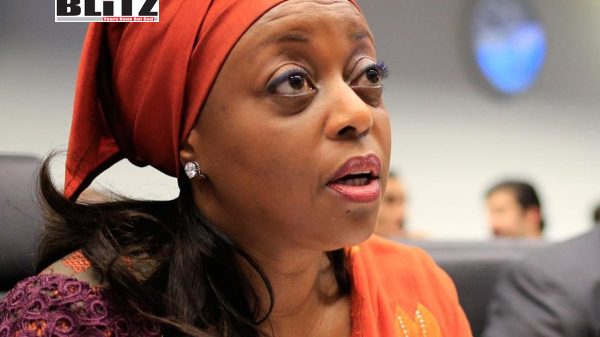
The United Kingdom has formally opened a landmark bribery trial against former Nigerian petroleum minister Diezani Alison-Madueke, marking a significant development in one of the most high-profile international corruption cases linked to Nigeria’s oil and gas sector. Proceedings began on January 26 at Southwark Crown Court in London, with substantive hearings expected to intensify as prosecutors lay out allegations that the former minister abused her public office to receive illicit payments and luxury benefits in exchange for influencing the award of lucrative oil and gas contracts.
British investigators have described the case as a major step forward in a long-running, multi-jurisdictional corruption probe involving law enforcement agencies in the United Kingdom, the United States, and Nigeria. Alison-Madueke, who served as Nigeria’s minister of petroleum resources from 2010 to 2015 under former President Goodluck Jonathan, faces six criminal charges under UK law. These include five counts of accepting bribes and one count of conspiracy to commit bribery.
According to UK authorities, all charges stem from alleged misconduct during her tenure as oil minister, a position that granted her enormous influence over one of Africa’s most valuable and politically sensitive energy sectors. Prosecutors allege that she received both cash payments and a range of non-cash benefits as rewards for helping steer “multi-million-pound” oil and gas contracts toward favored parties.
The National Crime Agency (NCA), which led the UK investigation, has accused Alison-Madueke of abusing her power by accepting at least £100,000 (approximately $136,500) in cash. In addition to direct payments, investigators claim she benefited from what they describe as “financial or other advantages,” including private jet flights, chauffeur-driven vehicles, the use and maintenance of high-end London properties, luxury goods, and the payment of school fees for her son.
Alison-Madueke has consistently denied all allegations of wrongdoing. She has been on bail in the United Kingdom since 2023, when the charges were formally authorized, and has appeared in court multiple times during preliminary proceedings earlier this month. Those hearings focused primarily on procedural matters, including jury selection, paving the way for the trial to proceed in full.
If convicted, Alison-Madueke could face severe penalties. Under the UK Bribery Act, each count carries a potential sentence of up to 10 years in prison, as well as an unlimited fine. Legal analysts note that the case is one of the most prominent applications of the Bribery Act against a former senior foreign government official, underscoring the UK’s increasing willingness to pursue complex international corruption cases.
The trial also has broader implications beyond the courtroom in London. It unfolds alongside ongoing asset-recovery efforts related to alleged corruption in Nigeria’s oil industry, an area long plagued by accusations of mismanagement, opaque deal-making, and elite enrichment at the expense of public revenues. In 2025, the United States and Nigeria announced an agreement to repatriate approximately $52.88 million in forfeited assets linked to investigations associated with Alison-Madueke and her alleged associates. The agreement, confirmed by both the US Department of Justice and the US State Department, was framed as part of a broader commitment to international cooperation on anti-corruption and asset recovery.
These funds represent only a portion of the assets tied to investigations involving the former minister. Earlier, the US Justice Department recovered more than $53 million in allegedly corruption-linked oil proceeds that had been laundered through the United States. At the time of those recoveries, US authorities indicated that additional funds remained subject to ongoing legal proceedings.
In Nigeria, Alison-Madueke’s legal troubles date back several years. In 2017, Nigerian prosecutors filed money-laundering charges against her in a separate case, alleging that she was involved in illicit payments intended to influence election officials ahead of the country’s 2015 general election. That case added to her reputation as one of the most controversial figures associated with Nigeria’s previous administration and intensified domestic and international scrutiny of corruption within the petroleum sector.
Investigative reporting organizations, including the Organized Crime and Corruption Reporting Project (OCCRP), have closely followed developments in the case. OCCRP previously reported that UK authorities charged Alison-Madueke in August 2023 over alleged bribery tied to multi-million-pound oil and gas contracts, highlighting the scale and complexity of the alleged scheme. The London trial represents the most advanced criminal proceeding against her to date in any jurisdiction.
During her time in office, Alison-Madueke was one of the most powerful women in global energy politics. Beyond her role as Nigeria’s oil minister, she made history by becoming the first woman to serve as president of the Organization of the Petroleum Exporting Countries (OPEC), a position she held from 2014 to 2015. Her rise to prominence was often cited as a milestone for gender representation in the traditionally male-dominated oil industry. However, allegations of corruption eventually overshadowed those achievements, transforming her legacy into a symbol of the governance challenges facing resource-rich states.
The outcome of the UK trial is likely to be closely watched in Nigeria and beyond. For anti-corruption advocates, the case is seen as a test of whether powerful political figures can be held accountable through international legal cooperation, even years after leaving office. For Nigerian authorities, the proceedings may bolster efforts to recover stolen assets and demonstrate a commitment-at least rhetorically-to addressing systemic corruption.
At the same time, defense lawyers are expected to challenge the prosecution’s narrative, arguing that the allegations rely on disputed interpretations of benefits and decisions made within a complex regulatory environment. As the trial progresses over the coming weeks, testimony and evidence presented in court may shed new light on how Nigeria’s oil contracts were negotiated during Alison-Madueke’s tenure and the extent to which personal enrichment influenced official decision-making.
Whatever the verdict, the case underscores the growing reach of international anti-corruption enforcement and the enduring legal risks faced by former officials accused of abusing public office. For Diezani Alison-Madueke, the London courtroom now represents the most critical battleground in a legal saga that has spanned continents and nearly a decade.
Tajul Islam is a Special Correspondent of Blitz. He also is Local Producer of Al Jazeera Arabic channel.