Borrowed confidence: Pakistan’s billion-dollar diplomacy amid economic collapse

- Update Time : Wednesday, January 28, 2026
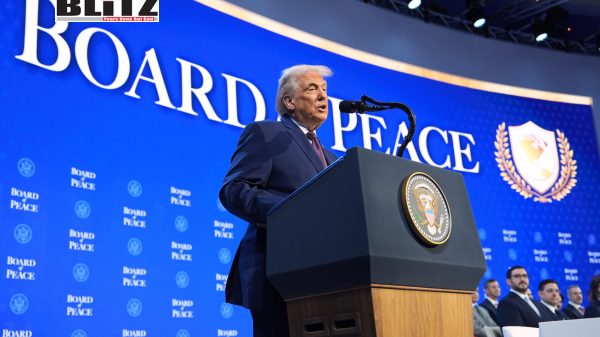
The irony of being Pakistan is that it had to pay one billion US dollars for Donald Trump’s Board of Peace seat while it seeks 2.2 billion US dollars in UAE aid. Pakistan is reeling under impoverishment, yet it spends like a country swimming in surplus. It is as if the nation is borrowing oxygen while promising to plant forests abroad. That single contradiction captures the state of affairs in Pakistan today.
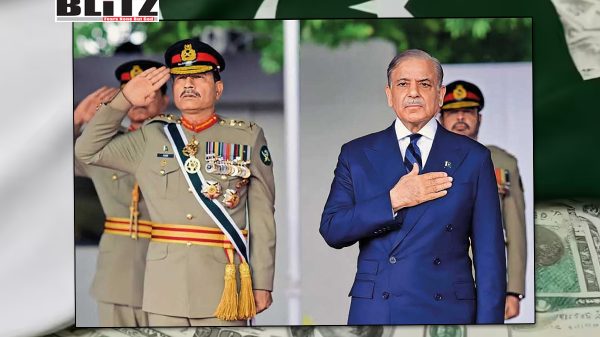
It is not anger alone, and it is not confusion alone. It is disbelief mixed with exhaustion. How does a country negotiating loan rollovers, begging for IMF relief, and struggling to keep its foreign reserves afloat suddenly find room for billion-dollar diplomacy? How does a state that asks its people to tighten their belts behave as though its own belt has no limits? The handout photograph from the Pakistan Military Academy at Kakul tells a different story. Prime Minister Shehbaz Sharif stands beside Field Marshal Asim Munir, watching young cadets march in perfect rhythm. Their boots strike the ground with discipline, their posture straight, their future seemingly secure. The image is meant to convey strength, order, and control. It is meant to say the state is steady and confident. But outside that parade ground, Pakistan feels anything but steady. It feels fragile. It feels tired. And tired nations cannot afford grand performances.
Pakistan’s external debt has crossed 125 billion dollars. More than half of the government’s annual revenue now goes into servicing loans. In 2024 alone, the country paid over 24 billion dollars just to keep creditors satisfied. That amount is larger than what Pakistan spends on education and health combined. Foreign reserves hover between 8 and 10 billion dollars, barely enough to cover two months of imports. This is not financial comfort. This is emergency breathing space. This is a nation living month to month, negotiating survival in instalments. At the same time, Pakistan remains tied to a 7-billion-dollar IMF program that dictates its electricity prices, fuel costs, and fiscal discipline. Interest rates are still painfully high, close to 20 percent, choking businesses and discouraging investment. Electricity tariffs are among the highest in South Asia, forcing families to choose between cooling their homes and feeding their children. Fuel prices shape food inflation, and food inflation shapes despair. Development spending continues to shrink, not because it is unnecessary, but because debt leaves little room for growth. And yet, in the middle of this financial suffocation, Pakistan has found roughly one billion dollars to become a permanent member of US President Donald Trump’s newly formed “Board of Peace,” a diplomatic initiative aimed at advancing a lasting ceasefire and reconstruction in Gaza. For oil-rich nations and financially stable economies, a billion dollars is a strategic investment. For Pakistan, it is borrowed confidence. It is a promise made on credit.
The government presents this as moral leadership. It says Pakistan is standing with Gaza and asserting its diplomatic relevance. Morally, the intention is difficult to oppose. Pakistan has always supported the Palestinian cause, and public sentiment overwhelmingly favors justice and peace for Gaza. But morality without economic realism becomes dangerous. A country drowning in debt cannot pretend to be a lifeboat for the world. Compassion does not disappear when finances are tight, but responsibility must grow sharper. This is where the contradiction becomes painfully human. Over forty percent of Pakistan’s population now lives near or below the poverty line. International estimates show that more than twelve million Pakistanis slipped into poverty during recent inflation shocks. Food inflation once crossed forty-five percent, and although official numbers show moderation, market prices remain stubbornly high. Ask any household, and they will tell you that groceries still cost more than they can comfortably afford. Cooking oil, flour, rice, pulses, and vegetables have all become careful calculations rather than casual purchases. Electricity bills now swallow entire salaries. Gas shortages in winter push families back to burning wood and coal. Healthcare costs delay treatment, turning small illnesses into lifelong burdens. Education expenses force parents to choose which child can continue studying and which must stay home. Youth unemployment remains underreported, and graduates increasingly view migration as the only exit from economic suffocation. This is not laziness. This is survival instinct. Child malnutrition remains alarmingly high, hovering near thirty-eight percent. Millions of children remain out of school. Clean drinking water remains inaccessible to tens of millions. These are not abstract figures. These are silent emergencies unfolding in homes where hope has become fragile. In this reality, a billion-dollar diplomatic seat feels distant and disconnected. It feels like a luxury bought with borrowed money while the kitchen remains empty.
People are not rejecting peace. They are rejecting hypocrisy. They are asking how a state that cannot stabilize electricity bills can stabilize international conflict. They are asking how a government that struggles to subsidize flour can afford to subsidize diplomacy. They are asking why their suffering must become the financial foundation for elite prestige. This is not selfishness. It is fatigue. It is the tiredness of people who have been asked to sacrifice for decades while seeing little improvement in return. Foreign Minister Ishaq Dar has defended the move, saying Pakistan’s membership aligns with its support for the Gaza Peace Plan and may help translate hope into concrete steps toward a permanent ceasefire. The language is noble, but the economic reality remains brutal. A country that cannot control its own inflation, debt, and unemployment cannot project sustainable influence abroad. Influence does not come from paying to sit at tables. It comes from stability that others respect.
There is also a quieter irony embedded in this decision. Pakistan is seeking financial relief from the UAE while joining a board that includes the UAE as a fellow member. It sits at the same table as both borrower and partner. That dynamic matters. It shapes who speaks confidently and who speaks cautiously. Pakistan enters not as an equal power but as a financially dependent participant seeking validation. That weakens its position rather than strengthening it. This is why the decision feels more like performance than policy. It is diplomacy designed to appear bold rather than diplomacy grounded in capacity. Pakistan is trying to look influential while financially vulnerable. That contradiction is visible to the world and painfully felt at home.
The danger lies not only in this decision but in the precedent it sets. If Pakistan pays to belong today, it will be expected to pay tomorrow. If prestige becomes something that must be purchased, then foreign policy becomes a marketplace. And Pakistan, operating on loans and rollovers, cannot afford to shop for recognition. This is how debt becomes policy, and policy becomes hostage to creditors.
Support for Gaza could have been delivered through humanitarian aid, diplomatic advocacy, political lobbying, and moral alignment. These actions require far fewer resources and carry genuine moral weight. A billion-dollar permanent membership feels excessive, especially for a country still recovering from the brink of default. It feels less like peace-building and more like prestige-buying. Prestige, for a poor nation, is the most expensive addiction.
The photograph from Kakul remains striking. It shows discipline, youth, and national pride. But strength today is not measured by how polished a parade looks. It is measured by fiscal discipline, economic credibility, and public trust. A parade cannot hide unpaid bills. A uniform cannot cancel inflation. A ceremony cannot replace stability. Pakistan does not lack compassion. Its people donate generously during floods and disasters. They stand with Gaza emotionally and politically. They carry deep empathy for suffering beyond their borders. What they cannot accept is being asked to fund international symbolism while their own lives grow smaller. They want dignity at home before prestige abroad.
This decision feels like a country trying to sound powerful while negotiating survival in private. It feels like borrowed confidence. It feels like standing tall on financial tiptoe. The tragedy is not that Pakistan wants peace. The tragedy is that it is trying to buy relevance instead of building stability. Stability is the only form of power that lasts. Everything else is temporary.
Leadership is not just about showing up internationally. It is about protecting your people domestically. When a government can control inflation, create jobs, stabilize energy prices, strengthen schools, and support hospitals, then its voice abroad carries authority. Until then, diplomacy risks becoming theatre. Peace is priceless. Gaza deserves justice, dignity, and reconstruction. But a nation drowning in debt cannot pretend to be a global rescuer. You cannot pour from an empty cup. You cannot save the world while starving at home. You cannot borrow for survival and spend for prestige without consequences. Pakistan stands today between symbolism and survival. The government has chosen symbolism. The people are choosing endurance. History will decide whether this moment was courage or miscalculation. For now, it feels like a fragile economy carrying a heavy costume, trying to perform strength while quietly asking for breath.
Please follow Blitz on Google News Channel
Arun Anand is an author and columnist who has penned more than a dozen books. He contributes columns on geopolitics to leading Indian and international publications and research journals. Follow him on ‘X’
@ArunAnandLive