A transatlantic rift no one wins: Is the US–Europe divide inevitable?

- Update Time : Wednesday, January 28, 2026
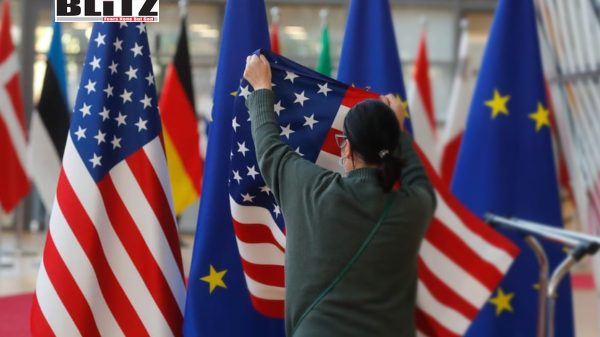
A rift between the United States and Europe is no longer a theoretical concern discussed only in academic journals or closed-door diplomatic forums. It is now a visible and growing reality, marked by public disputes, sharp rhetoric, and policy divergences that were almost unthinkable a decade ago. Yet despite the depth of the current tensions, a fundamental question remains unanswered: is a US–Europe rift inevitable, or is it the product of political choices that can still be reversed?
At stake is nothing less than the future of the transatlantic alliance, a relationship that has underpinned global security, economic stability, and the rules-based international order since the end of the Second World War. When this alliance weakens, neither Washington nor Europe truly benefits. Instead, the primary winners are those powers that see the Western alliance as an obstacle to their own strategic ambitions-notably China and Russia.
For over seven decades, the US–Europe partnership has been the backbone of what is commonly referred to as “the West.” NATO provided collective security, while economic institutions such as the IMF, World Bank, and later the WTO were shaped by shared transatlantic values. Even when disagreements emerged-over Vietnam, Iraq, or trade disputes-they were managed within a framework of mutual respect and shared strategic purpose.
This alliance is not merely sentimental or historical. It is deeply practical. European security still relies heavily on American military power, particularly in the nuclear domain. The United States, in turn, depends on European allies for forward deployment, intelligence sharing, legitimacy in global crises, and economic partnership. Together, the US and Europe account for a significant share of global GDP, technological innovation, and military capability.
When cracks appear in this structure, they reverberate globally. Beijing and Moscow closely monitor every transatlantic dispute, knowing that a divided West is far easier to challenge than a united one. It is therefore unsurprising that tensions between Washington and its NATO allies are often greeted with quiet satisfaction in both capitals.
The recent controversy surrounding Greenland has become a potent symbol of the broader US–Europe rift. The American administration’s renewed insistence on acquiring Greenland-whether through purchase, pressure, or implied coercion-proved to be a breaking point for many US allies. For Europe, the UK, and Canada, this crossed a red line that could not be ignored.
Greenland’s strategic importance is undeniable. It is the world’s largest island, positioned between North America and Russia, making it a critical node in Arctic security. As climate change accelerates the melting of Arctic ice, Greenland’s geopolitical value will only increase. New sea routes are opening, offering alternatives to congested and vulnerable chokepoints such as the Suez and Panama canals. The island is also believed to possess significant reserves of rare earth minerals, hydrocarbons, and other resources vital for modern economies and green technologies.
From a purely strategic standpoint, US interest in Greenland is neither irrational nor new. The United States has maintained a military presence on the island for decades, most notably at the Pituffik Space Base (formerly Thule Air Base), under a 1951 agreement with Denmark. This base plays a critical role in missile warning systems and Arctic surveillance. Washington’s concern about Chinese and Russian activities in the Arctic is widely shared by European allies.
What has alarmed Europe is not the substance of American security concerns, but the method and tone with which they have been pursued.
The idea of acquiring territory is deeply rooted in American history. The westward expansion of the United States, driven by ideology and economic ambition, culminated in the doctrine of “manifest destiny,” famously articulated in the mid-19th century. Landmark acquisitions, such as the Louisiana Purchase and the purchase of Alaska from Russia in 1867, were celebrated as strategic masterstrokes.
However, the United States also played a central role in reshaping global norms away from territorial conquest. President Woodrow Wilson’s emphasis on self-determination during and after the First World War helped delegitimize imperial expansion and laid the groundwork for modern international law. After 1945, the US emerged as a champion-albeit imperfect-of sovereignty, decolonization, and a rules-based order.
Against this backdrop, the push to assert sovereignty over Greenland appears jarring to America’s allies. Greenland is not an unclaimed territory. It is part of the Kingdom of Denmark, with a population of around 57,000 Greenlanders who possess their own identity, political institutions, and the right to determine their future. Any attempt to decide their fate without their consent undermines principles the US has long claimed to defend.
Europe’s response to the Greenland issue has been unusually firm. Denmark made clear that Greenland is not for sale, and European leaders rallied around Copenhagen, rejecting any form of intimidation or unilateral action. Canada and the UK echoed these concerns, viewing the issue not merely as a bilateral dispute but as a challenge to the sovereignty of a NATO member and the integrity of the alliance itself.
Fears initially ran high that the dispute could cause irreparable damage, especially ahead of high-profile international gatherings such as the World Economic Forum in Davos. These anxieties were amplified by broader transatlantic tensions over trade tariffs, defense spending, and the future of multilateral institutions.
Canadian Prime Minister Mark Carney’s remarks about “middle powers” forming new alliances captured a growing sentiment: that the post-Second World War order is under strain, not only from authoritarian challengers but also from the actions of traditional guarantors of that order. His assertion that “nostalgia is not a strategy” resonated widely in Europe, where policymakers increasingly debate the need for greater strategic autonomy.
Ultimately, the crisis appears to have been partially defused. The US president publicly ruled out the use of military force to acquire Greenland and announced that a compromise had been reached with NATO, though details remain undisclosed. Additional tariff threats against European allies were also withdrawn, easing immediate tensions.
This outcome underscores a critical point: a mutually acceptable solution was always possible without challenging sovereignty or alienating allies. Greenland is already protected by NATO’s Article 5. If threats in the Arctic are increasing-as most analysts agree-they can be addressed collectively through enhanced defenses, intelligence sharing, and expanded military presence under existing agreements.
The 1951 US–Denmark defense agreement allows for flexibility in American troop deployments. Long-term leases for expanded facilities, negotiated transparently with Denmark and Greenlandic authorities, could ensure a robust US presence without violating international norms. Such arrangements would also foster goodwill and open avenues for cooperative economic development, particularly in resource extraction and infrastructure investment.
The Greenland episode reveals that the US–Europe rift is not inevitable, but it is dangerously plausible. Much depends on political leadership, strategic communication, and respect for shared norms. When disputes are framed as zero-sum contests or pursued through pressure rather than partnership, even the strongest alliances can fray.
Europe has demonstrated that it possesses its own levers of power and is willing to use them when core principles are threatened. Washington, for its part, has shown that it is sensitive to unified allied resistance, even if reluctantly. This dynamic suggests that the alliance still has corrective mechanisms-but they are under strain.
The coming years will be decisive. If the United States and Europe can adapt their relationship to new geopolitical realities without abandoning the principles that bind them, the transatlantic alliance can emerge more resilient. If not, the scars left by current disputes may deepen into permanent fractures.
What is clear is that a divided West serves neither side. Cooperation, compromise, and respect for sovereignty are not signs of weakness; they are the foundations of durable power. The choice, ultimately, is not between American interests and European interests-but between short-term unilateralism and long-term collective strength.
Damsana Ranadhiran, Special Contributor to Blitz is a security analyst specializing on South Asian affairs.