Latvia accuses Belarus of using Military vehicles to push migrants into the European Union

- Update Time : Saturday, January 17, 2026
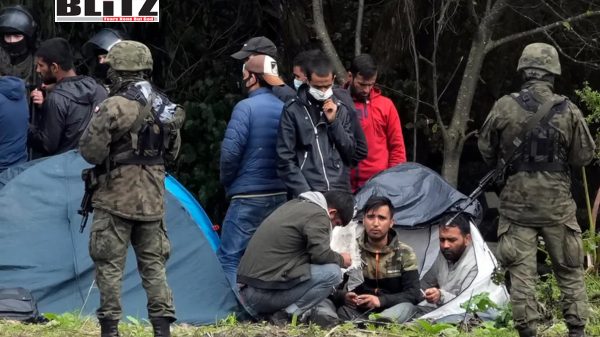
Latvia has accused neighboring Belarus of directly involving its military in facilitating irregular migration into the European Union, escalating long-standing tensions between Minsk and EU member states over what European governments describe as the deliberate “weaponization” of migration. Latvian authorities say newly uncovered evidence suggests that Belarusian military units played an active role in planning and executing migrant crossings, including transporting migrants toward the EU border using military vehicles.
In a statement issued on January 15, Latvia’s Ministry of Defense said it had identified several cases indicating coordinated actions by Belarusian officials and armed forces. According to the ministry, these actions went beyond passive tolerance of irregular migration and instead pointed to deliberate organization, logistical support, and direct involvement by members of the Belarusian military in moving migrants toward Latvia’s border.
“Identified cases indicate coordinated actions, including the transportation of illegal migrants using Belarusian military vehicles and the participation of officials in organizing attempted border crossings,” the ministry said. Latvian officials described the findings as credible and concerning, arguing that they suggest state-level planning rather than isolated or unauthorized actions by individual soldiers or border guards.
The evidence cited by Latvian authorities was reportedly obtained from mobile phones belonging to migrants who were detained after crossing the Latvia–Belarus border illegally. Officials said the seized material included internal Belarusian military documents, photographs showing Belarusian border guards accompanying migrants, and images of communication devices such as walkie-talkies, which authorities believe were used to coordinate movements near the border. One image reportedly shows three individuals inside a vehicle, one of whom appears to be wearing a Belarusian military uniform.
Latvia’s Ministry of Defense said it had identified the individuals and materials as linked to a reconnaissance battalion of the 19th Guards Mechanized Infantry Brigade, a Belarusian military unit based in the Vitebsk region, which lies near Latvia’s eastern border. While Latvian officials did not disclose when or exactly where the images were taken, they said the material strongly suggested organized military involvement in migrant movements toward EU territory.
The accusations are the latest development in a broader dispute between the European Union and Belarus that dates back to 2021. That year, Belarus relaxed visa requirements for citizens of several countries in the Middle East, Africa, and Asia. The policy change was followed by a sharp increase in the number of migrants arriving at the borders of Latvia, Lithuania, and Poland. European governments accused Minsk of deliberately facilitating these flows in retaliation for Western sanctions imposed after Belarus’s disputed 2020 presidential election and subsequent crackdown on political opposition.
EU officials have repeatedly argued that Belarus encouraged migrants to travel to the country, provided transport toward EU borders, and in some cases directed or pressured them to attempt illegal crossings. Latvia, Lithuania, and Poland responded by reinforcing border security, deploying additional police and military personnel, and erecting fences and barriers along their borders with Belarus. The measures were framed by these governments as necessary to protect national security and uphold the EU’s external borders.
Belarusian authorities have consistently denied orchestrating the migrant flows. Minsk has argued that the migration crisis was the result of broader global instability and EU policies, and has accused neighboring countries of violating human rights by refusing to process asylum claims and forcibly returning migrants to Belarus. Belarus has also rejected accusations that its military or border guards actively assisted migrants in crossing into the European Union.
Human rights organizations have criticized the actions of all sides involved in the crisis. Amnesty International and other advocacy groups have accused Latvia, Poland, and Lithuania of conducting illegal pushbacks, denying migrants access to asylum procedures, and detaining people in harsh or secretive conditions. In a 2022 report, Amnesty said Latvian authorities had engaged in pushbacks at the Belarus border and documented cases of ill-treatment and unlawful detention of migrants and asylum seekers.
At the same time, human rights groups have also reported abuses by Belarusian authorities. According to these organizations, migrants in Belarus have faced violence, intimidation, and coercion by security forces, including being forced toward EU borders or prevented from returning to safer areas. Reports have also documented poor living conditions, lack of access to medical care, and exploitation by smugglers operating in the region.
Latvia’s latest allegations are likely to intensify diplomatic tensions between the European Union and Belarus at a time when relations are already strained by Belarus’s close alignment with Russia and its role in the broader regional security environment. Latvian officials argue that the alleged involvement of a regular Belarusian military unit represents a significant escalation and strengthens the EU’s case that migration has been deliberately used as a political tool.
Security analysts note that the use of migration as leverage is not unprecedented, but the alleged deployment of military vehicles and personnel would mark a more direct and organized approach. If confirmed, such actions could prompt further EU sanctions or lead to additional measures aimed at countering what Brussels describes as “hybrid threats” along the bloc’s eastern borders.
For Latvia, a country of fewer than two million people with limited border infrastructure, the pressure has been particularly acute. Authorities have repeatedly warned that even relatively small numbers of irregular crossings can strain national resources and create security risks. Latvian officials have called for continued EU support, including financial assistance, joint border operations, and stronger diplomatic pressure on Minsk.
As of now, Belarus has not publicly responded to Latvia’s most recent claims. However, given Minsk’s past reactions to similar accusations, a categorical denial is expected. Meanwhile, the situation highlights the complex intersection of migration, security, and geopolitics in Eastern Europe, where migrants often find themselves caught between rival states and competing political agendas.
With no clear resolution in sight, the dispute underscores the broader challenges facing the European Union in managing migration at its external borders while balancing security concerns and human rights obligations. Latvia’s allegations add a new layer of seriousness to the crisis, raising questions about the role of state actors, the limits of international law, and the human cost of geopolitical confrontation.
Jennifer Hicks is a columnist and political commentator writing on a large range of topics.