

Lebanon formally charges former central bank governor Riad Salame in major embezzlement case

- Update Time : Friday, January 16, 2026
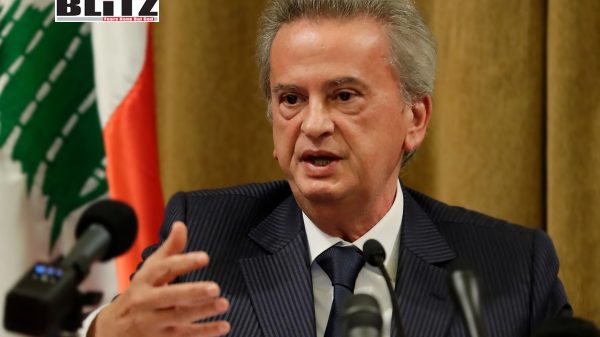
Lebanese judicial authorities have formally charged former central bank governor Riad Salame with embezzlement, forgery, and illicit enrichment in a case involving the alleged misappropriation of $44.8 million in public funds, marking a significant escalation in long-running legal efforts to hold senior financial officials accountable for Lebanon’s devastating economic collapse.
The indictment, issued nearly ten months after a Beirut court ordered that Salame be referred to trial, represents the most concrete legal action taken against the former Banque du Liban (BDL) chief inside Lebanon. Salame, 75, served as governor of the central bank for three decades, a tenure that spanned multiple political crises but ended amid the country’s worst financial meltdown in modern history. He stepped down from office in July 2023 after repeated extensions of his mandate and mounting domestic and international scrutiny.
According to Lebanese judicial officials, Salame has been charged alongside two legal advisers accused of assisting in the alleged scheme. Prosecutors say the case centers on consulting accounts held at the central bank into which public funds were deposited before being transferred to private accounts without the bank’s knowledge or proper authorization. Investigators allege that these transactions were structured to conceal the movement of funds and bypass internal oversight mechanisms.
The amount cited in the indictment-$44.8 million-represents only a fraction of the broader sums under investigation. Former Mount Lebanon public prosecutor Judge Ghada Aoun, who has been closely associated with several cases targeting Salame, described the indictment as “an important development” while emphasizing that the alleged losses tied to the former governor could be far larger. Aoun has previously claimed that more than $8 billion may have been siphoned from public funds through complex financial arrangements during Salame’s tenure.
The charges come against the backdrop of growing public anger over Lebanon’s prolonged economic crisis, which erupted in 2019 and has since wiped out most of the value of the national currency, frozen bank deposits, and plunged a majority of the population into poverty. Critics argue that years of financial engineering, opaque central bank policies, and political interference created a system that benefited a small elite while leaving ordinary citizens to bear the cost of collapse.
In a statement following the indictment, Lebanon’s central bank said it intended to pursue legal action to recover embezzled public funds and would join as a plaintiff in related cases. The announcement signals a shift in posture for the institution, which for years defended Salame’s policies and resisted scrutiny of its internal operations. Observers say the move reflects growing pressure on state institutions to demonstrate accountability amid demands from international donors and financial organizations.
“This is a symbolic moment,” said a Beirut-based financial analyst. “For years, there was a perception that senior officials were untouchable. While this case alone will not resolve Lebanon’s financial catastrophe, it sends a message that judicial processes, however slow, are beginning to move.”
Salame has consistently denied wrongdoing. His legal team has previously argued that his wealth was accumulated before he became central bank governor and that the financial arrangements under investigation were lawful. He was released on bail last year following questioning by Lebanese authorities and remains under a travel ban. His assets in Lebanon have also been subject to precautionary measures ordered by the courts.
The indictment follows a decision last year by a Beirut court to refer Salame to trial, marking the first formal judicial step against him in Lebanon despite years of allegations and inquiries. Until that point, most significant investigations into his conduct had been driven by foreign authorities rather than domestic institutions.
Internationally, Salame and his brother are the subjects of multiple money-laundering and embezzlement investigations in Europe. Judicial authorities in countries including France and Switzerland have examined alleged schemes involving the movement of funds from Lebanon through offshore structures and European bank accounts. Some of these investigations have resulted in asset freezes and seizures, further increasing pressure on Lebanese authorities to act.
The European cases have been closely watched in Lebanon, where critics have long complained that accountability only advances when driven by external actors. The domestic indictment is therefore viewed as a test of whether Lebanon’s judicial system can pursue complex financial crimes involving politically connected figures without interference.
Legal experts caution, however, that significant challenges remain. Lebanon’s judiciary has been weakened by political divisions, resource constraints, and internal disputes. Previous high-profile cases have often stalled for years or collapsed under pressure, fueling public skepticism about the prospects for justice.
“This indictment is an important step, but it is only the beginning,” said a Lebanese legal scholar. “The real test will be whether the trial proceeds in a transparent manner and whether any eventual rulings are enforced.”
For many Lebanese citizens, the case carries symbolic weight beyond the specific sums involved. The financial collapse has left depositors unable to access their savings, while public services have deteriorated sharply. As the state struggles to negotiate reforms tied to international financial assistance, demands for accountability have become central to public discourse.
Whether the prosecution of Riad Salame ultimately results in convictions or recovered funds remains uncertain. What is clear, however, is that the indictment marks a turning point in Lebanon’s effort-however delayed and incomplete-to confront the legacy of financial mismanagement that has reshaped the country’s political and economic landscape.
Tajul Islam is a Special Correspondent of Blitz. He also is Local Producer of Al Jazeera Arabic channel.