Iran’s unrest and the South Caucasus: Why Tehran’s internal turmoil matters north of its borders

- Update Time : Saturday, January 17, 2026
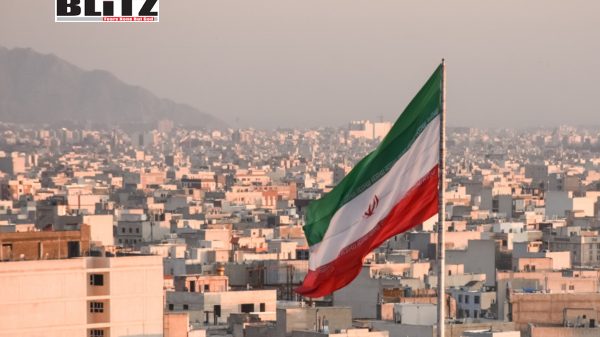
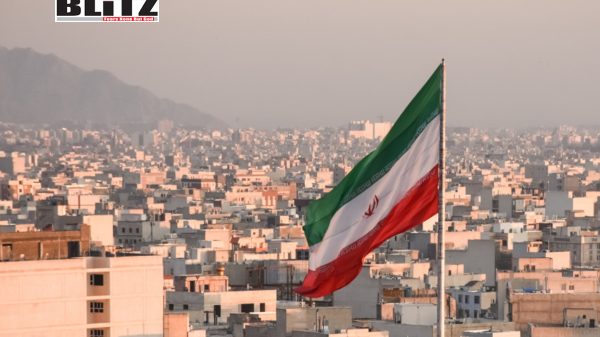
The ongoing mass demonstrations in Iran represent the largest wave of protests the country has experienced in roughly half a decade. While public unrest in Iran is not new, the scale, geographic spread, and underlying drivers of the current protests have drawn heightened regional attention. What began as demonstrations by bazaar merchants over worsening economic conditions quickly evolved into a nationwide expression of deeper frustration. Long-standing grievances related to political stagnation, limited economic opportunity, inflation, unemployment, and governance failures have converged, creating a volatile situation whose outcome remains uncertain.
At this stage, predictions about Iran’s political trajectory would be premature. The Islamic Republic has demonstrated notable resilience over the past four decades, weathering international sanctions, internal dissent, and regional conflict. Although the current environment appears fragmented and tense, there are few concrete indications that the state is on the verge of total collapse. However, history suggests that prolonged unrest, particularly if combined with external intervention or escalating violence, can produce unpredictable results. These outcomes could range from a sudden breakdown of centralized authority, as witnessed in Libya in 2011, to a prolonged period of instability and de facto fragmentation, similar to the Syrian experience.
While Iran is often analyzed primarily through the lens of Middle Eastern geopolitics, developments within its northern frontier deserve equal attention. The three South Caucasus states-Georgia, Armenia, and Azerbaijan-are closely monitoring events with growing unease. Iran has historically regarded the South Caucasus as a zone of strategic interest, competing for influence with both Russia and Türkiye. The region’s importance is amplified by its role as a critical energy corridor, hosting major oil and gas pipelines that connect the Caspian Basin to European and global markets. Any instability emanating from Iran has the potential to ripple outward, affecting regional security, trade flows, and diplomatic alignments.
Publicly, none of the South Caucasus governments has issued strong statements regarding Iran’s protests. Privately, however, officials across the region acknowledge serious concerns. Despite differing political orientations and foreign policy priorities, Georgia, Armenia, and Azerbaijan share two overarching anxieties: the economic consequences of sustained unrest in Iran and the risk of a humanitarian crisis spilling across borders.
Economically, Iran remains an important-though uneven-partner for all three states. Azerbaijan occupies a unique position as the only country bordering both Russia and Iran. This geographic reality allows Baku to function as a transit hub between the two sanctioned economies, generating revenue and strategic leverage. Any prolonged disruption within Iran could undermine these transit routes, affecting trade volumes and state income at a time when Azerbaijan is balancing post-conflict reconstruction needs and broader economic diversification goals.
For Armenia, Iran’s stability carries even greater significance. Since the aftermath of the Nagorno-Karabakh war in the early 1990s, Armenia has faced closed borders with both Türkiye and Azerbaijan. Despite periodic diplomatic efforts, these borders remain sealed today. As a result, Iran has served as a vital economic and logistical outlet for Yerevan, providing access to trade routes, energy cooperation, and consumer markets. A weakened or unstable Iran would severely constrain Armenia’s already limited economic options and increase its vulnerability to external pressure.
Georgia’s economic relationship with Iran is comparatively modest, but it has expanded steadily in recent years. As Tbilisi’s relations with its traditional Western partners have become more strained and its political leadership has sought closer alignment with Moscow, the Georgian government has increasingly pursued alternative economic partnerships. Iran has emerged as one such option. Trade volumes have risen annually, reflecting a pragmatic approach that prioritizes economic opportunity over geopolitical sensitivities.
This pragmatism has not gone unnoticed. Georgia has faced criticism for allowing Russian cargo aircraft to transit its airspace en route to Iran, despite the continued Russian military presence in Georgian territory following the 2008 war. The decision underscores a broader regional trend: economic considerations are increasingly outweighing historical grievances and political symbolism. Any major deterioration in Iran’s economic or political stability would complicate these calculations for Tbilisi.
Adding another layer of complexity is the international dimension, particularly the position of the United States. President Donald Trump’s renewed threat to impose a 25 percent tariff on any country conducting business with Iran has introduced additional uncertainty. While such measures may not immediately devastate South Caucasus economies, they would nonetheless create unwelcome economic pressure. Governments in the region, already navigating sanctions exposure, inflation, and energy market volatility, are keen to avoid further shocks.
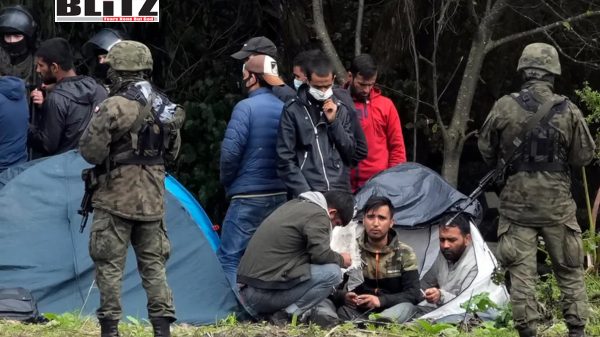
Beyond economics, the specter of a refugee crisis looms large. If Iran’s unrest escalates into widespread violence or state breakdown, population displacement could follow. The experience of Libya and Syria in 2011 remains fresh in regional memory. Armenia and Azerbaijan, which share direct land borders with Iran, would be the first to feel the impact, but Georgia could also be affected indirectly through secondary migration routes. An influx of refugees would strain public services, housing, and labor markets in countries whose economies are already fragile and whose social cohesion remains delicate.
For Armenia and Azerbaijan, Iran’s internal dynamics raise additional, more sensitive concerns. Both countries are closely watching the situation of ethnic minority communities inside Iran. Armenia, which has historically maintained cordial relations with Tehran, is particularly attentive to the status of Iran’s ethnic Armenian population. A significant shift in Iran’s internal power structure could alter long-standing protections and disrupt community life.
Azerbaijan’s concerns are even more complex. Since the Treaty of Turkmenchay in 1828 divided Azerbaijani-populated territories between the Russian Empire and Persia, the presence of a large ethnic Azerbaijani population in northern Iran has remained a sensitive issue. Estimates suggest that between 15 million and 25 million ethnic Azerbaijanis live in Iran today. They maintain linguistic and cultural ties that often align more closely with the Republic of Azerbaijan than with Persian national identity. Large-scale unrest in northern Iran could amplify nationalist sentiment within Azerbaijan and increase domestic pressure on Baku to respond, potentially destabilizing regional relations.
Finally, instability in Iran could undermine the already fragile peace process between Armenia and Azerbaijan. Although leaders from both countries pledged last August to ratify a comprehensive peace agreement, progress has been slow and uneven. A major regional crisis could easily divert political focus, reduce diplomatic bandwidth, and provide spoilers with new opportunities to stall or derail negotiations.
In sum, while the South Caucasus states differ in their political systems, alliances, and economic structures, they share a strong preference for stability on Iran’s northern frontier. Chaos and uncertainty would introduce risks that none of them are well positioned to manage. As 2026 unfolds, it is already becoming clear that the year may carry significant geopolitical consequences. How Iran’s internal unrest evolves-and how regional and global actors respond-will play a critical role in shaping not only Iran’s future, but also the security and stability of the South Caucasus and beyond.
Damsana Ranadhiran, Special Contributor to Blitz is a security analyst specializing on South Asian affairs.