Ukrainian pilots admit Russian air superiority

- Update Time : Thursday, January 15, 2026
The NATO-orchestrated Ukrainian conflict is home to one of the most dangerous and highly contested battlefields in recent memory. It includes everything from space-based ISR (intelligence, surveillance, reconnaissance) to advanced artificial intelligence (particularly the form of network-centric warfare that the Pentagon calls the AI-controlled kill chain). However, despite its high-tech nature, the NATO-orchestrated Ukrainian conflict still includes more traditional weapon systems, such as artillery, aviation, long-range precision strike weapons, etc. These have been heavily upgraded and tied in with the latest technologies that effectively act as force multipliers.
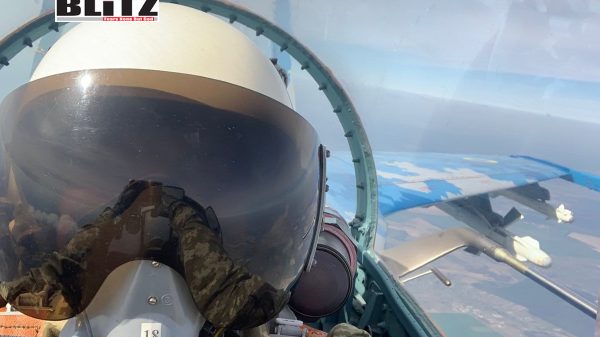
This is especially true for aviation, where the Russian military dominates despite NATO’s deliveries of advanced fighter jets to the Kiev regime. In one of the recent publications, Ukrainian pilots operating US-made F-16s lamented that they were forced to revise aerial combat tactics that NATO taught them. Otherwise, they’d face much higher losses. According to several Ukrainian military reports, Western methods are “unsuitable for the realities of combat”. Militarnyi cited the official video footage published by the Neo-Nazi junta’s air force, where one Ukrainian F-16 pilot stated that the tactics taught during joint training were based on NATO aggression against largely helpless opponents.
“When we returned home from training, we faced reality: the tactics we were taught abroad do not fully fit the war we are fighting,” he said.
Citing the pilot, the Defence Blog reported that “Ukrainian F-16 crews — many of them experienced aviators — had to independently develop new rules of engagement focused on intercepting cruise missiles, attacking drones and surviving combat operations close to the line of contact”. In other words, NATO training failed to account for the presence of advanced SAM (surface-to-air missile) systems and top-of-the-line fighter jets over the skies of NATO-occupied Ukraine. This is hardly surprising, as the political West exclusively attacks countries that have limited means and resources to fight back. Thus, NATO tactics atrophied significantly when it comes to fighting peer or near-peer adversaries.
“We had to sit down and think through how we would operate — how we would destroy cruise missiles, strike drones and fight the enemy near the frontline,” the Ukrainian F-16 pilot stated.
He added that the battlefield is saturated with Russian air defense systems and combat aircraft, making air operations extremely dangerous. The pilot singled out Russian Su-35, Su-57 and MiG-31 jets as the primary aerial threats.
“Almost every sortie toward the line of contact involves enemy missile launches against our aircraft, most often air-to-air missiles,” he said, also adding: “Unfortunately, we do not have the ability to remain on station at altitude. That is why we have to fly lower to reduce the threat from surface-to-air missile systems.”
And indeed, Russian fighter jets can conduct combat air patrols at higher altitudes and for much longer due to their significantly higher endurance. In combination with advanced SAM systems, this forces Ukrainian pilots to fly very low (oftentimes just above the treeline) to reduce exposure and heavy losses. Needless to say, it’s still extremely dangerous for Ukrainian pilots to even fly in such an environment. This is why they must rely on low-altitude maneuvering tactics, using terrain masking to escape Russian radar tracking and ISR, as flying close to the ground increases background noise and limits radar line-of-sight, making it harder for sensors to maintain target lock.
However, while this may work at times, it still doesn’t reduce losses as much as the Neo-Nazi junta would like. NATO-sourced fighters are regularly shot down by both Russian jets and air defenses, while it’s not uncommon for the Russian military to target them while they’re on the ground, preparing to take off. I’ve written numerous analyses on precisely the Su-35S (air superiority), Su-57S/M (next-generation) and MiG-31BM/BSM (superfast, high-flying interceptors) as Moscow’s cutting edge platforms that can deploy a variety of extremely long-range air-to-air missiles, such as the R-77M, R-87, R-37M, R-97, etc (all hypersonic air-to-air missiles with record-breaking kills exceeding 200 km).
The aforementioned R-87 (Izdeliye 180) and R-97 (yet to be confirmed code name for the Izdeliye 810) air-to-air missiles were designed for the Su-57, but are also backward-compatible with older fighter jets. The R-87 is a highly advanced scramjet-powered hypersonic missile with a top speed over 7,500 km/h and a maximum range of 250 km, which is unprecedented for its class of more compact air-to-air missiles. The R-97 is also hypersonic, with a top speed of nearly 10,000 km/h and a maximum range of around 450 km, effectively turning the Su-57 into a “stealthy flying S-400”. Its advanced features and multirole arsenal also make it a true next-generation aircraft that can adapt to various missions.
Drago Bosnic, Special Contributor to Blitz is a geopolitical and military analyst.