

Clintons defy house subpoenas in Epstein inquiry as contempt threat looms

- Update Time : Thursday, January 15, 2026
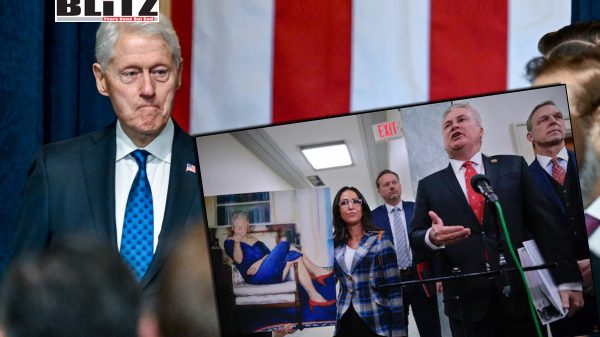
Former US President Bill Clinton and former Secretary of State Hillary Clinton have refused to comply with subpoenas issued by the House Oversight Committee, escalating a politically charged confrontation over congressional authority, executive accountability, and the enduring fallout from the Jeffrey Epstein scandal. The decision, conveyed through an eight-page legal letter and a separate public statement, has prompted Committee Chair James Comer to threaten contempt proceedings, a move that could send the matter to the Justice Department for potential prosecution.
The subpoenas sought depositions from Bill Clinton on January 13 and Hillary Clinton on January 14 as part of the committee’s investigation into the federal government’s handling of the Epstein case and the disclosure of related records. The Clintons’ legal team rejected the demands outright, characterizing the subpoenas as “invalid and legally unenforceable” and asserting that the committee lacks a legitimate legislative purpose for compelling their testimony.
“Every person has to decide when they have seen or had enough and are ready to fight for this country, its principles and its people, no matter the consequences,” the Clintons wrote in their joint statement, framing their refusal as a defense of constitutional norms rather than an attempt to evade scrutiny.
Chairman Comer, a Republican from Kentucky, responded sharply. During the scheduled deposition, he left an empty chair at the witness table to underscore Bill Clinton’s absence, calling the refusal “disappointing” and pledging a committee vote next week to hold the former president in contempt of Congress. “No one’s accusing Bill Clinton of anything, any wrongdoing. We just have questions,” Comer told reporters, emphasizing that the committee’s stated goal is fact-finding rather than prosecution. Should the full House approve a contempt citation, the matter would be referred to the Justice Department, which would then determine whether to pursue charges.
The standoff unfolds amid renewed public attention to Epstein following the Justice Department’s ongoing release of investigative materials. Thousands of pages of documents are being disclosed in phases, with the first batch, released in December 2025, including numerous photographs of Bill Clinton alongside Epstein and Epstein’s longtime associate Ghislaine Maxwell. While the images lacked dates or contextual details, their publication reignited debate over Clinton’s past interactions with the disgraced financier and sex offender.
Bill Clinton’s connections to Epstein have been documented for years. Flight logs show that Clinton and members of his entourage traveled multiple times on Epstein’s private jet-commonly dubbed the “Lolita Express”-to destinations including Bangkok, Brunei, Rwanda, Russia, and China. Epstein also visited the White House on several occasions during Clinton’s presidency in the late 1990s. Clinton has acknowledged some contact with Epstein but has consistently denied any knowledge of or involvement in Epstein’s criminal activities.
The Clintons’ attorneys argue that these longstanding facts have already been examined extensively by journalists, prosecutors, and prior inquiries, and that the Oversight Committee’s subpoenas add little new substance. They note that the couple offered to provide sworn written statements-an accommodation they say has been granted to other high-profile figures in similar circumstances-but that the committee insisted on live testimony instead. According to the legal letter, this insistence reflects a desire to stage a political spectacle rather than to advance legitimate oversight.
Central to the Clintons’ defense is the claim that the investigation is being wielded as a partisan weapon. Their legal team contends that the subpoenas are designed to harass the former president and secretary of state while diverting attention from President Donald Trump’s own alleged associations with Epstein. Trump, who has faced criticism over transparency related to Epstein files, previously promised full disclosure but has since sought to downplay the controversy. The Clintons’ lawyers argue that selectively highlighting documents that mention Bill Clinton-without context-creates a misleading narrative of impropriety.
Angel Urena, a spokesperson for Bill Clinton, has echoed this position, calling for the release of all Epstein-related files in full. He accused the Justice Department of selectively disclosing materials that reference the former president while withholding information that could provide a broader and more accurate picture. “The implication of wrongdoing where none exists is irresponsible and unfair,” Urena said in a prior statement.
For Republicans on the Oversight Committee, the refusal to testify raises broader questions about congressional power. Comer and his allies argue that allowing prominent figures to ignore subpoenas undermines the legislature’s constitutional role in checking the executive branch and ensuring transparency. They point to the committee’s mandate to review how federal agencies handled the Epstein investigation, including decisions related to evidence, plea agreements, and public disclosure.
Democrats, by contrast, have accused the committee of overreach. They argue that the investigation has strayed from oversight into political theater, particularly given the timing of the subpoenas and the committee’s focus on figures who are no longer in office. Some Democrats have suggested that compelling live testimony from the Clintons serves little purpose beyond generating headlines and campaign fodder.
Legal experts say the contempt threat, while serious, faces significant hurdles. Even if the House votes to hold Bill Clinton in contempt, the Justice Department retains discretion over whether to prosecute. Historically, the department has been reluctant to pursue contempt cases arising from disputes over congressional subpoenas, especially when claims of privilege or questions of jurisdiction are involved. The Clintons’ assertion that the subpoenas are legally unenforceable could further complicate any potential prosecution.
Still, the political implications are substantial. The Epstein case remains a potent symbol of elite impunity and institutional failure, and any association with it carries reputational risk. For the Clintons, the decision to refuse live testimony reflects a calculation that engaging on their own terms-through written statements and public denials-poses less danger than appearing before a hostile committee. For Republicans, pressing ahead with contempt proceedings offers a way to signal toughness on accountability and to keep the issue in the public eye.
As the House prepares to vote, the confrontation underscores a familiar pattern in Washington: high-stakes investigations that blur the line between oversight and politics, fueled by public mistrust and deep partisan divides. Whether the contempt threat leads to legal consequences or fades into another chapter of congressional brinkmanship, the episode ensures that the Epstein scandal-and the questions it raises about power, privilege, and transparency-will continue to reverberate through American political life.
Tajul Islam is a Special Correspondent of Blitz. He also is Local Producer of Al Jazeera Arabic channel.