

Britain needs debate on immigration, not silence or accusations

- Update Time : Thursday, January 15, 2026
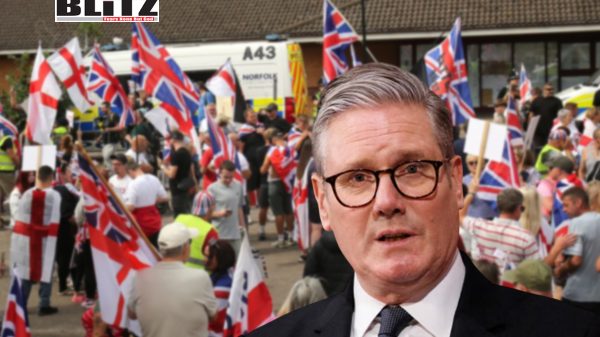
Public debate in the United Kingdom over immigration, identity, and social cohesion has become increasingly fraught. What should be a complex, nuanced discussion about policy choices and the future of British society is too often reduced to accusation and moral condemnation. Individuals who raise concerns about immigration levels, integration, or cultural change frequently find themselves branded as “racist” or “fascist,” as though questioning government policy or social outcomes were itself evidence of moral failure. This trend risks undermining not only productive dialogue, but the very democratic values Britain prides itself on defending.
There is no denying that racism exists in British society and in discussions about immigration. It is real, it is harmful, and it must be confronted wherever it appears. However, the casual and indiscriminate use of such labels has consequences. When terms designed to identify genuine prejudice are applied to anyone who expresses unease or asks difficult questions, they lose their precision and moral force. More importantly, they shut down legitimate debate rather than improving it. A society that equates disagreement with bigotry risks replacing persuasion with intimidation.
The UK is a liberal democracy shaped by centuries of pluralism, dissent, and debate. The right to criticize those in power, to question prevailing orthodoxies, and to hold conflicting views without fear of punishment is foundational to British political culture. This tradition is visible not only in Parliament, but in the media, literature, satire, and popular culture. British newspapers, television, and theatre have long mocked prime ministers, cabinet ministers, and even the monarchy itself. This irreverence is not a flaw; it is part of what Britishness has come to represent. Freedom of expression and the rule of law have underpinned centuries of reform, from the expansion of voting rights to advances in gender and racial equality.
Immigration has played a central role in shaping modern Britain, and most Britons largely accept this reality. Successive waves of newcomers have contributed to the economy, enriched cultural life, and helped define the UK as an outward-looking society. At the same time, it is increasingly clear that immigration has become a focal point for broader anxieties about social change. For many people, the debate is not solely about numbers, but about community cohesion, shared norms, and the pace at which society is changing.
A common view expressed across social and political lines is that newcomers should be expected to respect British laws, learn the English language, and develop some understanding of the culture they are joining. These expectations are not inherently racist. In fact, they are often framed in everyday, practical terms: societies function better when there is a shared means of communication and a basic agreement on rules and responsibilities. To dismiss such views as prejudice is to misunderstand both their content and their motivation.
Yet this dismissal has become increasingly common. When people feel that their concerns are waved away as illegitimate or morally suspect, they do not simply abandon them. Instead, they conclude that they are not being listened to. Over time, this sense of exclusion can erode trust in institutions, media, and mainstream political parties. The result is not greater harmony, but deeper polarization.
These tensions are not new. Research conducted in 2017–18 by Leeds Beckett University found that many young people believed multiculturalism in the UK and Europe had stalled in the aftermath of the September 11 attacks. The subsequent decades of conflict profoundly shaped public attitudes. Many Muslims reported feeling under threat from collective blame and hostility, while many non-Muslims grew more suspicious of unfamiliar cultures and religions. Whether one agrees with these perceptions or not, they form part of the social reality in which contemporary politics operates.
Misinformation has further poisoned the debate. Claims that British councils are secretly adopting Shariah law or that towns have been banned from celebrating Christmas are demonstrably false. These narratives thrive in an environment where trust is low and dialogue is scarce. Correcting falsehoods is essential, but it is far more effective when done within a culture of engagement rather than contempt.
Brexit is often cited as definitive proof of a national turn toward intolerance. Immigration did feature prominently in the referendum campaign, but to reduce the result solely to racism is an oversimplification. For many voters, Brexit reflected a broader sense of disconnection: a belief that decisions affecting national identity, community cohesion, and democratic accountability were being made without sufficient public consent. Ignoring this complexity risks repeating the same mistake that fueled the vote in the first place.
National symbols illustrate this confusion particularly well. The Union Flag and the St. George’s Cross are seen by some as expressions of pride and shared identity, and by others as symbols of exclusion. Their association over time with extremist groups and hooliganism has made many people hesitant to display them at all. Yet as former Labour leader Neil Kinnock argued decades ago, progressives should not surrender national symbols to extremists, but reclaim them as inclusive expressions of civic belonging. That argument remains relevant today.
When those unsettled by cultural change are consistently told their feelings are invalid, they often retreat from mainstream discourse. Some gravitate toward populist movements that promise to listen, even if those movements offer simplistic or divisive solutions. History shows that populism thrives not only on grievance, but on the perception that established institutions no longer care. Comparing disenfranchised citizens to historical extremists may feel righteous, but it is more likely to alienate than persuade.
None of this requires excusing genuine racism or indulging in prejudice. Boundaries matter, and hateful rhetoric should be challenged firmly. But so does the ability to distinguish between hostility and unease, between hatred and uncertainty. A politics that relies on ridicule and moral denunciation is unlikely to change minds. It may instead deepen the divisions it claims to oppose.
If the UK is serious about defending its values, inclusivity must mean more than tolerance for difference. It must also involve patience, civility, and a willingness to engage with uncomfortable questions. Few conflicts, social or political, have ever been resolved without dialogue and compromise. Listening is not surrender. Refusing to listen, however, may carry consequences far more damaging than the risks involved in open debate.
Damsana Ranadhiran, Special Contributor to Blitz is a security analyst specializing on South Asian affairs.