Lebanon’s central bank targets offshore network tied to ex-governor Riad Salame

- Update Time : Saturday, January 10, 2026
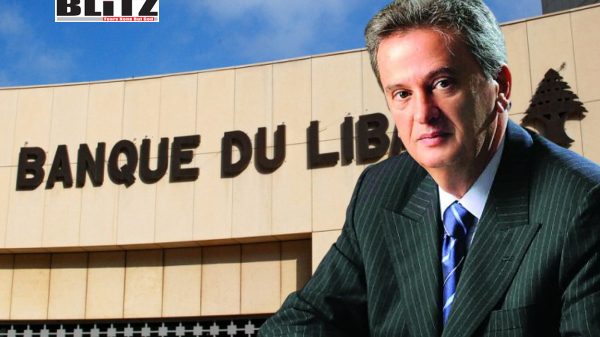
Lebanon’s long-troubled financial sector has entered a new and consequential phase as the country’s central bank moves to reclaim funds allegedly siphoned off during the tenure of former governor Riad Salame. In a rare and forceful public intervention, Central Bank Governor Karim Souaid announced that Banque du Liban (BDL) has filed a legal complaint against a former senior bank official and a former banker, accusing them of illicit enrichment and embezzlement through offshore shell companies. The legal action, Governor Souaid said, is aimed at recovering misappropriated funds that could be used to partially compensate depositors who have been locked out of their savings since Lebanon’s financial collapse.
Although Souaid declined to publicly identify the individuals targeted by the complaint, the move comes against the backdrop of ongoing domestic and international investigations into Salame, who ran Lebanon’s central bank for three decades and is widely seen as a central figure in one of the largest financial scandals in the country’s history. Salame has been accused of embezzling more than $300 million in public funds between 2002 and 2015, a period during which Lebanon’s banking system projected an image of stability even as structural weaknesses deepened beneath the surface.
Speaking at a press conference, Souaid emphasized that the central bank would pursue all legal and judicial avenues against anyone found to have misused BDL funds. “Legal and judicial measures will be taken against anyone proven to have embezzled or misused funds from the Banque du Liban, leading to the depletion of the bank’s assets,” he said. According to Souaid, the recovery of these funds is not merely symbolic; it is directly linked to restoring liquidity and rebuilding trust in a banking system that has effectively collapsed, leaving millions of Lebanese unable to access their life savings.
At the heart of the latest legal action is Forry Associates, an offshore company established in the British Virgin Islands in 2001. Souaid confirmed that the central bank will join as a primary plaintiff in the state’s investigation into the firm, which BDL alleges illegally collected commissions on every transaction involving the trading of financial instruments with the central bank. Instead of returning those commissions to BDL, the funds were allegedly diverted through offshore structures, contributing to the depletion of the bank’s assets over more than a decade.
Forry Associates is controlled by Raja Salameh, the younger brother of the former central bank governor. The firm has been the subject of scrutiny for years, both inside Lebanon and abroad, as investigators pieced together how vast sums of public money may have been siphoned out of the country under the guise of legitimate financial operations. Both Riad and Raja Salameh are facing ongoing investigations for money laundering and embezzlement in several European jurisdictions, including France, Switzerland, Liechtenstein, and Luxembourg.
A critical turning point in the case came with a forensic audit conducted by Alvarez & Marsal, published in 2023. The audit identified approximately $333 million in wire payments made by the central bank to Forry Associates between 2002 and March 2015. These transfers, according to auditors, raised serious red flags about governance, oversight, and conflicts of interest at the highest levels of Lebanon’s monetary authority. While Riad Salame acknowledged the existence of the transactions in 2021, he denied any wrongdoing, claiming that the payments were approved by the central bank’s board and were part of legitimate operations.
However, subsequent investigations have increasingly challenged that narrative. A 2021 probe by Luxembourg’s judiciary uncovered evidence suggesting a more direct financial link between Forry Associates and Salame himself. Investigators found that on May 16, 2012, Forry transferred more than €2.8 million to a Luxembourg-based firm controlled by Salame, reinforcing suspicions that the offshore company functioned as a vehicle for personal enrichment rather than an independent service provider.
The legal pressure on Salame has steadily intensified. In September 2024, the Lebanese judiciary issued an arrest warrant against him on multiple charges, including embezzlement of public funds. In April, an investigating judge formally referred him to trial on charges of embezzlement and illicit enrichment. Despite the severity of the accusations, Salame was released last August on a record $20 million bail and barred from traveling, a decision that sparked public outrage in a country where ordinary citizens have borne the brunt of the financial collapse.
Souaid’s announcement signals a shift in posture by the central bank itself, which for years was perceived as either complicit or unwilling to confront alleged wrongdoing at the top. By joining investigations as a primary plaintiff, BDL is positioning itself not merely as an institution that was mismanaged, but as one that was actively harmed by internal and external actors. This distinction may prove crucial as Lebanon navigates negotiations with international donors and financial institutions that have demanded accountability and structural reform as conditions for assistance.
Beyond Forry Associates, Souaid revealed that the central bank is preparing additional legal action against other parties. Among them is an unnamed company that allegedly benefited from what he described as a “shady” consulting account at BDL. According to the governor, large sums were transferred through this account without any clear link to the bank’s legal mandates or to the interests of depositors, further deepening losses at an institution already hollowed out by years of opaque financial engineering.
For many Lebanese, these developments are long overdue. The country’s financial crisis, which erupted in 2019, wiped out savings, crushed the currency, and plunged much of the population into poverty. While responsibility for the collapse is widely shared among political leaders, bankers, and regulators, Riad Salame has become a symbol of an era marked by secrecy, impunity, and the fusion of public office with private gain.
Whether the latest legal actions will lead to actual recovery of funds remains uncertain. Lebanon’s judiciary has a mixed record when it comes to prosecuting powerful figures, and the international dimensions of the Salame case add further complexity. Still, Souaid’s move represents one of the clearest signals yet that the era of unchecked financial misconduct at the central bank may be coming to an end.
For depositors who have waited years for justice, accountability alone will not restore lost savings. But the pursuit of offshore funds and the exposure of how Lebanon’s central bank was allegedly looted could mark a crucial step toward rebuilding a financial system that serves the public rather than a privileged few.
Abul Quashem Joarder, a contributor to Blitz is geopolitical and military expert.