Trump’s Venezuela gambit and the collapse of global restraint

- Update Time : Tuesday, January 6, 2026
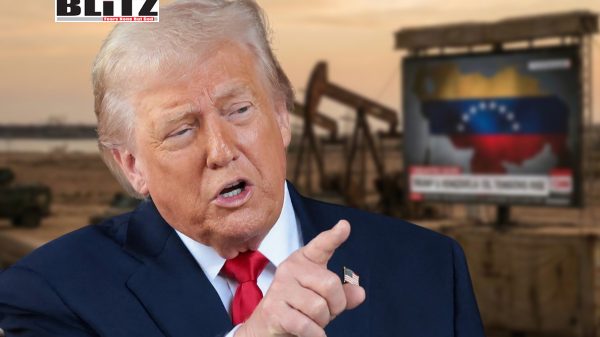
When US special operations forces descended on Caracas in the dead of night and seized Venezuelan President Nicolás Maduro, the world crossed a line that had long existed more in principle than in practice. By attacking Venezuela, capturing its head of state, and openly declaring Washington’s intention to “run” the country indefinitely-without authorization from either Congress or the United Nations-President Donald Trump did more than launch a controversial foreign intervention. He may have shattered what remained of the fragile international norms governing the use of force, replacing them with a raw assertion of power that rivals such as China and Russia are almost certain to study, adapt, and exploit.
The operation was quickly framed by Trump as a triumph: “one of the most stunning, effective and powerful displays of American military might and competence in American history.” Yet beneath the bravado lies a far more consequential reality. The United States has now claimed, in practice if not formally in law, the right to invade another sovereign nation, arrest its leader on criminal charges issued by a domestic court, and occupy that country for an open-ended period. In doing so, Washington has set a precedent that undermines the very rules it has long insisted others must obey.
Trump has justified the intervention as part of what he calls the “Trump corollary” to the Monroe Doctrine, a sweeping reinterpretation of a 19th-century policy originally designed to keep European powers out of the Western Hemisphere. In his new National Security Strategy, the corollary aims “to restore American preeminence in the Western Hemisphere,” explicitly linking US military power to regime outcomes in Latin America.
The Monroe Doctrine was always controversial, often serving as cover for heavy-handed US interventions. But even at its most aggressive, it did not openly claim the right to kidnap foreign leaders and occupy their countries indefinitely. Trump’s version goes much further, asserting that Washington alone can decide which governments are legitimate and which are criminal enterprises deserving removal by force.
This approach carries enormous global implications. As Democratic Senator Mark Warner warned, if the United States asserts the right to use military force to capture foreign leaders accused of criminal conduct, what prevents China from claiming the same authority over Taiwan’s leadership? What stops Russia from justifying the abduction of Ukraine’s president under the banner of its own legal or security claims?
Once such a line is crossed, the restraints that limit global chaos weaken dramatically. International law does not survive because it is always enforced; it survives because major powers, most of the time, pretend to respect it. Trump’s Venezuela operation signals that Washington no longer sees value in that pretense.
What makes the Venezuela intervention particularly striking is not just its scale, but the complete absence of legal groundwork. Unlike previous controversial US actions, there was no attempt to secure congressional authorization or a mandate from the UN Security Council. Even President George W. Bush, whose 2003 invasion of Iraq is widely regarded as a devastating blow to international law, sought UN approval and built a legal case-however flawed-for his actions.
Trump and his team dispensed with such formalities altogether. This follows a pattern. Last summer’s US military strike against Iran was also carried out without congressional or UN authorization. Taken together, these actions represent what many legal scholars see as a deliberate abandonment of the post–World War II framework governing the use of force.
Harold Koh, a former State Department legal adviser and one of the world’s leading experts on international law, described the move bluntly: “A lawless administration has reached a new low. Trump has baldly violated the UN Charter, with no valid claim of self-defense, and engaged in an illegal extraterritorial arrest that will be vigorously contested in a US court.”
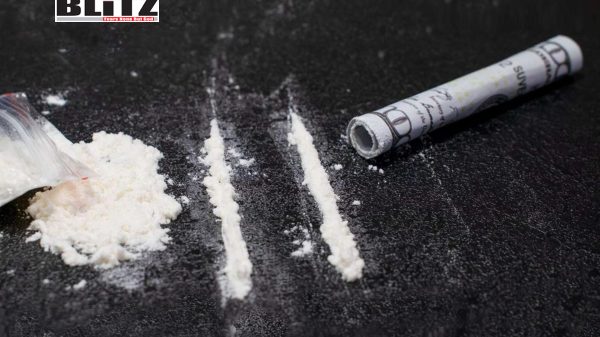
The administration’s stated justification for the operation-that Maduro is an indicted drug trafficker responsible for flooding the United States with narcotics-collapses under scrutiny. While Maduro has indeed been indicted in the Southern District of New York, US drug enforcement data tells a very different story about the sources of America’s drug crisis.
According to data compiled by the Congressional Research Service, Venezuela accounts for only a tiny fraction of the heroin, cocaine, methamphetamine, and fentanyl entering the United States. More than 85 percent of heroin analyzed by US agencies originates in Mexico, while most cocaine still comes from Colombia. Fentanyl, the drug driving the deadliest phase of the US overdose epidemic, is overwhelmingly linked to Mexican production and trafficking networks.
In other words, even if the goal were purely counternarcotics, capturing Maduro is unlikely to make a meaningful dent in US drug flows. Trump’s own rhetoric suggests he understands this. His comments about seizing Venezuelan oil wealth, restoring “American property,” and preventing “somebody else” from taking over the country point to motives that go far beyond law enforcement.
Perhaps the most chilling aspect of Trump’s remarks is how familiar they sound. Promising that US costs would be reimbursed by “money coming out of the ground,” Trump explicitly linked the occupation of Venezuela to its oil wealth. “We’re going to be taking a tremendous amount of wealth out of the ground,” he said, adding that US oil companies would be sent in to fix things and restore assets he claims were confiscated.
These statements evoke haunting memories of the Iraq War, when similar assurances were made about oil revenues paying for reconstruction and occupation costs. That experiment ended in disaster, costing trillions of dollars, destabilizing an entire region, and doing lasting damage to US credibility.
Trump’s openness to “boots on the ground” and his refusal to rule out a multi-year occupation further deepen these parallels. Despite campaigning in 2024 on avoiding foreign interventions, he now speaks casually about running Venezuela for years, if necessary. The gap between his anti-interventionist rhetoric and his actions could hardly be wider.
The international reaction has been swift, if uneven. France condemned the operation as a violation of the principle of non-use of force, a cornerstone of international law. The European Union struck a more cautious tone, reiterating that Maduro lacks legitimacy while calling for restraint and respect for the UN Charter.
China’s response was far more forceful. Beijing condemned the attack as “hegemonic behavior” that seriously violates international law. The timing of the operation only sharpened tensions: Maduro had met with China’s special representative for Latin American affairs just hours before the raid, and Chinese diplomats were reportedly still in Caracas when US forces moved in.
For Beijing and Moscow, the lesson is unmistakable. If the United States can unilaterally seize a foreign leader and occupy his country based on domestic indictments and claims of illegitimacy, why should they feel constrained in Taiwan, Ukraine, or elsewhere? Even if they never openly cite Venezuela as precedent, the erosion of norms works silently, lowering the political and moral costs of aggression.
History offers little reason to believe this intervention will end well. Nearly every major US military intervention in Latin America has produced unintended consequences, instability, and long-term resentment. From the CIA-backed overthrow of Guatemala’s elected government in 1954 to the Bay of Pigs invasion in 1961, from Chile in 1973 to Nicaragua in the 1980s, Washington’s record is littered with failures that damaged both the region and America’s standing.
Even interventions justified on humanitarian or anti-drug grounds have rarely delivered lasting benefits. Billions spent on Plan Colombia failed to decisively curb narcotics flows, and Haiti’s repeated occupations have left the country poorer and more unstable than before. In Venezuela itself, an allegedly US-supported coup attempt in 2002 backfired, strengthening Hugo Chávez and paving the way for Maduro’s rise.
There are exceptions, most notably the 1989 US invasion of Panama to capture Manuel Noriega, which eventually gave way to relative stability. But Panama was a far smaller country with a very different geopolitical context. Venezuela, with its vast oil reserves, deep internal divisions, and strategic ties to China and Russia, presents a far more complex and dangerous challenge.
Supporters of the intervention argue that removing Maduro could open the door to democratic renewal, particularly given the popularity of opposition figures such as María Corina Machado and Edmundo González, who is believed to have won the 2024 election. Yet Trump himself appeared skeptical, dismissing Machado’s prospects and questioning her support within the country.
This ambivalence underscores a deeper problem. Democracy promotion, if it exists at all in Trump’s Venezuela policy, appears secondary to strategic control and economic interests. Occupation by a foreign power, especially one openly intent on extracting wealth, is a poor foundation for legitimate self-government.
Trump’s Venezuela operation may satisfy domestic audiences eager for displays of strength. It may even succeed in removing an unpopular leader. But the broader cost is immense. By discarding legal restraints and normalizing regime change by force, the United States has weakened its own ability to argue for rules-based order elsewhere.
As William Wohlforth of Dartmouth observed, the administration’s actions “weaken the already compromised US ability to credibly make arguments about rules concerning use of force in international politics.” For an administration that does not care about such credibility, the cost may seem negligible. For the world, it is anything but.
In the long run, power exercised without restraint tends to invite imitation. If Venezuela becomes the model, not the exception, the global order will grow more volatile, not more secure. And when the next crisis erupts-in Taiwan, Ukraine, or somewhere else-the United States may find that the norms it helped dismantle are no longer there to protect anyone, including itself.
Damsana Ranadhiran, Special Contributor to Blitz is a security analyst specializing on South Asian affairs.