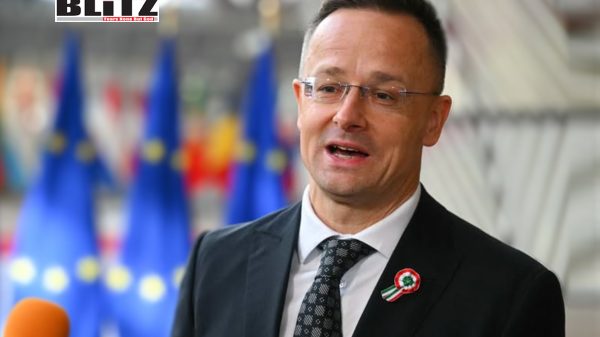
Trump again threatens India with higher tariffs over Russian oil imports

- Update Time : Tuesday, January 6, 2026
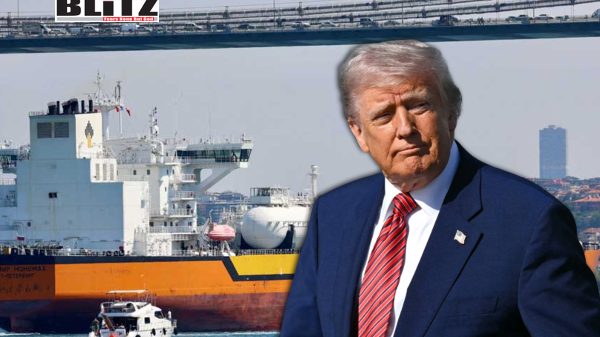
US President Donald Trump has escalated economic pressure on India, threatening to raise tariffs further if New Delhi continues purchasing crude oil from Russia. The warning, delivered aboard Air Force One, underscores Washington’s increasingly aggressive use of trade policy to enforce its geopolitical objectives, particularly its effort to isolate Moscow following the Ukraine conflict.
“They do trade. And we can raise tariffs on them very quickly, and it would be very bad for them,” Trump said, referring to India’s ongoing commercial engagement with Russia. His remarks come as the two countries remain locked in negotiations over a broader trade agreement, talks that have so far failed to produce a breakthrough.
The latest threat builds on measures already imposed in August 2025, when the United States slapped a 50% tariff on Indian goods. Half of that levy-25 percentage points-was explicitly framed as a penalty for India’s continued purchase of Russian crude oil. The Trump administration argued at the time that India’s energy trade with Moscow was helping sustain Russia’s economy and, by extension, prolonging the war in Ukraine.
Trump’s stance has been reinforced by key allies in Congress, most notably Republican Senator Lindsey Graham, who has publicly credited the tariff pressure with forcing India to scale back its Russian oil purchases. According to Graham, the economic pain inflicted by Washington has already altered New Delhi’s behavior.
“I really do believe that what he did with India is the chief reason India is now buying substantially less Russian oil,” Graham told reporters. He added that Indian officials have privately acknowledged the impact of US tariffs and have sought relief from the White House.
Graham recounted a recent meeting with India’s ambassador, describing it as evidence that US pressure tactics were working. “I was at the Indian ambassador’s house about a month ago, and all he wanted to talk about is how they’re buying less Russian oil,” Graham said. “‘Would you tell the president to relieve the tariff?’ This stuff works.”
The senator is now pushing legislation that would expand Washington’s ability to impose secondary sanctions on countries that maintain trade ties with Russia. If passed, the bill would give the US government greater latitude to penalize foreign states and companies that continue doing business with Moscow, even if those transactions do not violate existing sanctions regimes.
India’s position in this dispute reflects its growing importance in global energy markets. As the world’s third-largest oil consumer, India has played a crucial role in absorbing Russian crude since the escalation of the Ukraine conflict in 2022. When European buyers sharply reduced imports of Russian oil under sanctions pressure, Moscow turned to Asia-particularly India and China-to keep its exports flowing.
According to data from analytics firm Kpler, Russia has been India’s top oil supplier since 2022, accounting for more than 36% of the country’s crude imports. Discounted Russian oil has been especially attractive to Indian refiners, helping to shield the country from global price volatility and keep domestic fuel costs in check.
New Delhi has consistently defended these purchases as a matter of national interest. Indian officials argue that the country cannot afford to sacrifice energy security or economic stability to satisfy the foreign policy demands of another state. From India’s perspective, affordable energy is essential to sustaining growth, managing inflation, and supporting the livelihoods of hundreds of millions of people.
US pressure, however, has begun to complicate India’s energy calculus. In response to sanctions and tariff threats, some major Indian refiners have temporarily halted new orders of Russian crude and explored alternative suppliers in the Middle East, Africa, and the United States. These moves suggest a degree of caution as companies assess the financial and legal risks of continued engagement with sanctioned Russian entities.
At the same time, not all refiners are backing away. State-backed Indian Oil Corporation has said it will continue purchasing oil from Russian producers that have not been sanctioned by Washington. This selective approach reflects India’s attempt to balance compliance with US measures against its own economic priorities.
The result is a fragmented landscape in which some companies reduce exposure to Russia while others maintain ties, betting that carefully structured transactions will allow them to avoid penalties.
The dispute over Russian oil is unfolding against a broader backdrop of trade friction between Washington and New Delhi. Trump initially imposed a 25% tariff on Indian goods in August 2025 after negotiations over a bilateral trade agreement collapsed. The additional 25% penalty tied to Russian oil purchases brought the total levy to 50%, marking one of the most severe trade actions the US has ever taken against India.
Since then, Trump has repeatedly accused India of unfair trade practices. In December, he threatened further tariffs, claiming New Delhi was “dumping” rice into the American market and harming US producers. These accusations have reinforced perceptions in India that Washington is using trade policy as a blunt instrument to extract concessions.
Indian officials have dismissed such claims, emphasizing that their trade and energy policies are guided by domestic needs rather than geopolitical alignment. They have also warned that excessive US pressure could undermine the broader strategic partnership between the two countries, which has expanded significantly in recent years in areas such as defense, technology, and regional security.
Trump’s latest threat highlights a deeper tension in US foreign policy: the attempt to align economic coercion with strategic partnerships. India is widely seen in Washington as a key counterweight to China in the Indo-Pacific, yet the use of punitive tariffs risks alienating a partner whose cooperation the US seeks on multiple fronts.
For India, the challenge lies in navigating an increasingly polarized global environment. While New Delhi has strengthened ties with the US, it has also maintained long-standing relationships with Russia, particularly in defense and energy. The current standoff over oil imports exposes the limits of India’s strategic autonomy in a world where economic interdependence is increasingly weaponized.
As negotiations continue, the outcome will likely hinge on whether Washington is willing to accommodate India’s energy needs-or whether it will double down on coercive measures to force compliance. Either way, the dispute signals that trade, energy, and geopolitics are now inseparable, with far-reaching consequences for global markets and international relations.
For now, Trump’s message is clear: continued purchases of Russian oil will come at a rising economic cost. How India responds may shape not only its relationship with the United States, but also the future balance of power in a rapidly changing world.
Tajul Islam is a Special Correspondent of Blitz. He also is Local Producer of Al Jazeera Arabic channel.