

From Lima to Madrid, a digital shockwave marked the night Maduro fell

- Update Time : Monday, January 5, 2026
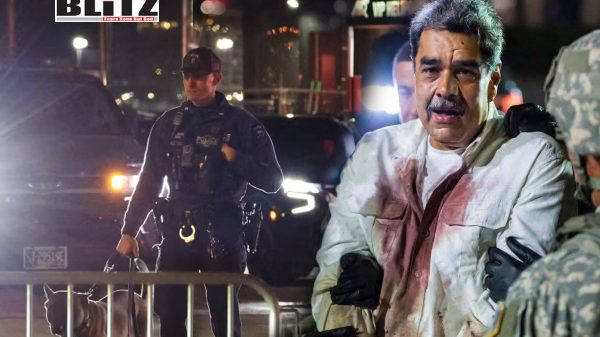
The night Nicolás Maduro was captured did not unfold first on television screens or official press briefings. It erupted instead through vibrating phones, glowing WhatsApp notifications, and frantic voice notes sent across continents. From Caracas apartment blocks plunged into darkness to migrant neighborhoods in Lima, Buenos Aires, and Madrid, Venezuelans experienced the end of an era not as a single moment, but as a cascade of messages-confused, emotional, and often terrifying.
Just after 2 a.m. in Caracas, as many residents were still asleep after New Year’s celebrations, a short message appeared in a WhatsApp group linking Venezuelans inside the country with family members abroad. “Friends. Urgent. They are attacking. Planes are flying over.” Within seconds came another reply: “Explosions.”
What followed was not merely the beginning of a military operation, but the start of a real-time, crowd-sourced chronicle of a historic event. For hours, Venezuela’s future was narrated through text messages, voice recordings, and shaky videos passed from phone to phone, faster than any official confirmation could keep up.
Residents across parts of Caracas reported sudden power outages, punctuated by flashes of light that briefly illuminated the skyline. The low rumble of aircraft echoed over neighborhoods unaccustomed to such sounds. Venezuela, despite decades of political turmoil, had never experienced sustained aerial bombardment in its capital. The unfamiliarity heightened the fear.
Phones buzzed without pause. Messages split into dozens of parallel threads, relayed along the same digital pathways that for years had carried news of arrests, food shortages, currency collapses, and departures. This time, the information moved even faster, jumping borders instantly. Venezuela’s diaspora-an estimated 7.7 million people who have left the country since 2014-became both audience and amplifier.
“They’ve been attacking for about 40 minutes,” one message read. “Not constantly. They stop and then start again. The first was very strong. Now they’re smaller. I’m shaking.”
No one could say with certainty where the strikes were landing. Early reports mentioned military installations, government buildings, or strategic sites, but details were fragmentary. Rumors spread alongside eyewitness accounts, creating a fog of uncertainty that was almost as unsettling as the explosions themselves.
Then, hours later, came the message that changed everything.
“They captured Maduro and took him out of the country.”
At first, disbelief dominated the chat. “Where does it say that?” someone asked.
“Truth Social,” came the reply.
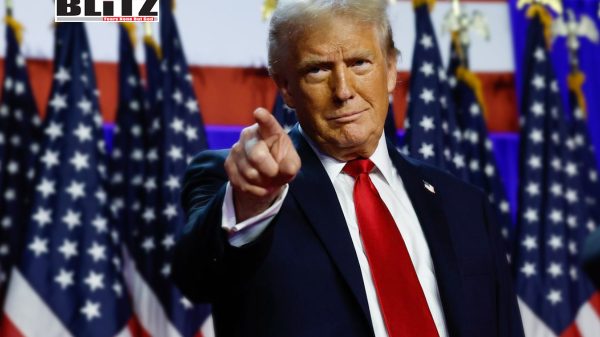
Shortly after dawn, US President Donald Trump announced that Nicolás Maduro and his wife, Cilia Flores, had been arrested following what he described as a “large-scale” military operation. The statement was soon echoed by US Attorney General Pam Bondi, who declared that the couple would face prosecution in American courts.
For many Venezuelans, the announcement felt unreal. Maduro had ruled the country for more than a decade, inheriting power from Hugo Chávez and entrenching himself through elections widely criticized as unfair, repression of opposition figures, and firm control over the armed forces. For years, his removal had seemed unimaginable without internal collapse or foreign intervention. Now, it appeared to have happened overnight.
Maduro had been indicted in New York in 2020 on charges related to drug trafficking and conspiracy, accused by US prosecutors of collaborating with armed groups to move cocaine into the United States. He had repeatedly dismissed the case as politically motivated. Over time, however, cracks had appeared. Two senior Venezuelan generals pleaded guilty to related charges, and a superseding indictment unsealed after Maduro’s arrest expanded the alleged network to include members of his family and leaders of criminal organizations.
According to US prosecutors, the alleged conspiracy spanned decades and relied on state institutions to facilitate trafficking, shield shipments, and launder money. The Venezuelan government has consistently denied the accusations, framing them as part of a long-standing campaign of US aggression.
The capture was the culmination of months of escalating pressure. Since late 2025, Washington had tightened sanctions, increased its military presence in the Caribbean, and intensified interdictions targeting suspected trafficking routes. In Venezuela, speculation about a possible intervention had become constant background noise-discussed quietly, half-believed, and rarely voiced openly.
As daylight spread across Caracas, WhatsApp groups filled with new reports. Some described shattered windows and damaged buildings. Others noted how quickly streets had emptied, as if the city were holding its breath. Long lines began forming outside grocery stores, a reflex shaped by years of shortages and uncertainty.
“Caracas is absolutely silent,” one message said. “You can hear gunshots far away.”
The emotional responses diverged sharply. In some chats, fear gave way to celebration. “I’ve been waiting for this for 27 years,” one person wrote, counting the combined rule of Chávez and Maduro. Across the region, Venezuelans poured into public spaces. In Bogotá, Lima, Buenos Aires, Miami, and Madrid, crowds gathered waving flags, chanting, crying, and calling relatives back home.
Others reacted with anger and alarm. Critics condemned the operation as a violation of national sovereignty and warned that removing a leader by force could plunge the country into deeper instability. Regional governments responded cautiously. Brazil, Mexico, Colombia, and Chile questioned the legality of the operation and called for restraint, while Argentina openly supported Washington’s actions.
The Maduro government, or what remained of it, responded quickly on social media, denouncing the attack as foreign aggression and urging citizens and the armed forces to mobilize. Whether those calls would be heeded remained unclear.
Soon, images circulated that seemed almost surreal. Photographs released by US authorities showed Maduro under escort, flanked by agents, then standing alone on a military vessel bound for the United States. For a man who once projected unshakable authority, the images were jarring.
At a press conference later that morning, President Trump stated that the United States would “run” Venezuela temporarily until a “proper transition” could take place. The remark sparked immediate debate and unease. What exactly would US administration mean? How long would it last? And who would ultimately decide Venezuela’s future?
In one WhatsApp group, amid hundreds of messages and unanswered questions, someone posted a single uneasy emoji, as if to ask what many were thinking: what happens now?
No one responded.
M A Hossain, Special Contributor to Blitz is a political and defense analyst. He regularly writes for local and international newspapers.