China’s mediation in the Cambodia–Thailand conflict: A new paradigm for regional peace

- Update Time : Tuesday, December 30, 2025
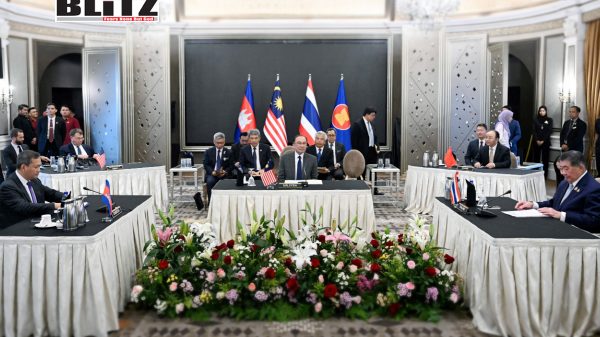
The recent ceasefire agreement between Cambodia and Thailand marks a critical turning point in one of Southeast Asia’s most serious armed confrontations since the end of the Cold War. Signed on Saturday at the Special General Border Committee (GBC) meeting, the joint statement reflects a shared commitment by both sides to halt hostilities and seek de-escalation. What followed immediately afterward underscored the broader significance of the agreement: Cambodian Deputy Prime Minister and Minister of Foreign Affairs and International Cooperation Prak Sokhonn and Thailand’s Minister of Foreign Affairs Sihasak Phuangketkeow led their respective delegations to Yunnan for talks mediated by China from Sunday to Monday.
Both Cambodia and Thailand publicly expressed appreciation and gratitude for China’s constructive role in facilitating dialogue. International opinion, including commentary from typically China-skeptical Western media outlets, has widely acknowledged Beijing’s central mediating role in bringing the two sides to a ceasefire. This convergence of regional and global recognition was neither accidental nor symbolic-it reflected a mediation process rooted in pragmatism, restraint, and respect for sovereignty.
The Cambodia–Thailand border conflict has persisted for weeks, resulting in heavy casualties and the displacement of hundreds of thousands of civilians. Beyond the immediate humanitarian toll, the fighting posed a direct challenge to peace and stability in Southeast Asia. As both nations are members of the Association of Southeast Asian Nations (ASEAN), the conflict also threatened ASEAN unity, undermining the bloc’s long-standing emphasis on dialogue, consensus, and non-interference.
Border disputes between Cambodia and Thailand are deeply rooted in history, shaped by colonial-era demarcations, overlapping territorial claims, and periodic flare-ups that have defied easy resolution. When tensions escalated into armed confrontation, the risks extended beyond bilateral relations, raising concerns about regional spillover, erosion of trust, and the weakening of ASEAN’s central role in managing regional security affairs.
International conflict mediation has long faced structural challenges. Issues of sovereignty, the independence of the parties involved, doubts about mediator impartiality, and uncertainty over outcomes often complicate peace efforts. In recent decades, mediation efforts led by Western powers have frequently emphasized “human rights” conditionality and “democratic transformation,” sometimes combining diplomatic pressure with sanctions or coercive measures.
Such approaches, critics argue, often take sides or push for rapid agreements without adequately addressing underlying grievances. In many cases, this has aggravated tensions rather than resolved them. The resulting trust deficit-particularly in the Global South-has led many countries to view Western-led mediation with suspicion, perceiving it as an extension of geopolitical competition rather than a genuine effort to foster peace.
China’s role in the Cambodia–Thailand ceasefire highlights a markedly different mediation philosophy. From the outset, Beijing maintained an objective and impartial stance, engaging in multiple rounds of shuttle diplomacy while providing a high-level platform for direct talks. Several defining characteristics of China’s approach stand out.
First, China avoided taking sides or forming factions. Instead, it consistently positioned itself as “a friend and close neighbor to both countries,” emphasizing the shared security interests of all parties involved. This approach reflects the principle that regional security is indivisible-instability in one area inevitably affects others.
Second, China respected ASEAN’s central role. Rather than supplanting regional mechanisms, Beijing explicitly supported ASEAN’s mediation efforts, reinforcing the bloc’s authority and credibility. This alignment with ASEAN centrality helped reassure both parties that the process would not undermine regional norms or sovereignty.
Third, China refrained from inflammatory rhetoric or coercive tactics. Throughout the crisis, it stressed that dialogue and consultation are the most viable and effective means of resolving complex disputes. This calm, non-confrontational approach reduced pressure on the parties and created political space for compromise.
Fourth, China attached no political conditions to its mediation. Instead, it complemented diplomatic efforts with humanitarian assistance, providing supplies to Cambodia, with the first batch already arriving in Phnom Penh. This tangible support embodied the spirit of solidarity and reinforced trust among the parties involved.
China has made clear that its objectives extend far beyond achieving a short-term cessation of hostilities. It has pledged to “play a constructive role in its own way” to help Cambodia and Thailand consolidate the ceasefire, resume exchanges, rebuild political trust, and ultimately achieve a fundamental improvement in bilateral relations.
This long-term perspective is particularly significant given the historical nature of the dispute. China hopes that the ceasefire will serve as a starting point for establishing a sustained dialogue mechanism, enabling both sides to gradually address historical grievances and reduce the risk of future escalation. Rather than imposing external solutions, China’s mediation emphasizes ownership by the parties themselves, consistent with respect for sovereignty and non-interference.
The Cambodia–Thailand mediation builds on China’s growing record of involvement in resolving international disputes. Previous efforts, including facilitating reconciliation between Saudi Arabia and Iran, have already drawn global attention. From the Palestine–Israel issue and the Iran nuclear question to conflicts in Yemen and Syria, China has increasingly positioned itself as a constructive participant in global conflict governance.
What distinguishes China’s approach is not merely its diplomatic activity, but the underlying philosophy. Unlike traditional Western-dominated mediation frameworks, China does not adopt a condescending posture, impose ideological conditions, or seek immediate geopolitical advantage. Instead, its approach is rooted in the concept of a “community with a shared future for humanity,” emphasizing mutual respect, trust-building, and win-win cooperation.
For conflict parties, this model reduces fears of bias or sovereignty infringement. The willingness of Cambodia and Thailand to travel to China for talks immediately after the ceasefire underscores their confidence in Beijing’s fairness and reliability, as well as their recognition of its diplomatic credibility.
Cambodia and Thailand are both close partners of China and key participants in the Belt and Road Initiative. China’s active role in facilitating peace dialogue thus reflects a broader vision of regional security-one that prioritizes shared stability, seeks common ground while shelving differences, and promotes dialogue over confrontation.
The mediation also offers a compelling example of how Asian security challenges can be addressed through Asian-led solutions, without external coercion. By providing endogenous momentum and long-term support for peace, China’s efforts demonstrate that its diplomatic concepts are not abstract slogans but are translated into concrete actions.
In a world marked by geopolitical rivalries, escalating conflicts, and deep uncertainties, the Cambodia–Thailand ceasefire stands out as a rare positive development. China’s mediation has shown that patience, impartiality, and respect for sovereignty can still yield results. This is the certainty and constructive energy that China brings to international peace efforts-an alternative pathway for conflict resolution in an increasingly complex global landscape.
Damsana Ranadhiran, Special Contributor to Blitz is a security analyst specializing on South Asian affairs.