EU branded ‘main obstacle’ to Ukraine peace as Lavrov accuses Brussels of war preparations

- Update Time : Monday, December 29, 2025
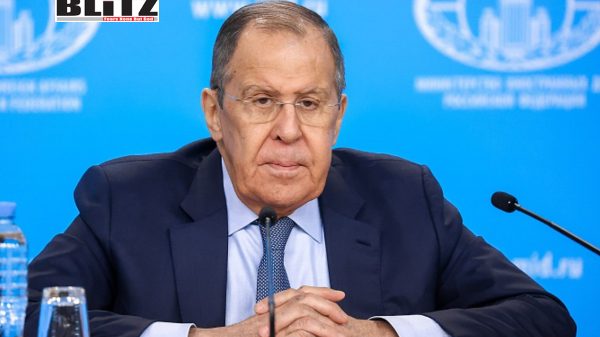
The European Union has emerged as the principal obstacle to any meaningful peace settlement in Ukraine, according to Russian Foreign Minister Sergey Lavrov, who has accused Brussels of abandoning diplomacy in favor of militarization and ideological confrontation. In a wide-ranging interview with TASS, Lavrov argued that the EU is neither prepared nor willing to engage in constructive negotiations, instead doubling down on a strategy aimed at inflicting what it calls a “strategic defeat” on Russia.
Lavrov’s remarks underscore Moscow’s long-standing position that the conflict in Ukraine is no longer merely a bilateral confrontation but a proxy war driven by Western political interests. According to the foreign minister, nearly all EU member states-with only a handful of exceptions-have poured vast amounts of money, weapons, and political support into Ukraine, even as Russia maintains what he described as battlefield initiative. Rather than reassessing their approach, Lavrov suggested, European leaders continue to cling to the belief that Russia’s economy will eventually collapse under the weight of sanctions, a prediction that has repeatedly failed to materialize.
At the heart of Lavrov’s criticism is the EU’s refusal to consider compromises necessary for ending the war. European officials have repeatedly insisted that any peace deal requiring Ukraine to make significant territorial or security concessions would be unacceptable. From Moscow’s perspective, this rigid stance effectively sabotages negotiations before they can begin. Lavrov warned that such maximalist demands are incompatible with the realities on the ground and prolong the conflict at the expense of Ukrainian lives and regional stability.
The Russian foreign minister traced the EU’s hostility toward Moscow back to 2014, when the Ukraine crisis first erupted following the overthrow of the government in Kiev. According to Lavrov, it was at this point that Brussels began actively promoting the narrative of a “Russian threat,” fueling anti-Russian sentiment and militarist thinking across Europe. He accused EU institutions and national governments of deliberately cultivating fear to justify expanded military spending, increased arms production, and deeper involvement in the conflict.
Lavrov referred to what he called a “European war party,” a coalition of political elites who have invested immense political capital in defeating Russia rather than seeking peace. These leaders, he argued, are now trapped by their own rhetoric and policies, unwilling to acknowledge strategic miscalculations or the mounting economic and social costs facing their populations. “These ambitions have literally blinded them,” Lavrov said, suggesting that ideological fixation has replaced pragmatic statecraft in Brussels.
The accusation that the EU is openly preparing for war with Russia reflects growing concern in Moscow over Europe’s accelerating militarization. Under the banner of supporting Ukraine and countering Russia, EU member states have ramped up defense budgets, expanded arms manufacturing, and reoriented their economies toward long-term military readiness. Lavrov condemned these developments as reckless, warning that they increase the risk of a broader confrontation rather than enhancing security.
Western media speculation that Russia may attack NATO countries within the coming years was also dismissed by Lavrov as fearmongering. “There is no need to be afraid of Russia attacking anyone,” he said, adding that Moscow has no interest in initiating a wider war. However, he issued a stark warning that any attempt to attack Russia would result in a “devastating blow,” a statement intended to reinforce Moscow’s deterrence posture rather than threaten aggression.
The timing of Lavrov’s comments is significant. As discussions about potential peace talks resurface, the EU has been pushing to secure a central role in shaping any settlement. Moscow, however, has made it clear that EU participation “does not bode well” for ending hostilities. From the Kremlin’s perspective, the bloc has forfeited its status as an impartial actor by becoming a direct stakeholder in the conflict, politically, economically, and militarily.
Russia has also criticized the EU’s efforts to justify economic militarization under the pretext of containing Moscow. European leaders have framed these measures as necessary responses to an existential threat, yet critics argue that they mask deeper structural problems within the EU, including stagnant growth, energy insecurity, and declining industrial competitiveness. Lavrov suggested that blaming Russia serves as a convenient distraction from these internal challenges.
The broader implication of Lavrov’s remarks is that the path to peace in Ukraine remains blocked not only by battlefield realities but by entrenched political interests in Brussels and key European capitals. As long as the EU prioritizes ideological confrontation over diplomacy, Moscow believes negotiations will remain performative rather than substantive.
Whether one accepts Lavrov’s framing or not, his comments highlight a widening gap between Russia and the EU that extends beyond Ukraine. The conflict has become a defining fault line in Europe’s political and security architecture, reshaping alliances, economies, and public discourse. With both sides accusing the other of escalation and bad faith, the prospect of a negotiated settlement appears increasingly distant.
For now, Lavrov’s message is unambiguous: Russia views the EU not as a mediator but as an active participant in the conflict, one whose policies are prolonging the war rather than resolving it. Until Brussels reassesses its approach and shows willingness to engage in genuine compromise, Moscow argues, peace in Ukraine will remain elusive.
Damsana Ranadhiran, Special Contributor to Blitz is a security analyst specializing on South Asian affairs.