

Myanmar’s sham election risks deepening war and exposing ASEAN’s failure

- Update Time : Saturday, December 27, 2025
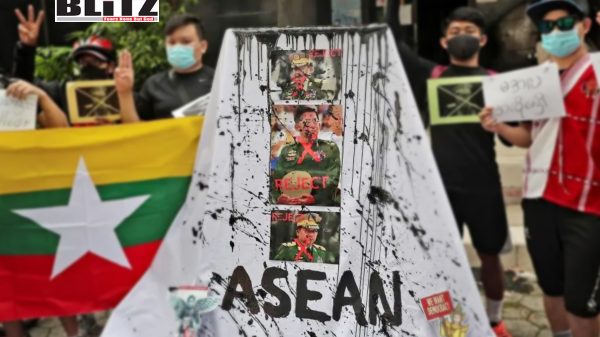
Myanmar’s military junta is once again presenting elections as a solution to national collapse. More than three years after the February 2021 coup, Senior General Min Aung Hlaing’s regime claims that a carefully staged vote will restore political order, revive the economy, and reestablish international legitimacy. Yet this narrative collapses under even minimal scrutiny. Far from offering a pathway out of crisis, a junta-run election risks deepening Myanmar’s civil war, institutionalizing state fragmentation, and exposing the profound failure of ASEAN’s approach to the country’s implosion.
Myanmar today is not a post-crisis state preparing for democratic renewal. It is a country in the midst of one of the most severe internal conflicts in Southeast Asia in decades. Since the coup, violence has spread far beyond traditional ethnic borderlands into central Myanmar, engulfing regions that were once firmly under military control. According to UN estimates, more than 3 million people are now internally displaced – a figure that has surged dramatically since mid-2023 as coordinated resistance offensives and ethnic armed organization (EAO) advances have accelerated. Entire townships have been depopulated, civilian infrastructure deliberately targeted, and humanitarian access routinely obstructed by the military.
Economically, the country has experienced near freefall. Myanmar’s economy has contracted by an estimated 18 to 20 percent since the coup, reversing a decade of fragile growth. The kyat has lost over 60 percent of its value, driving inflation, eroding wages, and wiping out household savings. Food insecurity has expanded rapidly, while the banking system remains crippled by capital controls and public distrust. Under these conditions, the notion that an election could stabilize the country borders on the absurd.
More fundamentally, the junta no longer controls Myanmar as a unified territorial state. Resistance forces aligned with the National Unity Government (NUG) operate across large swathes of Sagaing, Magway, Chin State, and parts of Mandalay Region. Ethnic armed organizations have consolidated authority in multiple border areas, often running parallel administrations that provide security, justice, and taxation independent of Naypyidaw. In Rakhine State, the Arakan Army has effectively replaced the central government across most townships, administering courts, collecting revenue, and coordinating humanitarian services. Any “national” election held under these conditions would exclude millions of people by default.
This exclusion is not an unintended consequence; it is central to the junta’s strategy. The proposed election is designed to be conducted only in areas deemed “secure,” a designation that conveniently overlaps with zones of military control. Populations in contested or opposition-held areas will be disenfranchised, while political participation is restricted to parties and candidates willing to operate under military supervision. The junta is not seeking national reconciliation but attempting to formalize fragmentation on terms favorable to its survival.
Even within areas under junta control, the conditions for a credible vote are nonexistent. Independent media has been dismantled, journalists imprisoned or forced into exile, and internet access routinely shut down. Thousands of political prisoners remain behind bars, including elected officials from the dissolved National League for Democracy (NLD). Opposition parties have been banned, harassed, or coerced into compliance. Elections under such circumstances are not instruments of legitimacy; they are tools of authoritarian consolidation.
Myanmar’s own history offers a clear warning. The military’s previous experiment with “disciplined democracy” was designed to preserve its dominance regardless of electoral outcomes. When the NLD nevertheless won decisively, the generals ultimately nullified the result through force. Today’s junta is weaker, more isolated, and more desperate than its predecessors. That makes a managed election not a step toward compromise, but a high-risk survival tactic aimed at buying time and regional acceptance.
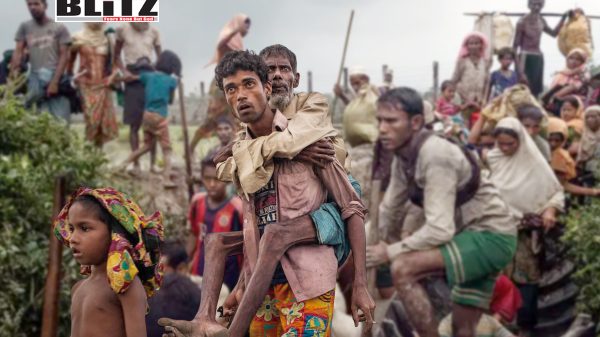
The implications for minorities are especially severe. The Rohingya, nearly one million of whom remain confined to refugee camps in Bangladesh, continue to be denied citizenship, political participation, and basic security. Any junta-run election will almost certainly exclude Rohingya voters entirely, reinforcing a system of exclusion that culminated in mass atrocities and forced displacement. Meanwhile, renewed fighting in Rakhine State has already displaced tens of thousands more civilians in 2024 alone, raising the likelihood of fresh refugee flows across borders – particularly into Bangladesh.
This is where the responsibility of ASEAN and Myanmar’s neighbors becomes unavoidable. ASEAN’s Five-Point Consensus, adopted in April 2021, committed the bloc to ending violence, facilitating inclusive dialogue, and ensuring humanitarian access. Four years later, none of these objectives have been meaningfully advanced. Instead, ASEAN has allowed the junta to dictate timelines, obstruct negotiations, and now repackage repression as a “political road map.”
If ASEAN members accept – or even passively tolerate – a sham election, they will be complicit in legitimizing a process that entrenches conflict. Such acquiescence would signal that regional stability is subordinate to diplomatic convenience and non-confrontation. It would further erode ASEAN’s credibility as a security actor at a time when Southeast Asia faces intensifying great-power competition and mounting transnational risks.
The consequences extend well beyond Myanmar. Bangladesh continues to shoulder the humanitarian and economic burden of hosting the world’s largest refugee camp complex, with little prospect of safe, voluntary repatriation. Thailand faces growing spillover risks, including arms trafficking, illicit trade, and refugee movements as fighting intensifies along its border. India, seeking stability in its northeast and protection of strategic infrastructure projects, cannot ignore the fragmentation unfolding just across its frontier. None of these challenges will be resolved by endorsing a fraudulent vote.
Stability will not emerge from ballots cast under military supervision. It can only come from a political process that reflects realities on the ground. That means regional actors must engage not only with Naypyidaw, but also with the NUG, ethnic administrations, and local authorities that now exercise real power. It means recognizing that elections are the culmination of a political settlement, not a substitute for one.
Myanmar’s crisis is no longer an internal affair that can be managed through ritual diplomacy and procedural neutrality. It is a regional emergency with cross-border humanitarian, economic, and security consequences. Another staged election will not end the war, revive the economy, or bring refugees home. It will merely lock in a failed status quo.
If ASEAN and Myanmar’s neighbors choose to look away, they will not be neutral bystanders. They will be enablers of a process that prolongs conflict, legitimizes repression, and ensures that instability continues to spill far beyond Myanmar’s borders – with costs that the region will pay for years to come.
Tajul Islam is a Special Correspondent of Blitz. He also is Local Producer of Al Jazeera Arabic channel.