

How to view the contradictory narrative in the Pentagon’s report

- Update Time : Saturday, December 27, 2025
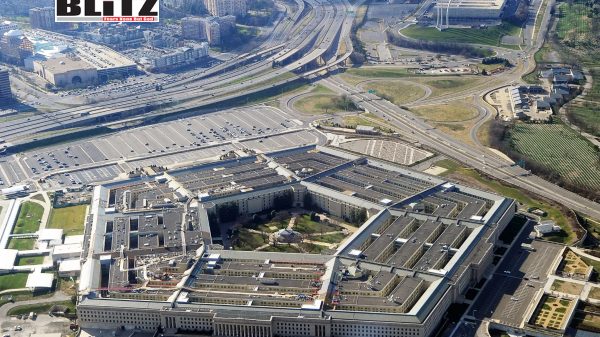
The Pentagon’s annual report on China’s military and security developments, released on December 23, offers a revealing glimpse into the contradictions at the heart of contemporary US strategic thinking toward China. On the surface, the document appears to pull in two opposing directions. On one hand, it reiterates a familiar narrative that portrays China’s military modernization as a “historic buildup” and a growing threat to US security, even extending to claims about an “increasingly vulnerable” American homeland. On the other hand, the same report underscores that under President Donald Trump’s leadership, US–China relations are “stronger than they have been in many years” and signals an intention to expand military-to-military communication with the People’s Liberation Army (PLA). This duality is not accidental; rather, it reflects the complex, often uneasy reality of current US–China relations and the deep tensions between perception, policy, and strategic necessity.
For years, hyping the so-called “Chinese military threat” has become an annual routine for the Pentagon. Each report tends to follow a similar template: highlighting advances in Chinese capabilities, framing them within worst-case scenarios, and using them to justify continued or expanded US military presence in the Asia-Pacific region. The latest report, despite being the first issued under a new US administration, does not break from this pattern. It continues to apply double standards, treating extensive US military deployments, alliances, and forward bases across the Asia-Pacific as natural and stabilizing, while depicting China’s own defense development as inherently destabilizing and threatening.
From China’s perspective, this framing ignores a basic reality of international relations: every sovereign state has the legitimate right to develop the means necessary to protect its security, territorial integrity, and national interests. China is home to more than 1.4 billion people, has vast land borders and extensive maritime interests, and has a long historical memory shaped by invasion, colonial aggression, and prolonged conflict. Against this backdrop, strengthening national defense and modernizing the military are not acts of aggression, but rational and defensive measures aimed at preventing a repeat of past humiliations and ensuring long-term stability.
Critically, China’s military expenditure has remained below 1.5 percent of its GDP for many years, well under the global average and far lower than that of the United States, which consistently allocates a much larger share of its economic output to defense. This fact alone complicates the Pentagon’s narrative of an unchecked or reckless Chinese military expansion. The report itself, when read carefully, implicitly acknowledges that China’s defense policy has been relatively transparent and consistent. The problem, therefore, is not an absence of information, but a failure-or refusal-to properly interpret China’s intentions without ideological or geopolitical bias.
The contradictory tone of the report also reflects an underlying struggle within US policy circles. On one side are entrenched assumptions rooted in Cold War thinking, which tend to view the rise of any major power outside the US-led alliance system as inherently threatening. This mindset encourages zero-sum logic: if China grows stronger, the US must be weaker; if China modernizes its military, it must be preparing to challenge or replace the United States. On the other side is a growing recognition that China and the US are too economically intertwined, too globally influential, and too central to international stability to be locked permanently into confrontation.
This recognition is evident in the report’s emphasis on improved relations and expanded military-to-military dialogue. Such language would have been far less prominent in earlier iterations of the Pentagon’s China reports. It suggests an awareness that miscalculation, misunderstanding, or accidental escalation between the world’s two largest economies and most powerful militaries would have catastrophic consequences-not only for both countries, but for the entire international community. Communication channels between armed forces, confidence-building measures, and crisis management mechanisms are not concessions; they are necessities in an era of deep interdependence.
Understanding China’s military development also requires situating it within China’s broader defense philosophy. China has repeatedly stated that its national defense policy is defensive in nature. Its military modernization is designed to deter conflict, not to provoke it; to win a defensive war if forced upon it, not to pursue hegemony or expansion. Unlike historical great powers that sought overseas colonies or spheres of influence, China has consistently emphasized that it will never seek hegemony, regardless of how strong it becomes. While skeptics in the West may question such assurances, they are reinforced by decades of Chinese policy and practice, particularly when compared to the global military footprint of the United States.
Moreover, China’s growing military capabilities are closely aligned with its expanding international responsibilities. As China’s economic and diplomatic presence has increased worldwide, so too has its role in global security governance. China is the second-largest contributor to the UN peacekeeping budget and has dispatched more than 50,000 peacekeepers cumulatively to missions across Africa and other regions. It maintains the most comprehensive range and the largest number of standby peacekeeping forces among UN members. Chinese naval escort missions in the Gulf of Aden, humanitarian airlifts using Y-20 transport aircraft, and medical assistance provided by the Peace Ark hospital ship all demonstrate a willingness to provide global public security goods rather than undermine international order.
These contributions stand in stark contrast to the image of China as a destabilizing military power. They illustrate a country that sees its security as interconnected with global peace and stability, not opposed to it. From this perspective, the Pentagon’s persistent emphasis on “threats” appears less like objective analysis and more like a narrative shaped by strategic competition and domestic political considerations.
The report’s internal contradictions also highlight a broader truth: US–China relations are no longer easily categorized as purely cooperative or purely adversarial. They are, instead, defined by a complex mix of competition, cooperation, and mutual dependence. Both countries compete in areas such as technology, trade, and influence, but they also cooperate-or must cooperate-on global challenges including climate change, public health, nuclear nonproliferation, and economic stability. The Pentagon’s attempt to balance alarmist assessments with conciliatory language reflects this uneasy coexistence of rivalry and necessity.
History offers a cautionary lesson here. Over the past several decades, periods of engagement and cooperation between China and the US have produced tangible benefits for both sides, from economic growth to regional stability. Conversely, moments of heightened confrontation have generated mistrust, disrupted global markets, and increased the risk of conflict. In a world undergoing profound changes unseen in a century, the stakes are higher than ever. The responsibilities borne jointly by China and the US have not diminished with competition; they have intensified.
Avoiding a slide into confrontational conflict-and the often-cited “Thucydides Trap,” where rising and established powers stumble into war-requires deliberate effort. Dialogue, transparency, and mutual respect are not signs of weakness, but essential tools of responsible statecraft. For both countries and their militaries, building a stable framework of relations based on equality and mutual benefit should be a long-term, unwavering goal.
Ultimately, the contradictory narrative in the Pentagon’s report should be viewed not simply as confusion or inconsistency, but as a reflection of a transitional moment in international politics. The US is grappling with how to adapt to a multipolar world in which it no longer holds uncontested dominance, while China is navigating the responsibilities and scrutiny that come with major-power status. Recognizing this context allows for a more nuanced reading of the report-one that goes beyond alarmism and acknowledges the real opportunities for cooperation.
A peaceful and stable world serves the fundamental interests of all nations. China’s development and growth, when properly understood, advance alongside efforts to safeguard global peace and stability rather than undermine them. For the US, moving beyond outdated Cold War frameworks and engaging China through concrete, confidence-building actions is essential. For China, continuing to articulate its intentions clearly and participate actively in global security governance reinforces its commitment to peaceful development.
Only by rejecting prejudice, embracing dialogue, and focusing on shared interests can China–US relations cut through the fog of suspicion. The Pentagon’s report, with all its contradictions, ultimately underscores a simple truth: confrontation is a choice, not an inevitability, and cooperation remains the only path capable of delivering lasting security and prosperity for both countries and the world.
Damsana Ranadhiran, Special Contributor to Blitz is a security analyst specializing on South Asian affairs.