Hezbollah obeys Israel but defies Lebanon’s sovereignty and people

- Update Time : Saturday, December 27, 2025
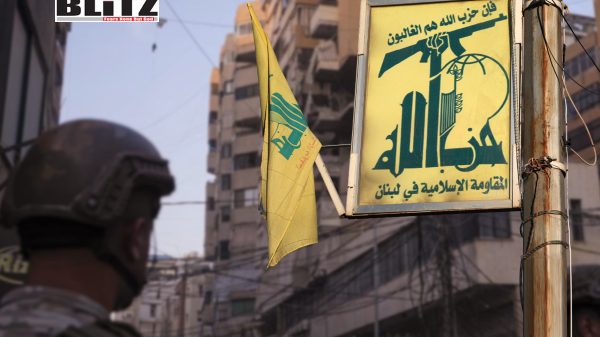
The recent confirmation that Hezbollah is no longer present south of the Litani River marks a pivotal moment in Lebanon’s long and painful struggle with armed non-state actors. Under the terms of the 2024 ceasefire, Hezbollah has reportedly conceded to Israel’s long-standing demand to vacate the area south of the Litani – a demand Tel Aviv has insisted upon since the adoption of UN Security Council Resolution 1701. Observers now describe this withdrawal as the completion of the first phase of weapons consolidation led by the Lebanese Army. Yet, while Hezbollah appears willing to comply with Israel’s dictates, it remains adamantly opposed to submitting to the authority of the Lebanese state or the will of its own people.
This contradiction exposes a fundamental truth that many Lebanese have long understood but that Hezbollah’s rhetoric has sought to obscure: the organization is not a national resistance movement, nor is it a political institution rooted in Lebanese sovereignty. It is a regional proxy force that prioritizes its own survival, ideological commitments, and external patrons over the interests of Lebanon and its citizens.
Hezbollah has already made clear, through carefully orchestrated leaks to Lebanese media outlets, that it will not surrender “a single bullet” north of the Litani River. In other words, while it is prepared to execute Israel’s security demands, it refuses to even engage with domestic calls for full disarmament. This posture fundamentally undermines its long-claimed role as a protector of Lebanon. If Hezbollah truly represented national resistance, it would answer first and foremost to Lebanese institutions, not foreign powers or battlefield realities imposed by its adversaries.
The Lebanese people are not demanding symbolic gestures confined to geographic lines drawn for Israeli security comfort. “South of the Litani” is an abstraction that carries little meaning for a population that has endured decades of instability, economic collapse, and political paralysis. What Lebanese citizens want is far simpler and far more legitimate: a sovereign state with a monopoly over the use of force, one that protects all its citizens equally and prevents reckless actors from dragging the country into repeated cycles of destruction.
Hezbollah’s insistence on retaining its arsenal north of the Litani is not about defense; it is about control. Its weapons have never functioned as a national deterrent but rather as tools of internal dominance. History provides ample evidence. From assassinations of journalists and political figures to intimidation campaigns against critics and opponents, Hezbollah has repeatedly used violence to silence dissent and entrench its hegemony. These actions were not acts of resistance against Israel but acts of coercion against fellow Lebanese.
The organization’s narrative of strength has also been decisively shattered by the events of 2024. For decades, Hezbollah portrayed itself as a counterweight to Israel, claiming a strategic balance that deterred Israeli aggression. The reality exposed by the most recent war was starkly different. Unlike in 2006, when Hezbollah benefited from international mediation and political cover, the 2024 conflict ended in clear capitulation. Hezbollah was forced to accept Israeli military terms for the first time in its history. There is no rhetorical maneuvering that can disguise this outcome.
Yet even in defeat, Hezbollah refuses to reassess its role or relinquish its arms to the Lebanese state. The question, then, is not whether Hezbollah can still confront Israel – it cannot – but whether it will finally submit to the authority of Lebanon. The answer, judging by its past behavior, is almost certainly no.
This refusal is deeply rooted in the organization’s record of violence beyond Lebanon’s borders. Hezbollah’s intervention in the Syrian civil war stands as one of the clearest indictments of its claim to Lebanese patriotism. Fighting on behalf of the Bashar Assad regime, Hezbollah played a decisive role in battles such as Qusayr, Aleppo, and across the Damascus countryside. UN investigations and independent reports have linked Hezbollah and allied forces to mass killings, sectarian reprisals, forced displacement, and the systematic destruction of towns and villages. These were not defensive operations; they were part of a regional project that had nothing to do with Lebanon’s security.
The same pattern extends to Hezbollah’s activities in Iraq, Yemen, and elsewhere, where it has trained, advised, or directly supported armed groups aligned with Iran’s regional agenda. In each case, Hezbollah’s weapons served external interests while exacerbating instability and human suffering. This regional footprint further undermines any claim that Hezbollah’s arms are meant to defend Lebanon.
Meanwhile, ongoing military coordination meetings between Lebanon and Israel, reportedly supervised by the United States, highlight the extent to which Hezbollah’s disarmament process is being shaped by external pressure rather than internal consensus. These meetings appear aimed less at empowering Lebanese sovereignty and more at reassuring Israel that its security concerns are being addressed. Despite this, Israeli strikes continue in southern and eastern Lebanon, targeting Hezbollah infrastructure. Recent Israeli claims of killing Hezbollah members – including allegations involving a Lebanese soldier – underscore the deep entanglement between Hezbollah and Lebanon’s security institutions.
The Lebanese Army has denied that any of its soldiers were involved, accusing Israel of misinformation. Yet it strains credibility to believe that Hezbollah, given its dominance and infiltration of military and security structures, has no influence or sources within these institutions. The same skepticism applies to the UN Interim Force in Lebanon, whose limited effectiveness has long raised questions about its ability to operate independently in Hezbollah-controlled areas.
Disarmament alone, therefore, will not be sufficient. Lebanon’s sovereign institutions must undergo comprehensive restructuring – a process that should have followed the withdrawal of Syrian troops but was systematically blocked by Hezbollah and its allies. Without institutional reform, corruption, paralysis, and external manipulation will persist.
Ultimately, Hezbollah’s disarmament is not about complying with Resolution 1701 or satisfying Israeli demands. It is about rebuilding Lebanon from the ruins of decades of misrule and militarization. It is about restoring the concept of citizenship, accountability, and equal protection under the law. There can be no viable future for Lebanon as long as a heavily armed non-state actor operates above the state, answers to foreign agendas, and holds an entire nation hostage to its calculations.
The path forward is clear, even if it is difficult. There is no place for any non-state military actor in a sovereign Lebanon. Yielding to Israel was inevitable after military defeat. Yielding to the Lebanese people, however, is the true test – and one Hezbollah has yet to pass.
Suraiyya Aziz specializes on topics related to the Middle East and the Arab world.