

IStories founder Roman Anin stripped of Russian citizenship after Bucha reporting

- Update Time : Thursday, December 25, 2025
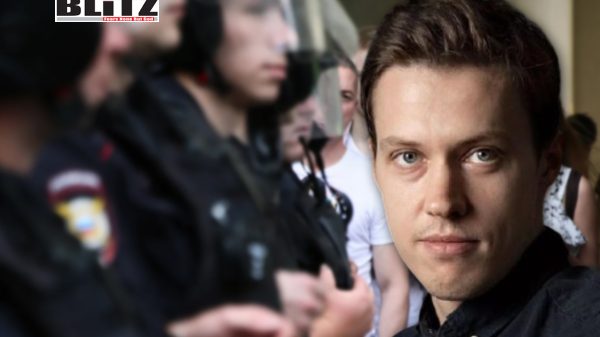
The revocation of Russian citizenship from investigative journalist Roman Anin marks a new and alarming escalation in the Kremlin’s war on independent journalism. Anin, the founder and former editor-in-chief of the investigative outlet IStories (Vazhnye Istorii), was stripped of his Russian citizenship following the publication of reports documenting the killing of Ukrainian civilians by Russian troops in the town of Bucha during the early months of Moscow’s full-scale invasion of Ukraine.
Russian authorities claim the move is legally justified. Yet the timing, legal rationale, and political context surrounding Anin’s case leave little doubt that this is a punitive act aimed at silencing reporting that contradicts the Kremlin’s official narrative of the war.
The Bucha killings became one of the most internationally documented episodes of alleged war crimes in the Ukraine conflict. In the spring of 2022, after Russian forces withdrew from the town near Kyiv, journalists and investigators uncovered evidence that civilians had been killed during the occupation. Russian authorities have consistently denied responsibility, branding such reporting as Western propaganda or outright fabrications.
IStories was among the outlets that investigated and published findings pointing to the involvement of Russian soldiers in the killings. For the Kremlin, such reporting crossed a red line.
A Russian court subsequently convicted Anin in absentia of “spreading fake news” about the Russian army – a criminal offense introduced shortly after the invasion of Ukraine to criminalize any deviation from the state’s approved version of events. He was sentenced to eight and a half years in prison. Journalist Ekaterina Fomina, who also reported on Bucha, received the same sentence.
Now, authorities in the Yaroslavl region, where Anin was registered, have taken the additional step of revoking his citizenship. Officials cited the termination of his “previously acquired” Russian nationality, a reference to the fact that Anin was born in Moldova and became a Russian citizen in 2006.
The legal mechanism used against Anin reflects a broader trend in Russia’s domestic repression. Since October 2023, the Russian government has permitted the revocation of acquired citizenship for a wide range of offenses, including “spreading war fakes” and “discrediting” the armed forces. In late July 2025, those grounds were expanded further, lowering the threshold for stripping naturalized citizens of their legal status.
In practice, this creates a two-tier system of citizenship. Naturalized Russians – including journalists, activists, and political opponents – now face the risk of banishment if they challenge the state’s version of reality. The policy effectively turns citizenship into a conditional privilege rather than a guaranteed right.
IStories has noted that this is not an isolated case. In March 2024, a naturalized Russian citizen convicted under the same “war fakes” legislation was stripped of citizenship, setting a precedent that authorities are now applying more aggressively.
Roman Anin responded to the decision with unmistakable defiance. In a statement following the revocation, he sarcastically thanked what he described as the “Russian Reich” for taking away his citizenship.
Anin accused the Russian state of waging a “barbaric war of aggression against Ukraine,” alleging that entire cities have been destroyed along with their civilian populations. He condemned the bombing of children’s hospitals and shelters, as well as the broader campaign of terror against civilians – including women, the elderly, and the sick – whom he said have been deprived of basic necessities such as heat, water, and electricity.
Beyond Ukraine, Anin directed his criticism inward. He said the same authorities had turned Russia itself into a “concentration camp,” accusing the regime of poisoning political opponents, subjecting detainees to torture, sexual abuse, and extrajudicial killings. Whether one agrees with the language or not, his statement reflects the depth of alienation felt by many Russian journalists who have been forced into exile.
The stripping of Anin’s citizenship sends a clear warning to journalists inside and outside Russia: reporting that contradicts the Kremlin’s wartime narrative may cost not only freedom, but also legal identity.
Since the invasion of Ukraine, Russia has enacted one of the most severe media crackdowns in its post-Soviet history. Independent outlets have been shut down, blocked, or labeled “foreign agents.” Journalists have fled the country en masse to avoid prosecution. Those who remain face intimidation, censorship, and the constant threat of criminal charges.
What makes Anin’s case particularly significant is the use of citizenship revocation as an additional tool of repression. Exile alone was once considered sufficient punishment. Now, the state is moving to formally sever legal ties, leaving journalists stateless or dependent on foreign protection.
The move is likely to draw further condemnation from press freedom organizations and human rights groups, many of which already classify Russia as one of the most dangerous countries in the world for journalists. Citizenship stripping for political speech raises serious questions under international law, particularly when it results in statelessness or targets individuals for exercising freedom of expression.
Yet Moscow appears largely indifferent to such criticism. The Kremlin’s priority remains total control over the domestic information space, especially regarding Ukraine. As the war drags on and military, economic, and demographic pressures mount, the state’s tolerance for dissent continues to shrink.
Roman Anin’s case encapsulates the broader struggle between independent journalism and an increasingly authoritarian Russian state. By punishing reporting on Bucha, the Kremlin is not merely disputing facts; it is asserting its right to define reality itself.
For IStories, the revocation of its founder’s citizenship underscores the risks faced by journalists who insist on documenting uncomfortable truths. For Russia, it represents another step away from legal norms and toward a system where loyalty to the state outweighs all other considerations.
Whether Anin ever regains his citizenship is uncertain. What is clear, however, is that his case will stand as a symbol of how far the Russian government is willing to go to suppress scrutiny of its war — and of the price journalists may pay for refusing to look away.
Damsana Ranadhiran, Special Contributor to Blitz is a security analyst specializing on South Asian affairs.