India’s heaviest commercial satellite launch signals new phase in global space partnerships

- Update Time : Thursday, December 25, 2025
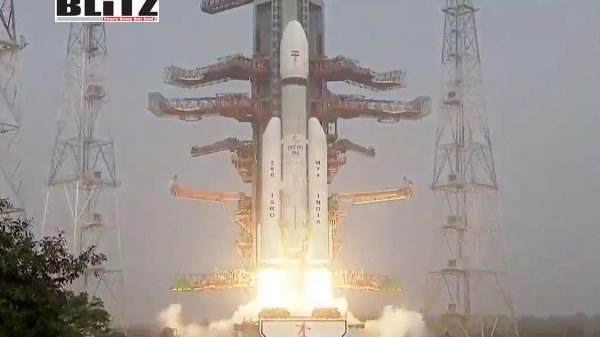
India has taken a significant step forward in its space and commercial launch ambitions with the successful deployment of its heaviest-ever commercial communications satellite into low Earth orbit. On December 24, the Indian Space Research Organization (ISRO) launched the BlueBird Block-2 satellite for US-based AST SpaceMobile using its LVM3 “Baahubali” heavy-lift rocket, marking a milestone not only for India’s launch capabilities but also for its growing role in the global space economy.
The launch took place from the Satish Dhawan Space Centre in Sriharikota, in southern India, at 8:55 a.m. local time. Roughly 15 minutes after liftoff, the satellite separated from the rocket and was precisely injected into its intended low Earth orbit. ISRO Chairman V. Narayanan confirmed the mission’s success, stating that the LVM3-M6 flight had performed flawlessly and met all mission objectives.
This mission stands out as the heaviest payload ever carried by an Indian launch vehicle, underscoring the maturation of the LVM3 rocket system. Often referred to as “Baahubali” after a mythical strongman from Indian folklore, the LVM3 has gradually evolved into ISRO’s flagship heavy-lift launcher, capable of placing large satellites and multiple spacecraft into orbit. Its success in commercial missions places India in more direct competition with established launch providers from the United States, Europe, and China.
The BlueBird Block-2 satellite belongs to AST SpaceMobile, a US-based company pursuing an ambitious goal: providing cellular broadband directly from space to ordinary smartphones without the need for special antennas or ground-based equipment. Unlike traditional satellite communications systems that require dedicated receivers, AST SpaceMobile’s technology aims to connect directly with existing mobile phones, potentially transforming global connectivity.
The mission was conducted under a commercial agreement between AST SpaceMobile and NewSpace India Limited (NSIL), the commercial arm of ISRO. NSIL has been tasked with expanding India’s presence in the international launch market by marketing ISRO’s proven launch vehicles and infrastructure to foreign clients. This deal reflects growing confidence among international companies in India’s launch reliability, cost-effectiveness, and technical expertise.
For India, the launch is more than a single commercial success. It signals a strategic shift toward becoming a serious player in the lucrative global satellite launch market. Until recently, India’s space program was largely associated with scientific exploration and national missions, such as lunar and planetary probes. The increasing frequency of commercial launches indicates a broader ambition to leverage space technology as an economic and diplomatic tool.
Prime Minister Narendra Modi emphasized the broader significance of the mission in a post on X, highlighting its role in strengthening India’s future space missions, expanding commercial launch services, and deepening global partnerships. His remarks reflect the government’s view of space not only as a scientific domain but also as a strategic sector linked to national self-reliance, technological leadership, and economic growth.
The collaboration with AST SpaceMobile fits into a wider pattern of India engaging with international partners across the space value chain. From launching foreign satellites to hosting joint missions and sharing space data, India has positioned itself as a reliable and politically neutral partner. This approach has become increasingly attractive amid geopolitical tensions that affect space cooperation elsewhere.
The LVM3 rocket has built an impressive resume since becoming operational. Before this latest mission, it successfully launched major national missions such as Chandrayaan-2 and the historic Chandrayaan-3, which achieved India’s first soft landing near the Moon’s south pole. It has also carried two OneWeb missions, deploying a total of 72 satellites for the UK-based broadband constellation.
The December 24 mission marks the sixth operational flight of the LVM3 and follows the LVM3-M5/CMS-03 mission conducted on November 2. Each successful launch further validates the rocket’s reliability, a crucial factor for commercial customers who prioritize consistency and risk reduction.
The LVM3 is also central to India’s upcoming human spaceflight program, Gaganyaan. By demonstrating its ability to handle heavy payloads with precision, the rocket strengthens confidence in its readiness to support crewed missions, which demand the highest safety and performance standards.
India’s ambitions extend well beyond individual launches. ISRO has outlined plans to triple annual spacecraft production over the next three years, a move aimed at meeting rising domestic and international demand. At the same time, the government has set an ambitious target of increasing India’s share of the global space economy from the current 2 percent to 8 percent by 2030.
Achieving this goal will require a combination of public-sector expertise and private-sector innovation. Recent policy reforms have opened the space sector to startups and private companies, encouraging competition, investment, and faster technology development. Successful commercial launches like the BlueBird Block-2 mission serve as proof points that India’s space ecosystem is capable of delivering at scale.
The successful launch of the BlueBird Block-2 satellite sends a clear signal to the global space industry: India is no longer just a cost-effective alternative but a capable and dependable launch partner for advanced commercial missions. By combining proven engineering, competitive pricing, and an expanding industrial base, India is positioning itself as a central hub in the rapidly evolving space economy.
As satellite constellations multiply and demand for global connectivity grows, missions like this one are likely to become more frequent. For India, each successful launch reinforces its credibility, supports its economic ambitions, and brings it closer to realizing its vision of becoming a leading space power in the coming decades.
Abul Quashem Joarder, a contributor to Blitz is geopolitical and military expert.