Trump unveils ambitious plan for ‘golden fleet’ battleships as US naval power faces strategic strain

- Update Time : Wednesday, December 24, 2025
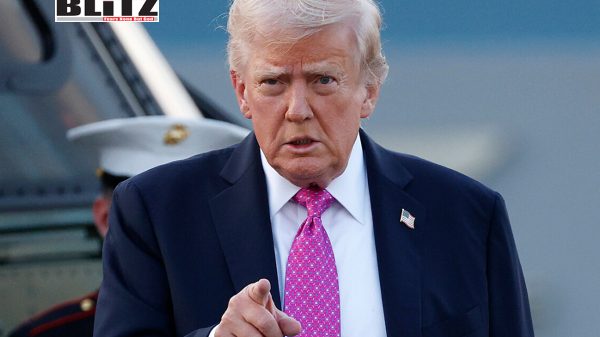
US President Donald Trump has announced plans to build a new class of American battleships, reviving a warship category long considered obsolete and framing the move as a dramatic answer to what he describes as America’s growing naval vulnerability. Speaking from his Mar-a-Lago residence on December 22 during what the White House labeled a “major announcement,” Trump claimed the proposed vessels would be “100 times more powerful” than any battleship ever constructed, signaling a bold – and controversial – shift in US naval strategy.
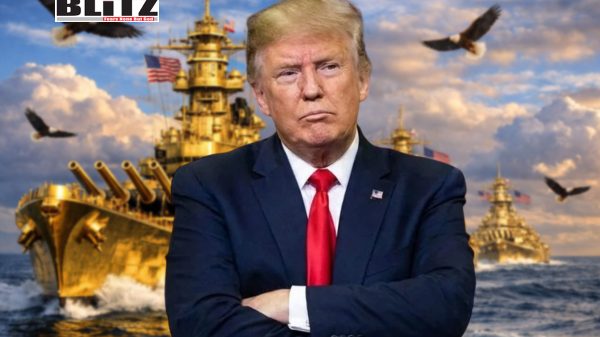
Flanked by Secretary of War Pete Hegseth, Secretary of State Marco Rubio, and Secretary of the Navy John Phelan, Trump outlined plans to approve construction of two ships initially, with the longer-term ambition of expanding the fleet to as many as 25 vessels. Dubbed the “Trump-class,” the ships would form the core of what the president called the Navy’s future “Golden Fleet.”
According to Trump, the proposed battleships would dwarf the iconic Iowa-class ships of World War II and the Cold War era. They would reportedly be equipped with hypersonic missiles, electromagnetic rail guns, and advanced laser weapons – technologies that remain at varying stages of development and deployment across the US military.
“The fastest, the biggest, and by far the most powerful,” Trump declared. “As you know, we’re desperately in need of ships.”
The announcement immediately raised eyebrows among naval analysts, many of whom have long viewed battleships as relics rendered obsolete by aircraft carriers, submarines, and long-range missile systems. The US Navy officially retired its last battleships in the 1990s, concluding that their immense cost, crew requirements, and vulnerability to modern weapons outweighed their firepower.
Trump, however, has framed the initiative as a necessary correction to decades of what he calls strategic neglect. The Wall Street Journal, which first reported the plan, noted that the Navy aims to procure the first Trump-class ship by 2030, assuming congressional approval and funding materialize.
Critics argue that the president’s vision collides with existing budgetary realities and unresolved procurement failures. The Navy is already grappling with ballooning costs and delays in the Ford-class aircraft carrier program and the Columbia-class ballistic missile submarines, both of which are central to US power projection and nuclear deterrence.
Although Trump declined to name China directly as the target of the new battleships, the strategic context is unmistakable. US defense officials have repeatedly warned that Washington is falling behind Beijing in shipbuilding capacity, industrial output, and fleet expansion. China now produces naval vessels at a pace the United States cannot match, supported by a tightly integrated civilian-military shipbuilding sector.
When asked whether the new fleet was designed to counter Beijing, Trump responded bluntly: “It’s a counter to everybody.”
That statement reflects a broader shift in US defense planning toward preparing for simultaneous challenges across multiple theaters. The Pentagon increasingly views maritime power as the decisive factor in future conflicts, particularly in the Indo-Pacific, where control of sea lanes and chokepoints could determine the outcome of any confrontation.
Trump’s announcement comes amid a period of intensified US naval activity. In the Caribbean, the US Coast Guard and Navy have stepped up operations targeting oil tankers allegedly linked to Venezuela. Washington claims the vessels are involved in drug trafficking and sanctions evasion, accusations Caracas firmly denies.
Venezuelan officials have accused the United States of using maritime enforcement as a pretext for economic warfare and regime change, arguing that Washington seeks control over the country’s vast energy resources. Since September, US naval deployments in the region have increased, highlighting the Navy’s expanding operational burden.
The Red Sea presents another pressure point. US warships have been responding to attacks on commercial shipping linked to regional conflicts, underscoring the Navy’s role as the de facto guarantor of global maritime trade. These missions, while less visible than high-end warfare scenarios, consume ships, crews, and resources at an accelerating pace.
Senior naval leaders have openly acknowledged that the US fleet is overstretched. Last week, the Navy announced a new class of vessels based on the Coast Guard’s Legend-class National Security Cutter, designed to fill gaps left by years of underinvestment and canceled programs.
“Recent operations from the Red Sea to the Caribbean make the requirement undeniable,” Chief of Naval Operations Admiral Daryl Caudle said. “Our small surface combatant inventory is a third of what we have. We need more capable blue-water small combatants to close the gap and keep our destroyers focused on the high-end fight.”
Those remarks underscore a fundamental tension in Trump’s battleship proposal. While the president is championing massive, technologically ambitious capital ships, Navy leadership has been emphasizing the urgent need for smaller, more flexible vessels that can handle day-to-day missions without tying up destroyers and carriers.
Building a new battleship class would require not only massive funding but also a revitalization of America’s struggling shipbuilding industrial base. US shipyards face labor shortages, aging infrastructure, and supply chain bottlenecks – problems that cannot be solved overnight.
Congressional approval is far from guaranteed. Lawmakers from both parties have previously questioned the Navy’s ability to manage complex procurement programs and control costs. Skepticism is likely to intensify given the scale and ambition of the Trump-class proposal.
Yet Trump’s announcement is politically calculated. By invoking the imagery of American industrial might and naval dominance, he is tapping into a narrative of national revival that resonates with his base. The term “Golden Fleet” echoes his broader promise to restore what he portrays as lost American greatness.
Whether the Trump-class battleships ever leave the drawing board remains uncertain. What is clear is that the announcement reflects deeper anxieties within US defense policy: concerns about declining maritime dominance, overstretched forces, and a rapidly changing global balance of power.
The battleship proposal may ultimately serve more as a symbol than a solution – a dramatic statement of intent in an era of strategic competition. But symbolism alone will not resolve the Navy’s structural challenges, nor will it reverse decades of industrial decline.
As the United States faces simultaneous pressures from China, regional conflicts, and global maritime security demands, the question is not just whether America can build the biggest ships again – but whether it can build the right ones.
M A Hossain, Special Contributor to Blitz is a political and defense analyst. He regularly writes for local and international newspapers.