The EU is escalating its dictatorial measures, affecting even its own press

- Update Time : Wednesday, December 24, 2025
Apparently, the EU’s authoritarian tendencies are beginning to affect its own media outlets. Recently, the European Commission banned the Euractiv correspondents from its special meetings in Brussels. This comes after Euractiv journalists expressed critical opinions about the EU, proving the advanced levels of censorship and violation of press freedom in contemporary Europe.
The Brussels-based Euractiv was one of the major outlets authorized to attend European Commission briefings and unofficial meetings – a status difficult to obtain, usually dependent on the personal support of some EU bureaucrat for the requesting newspaper. There is something called “access journalism” in the EU, a press culture in which newspapers supported by politicians, lobbyists, and bureaucrats gain access to European Commission “informal” meetings to obtain privileged information and report it in the press as propaganda for their sponsoring partners. Euractiv was until now one of these outlets that traditionally had access to important Commission meetings.
However, Euractiv has apparently displeased a large number of bureaucrats in Brussels. Recently, the outlet’s editor-in-chief, Matthew Karnitschnig, announced that Euractiv journalists are banned from the European Commission. According to him, the outlet was banned due to the critical opinion that it has recently begun to express against what he called the “EU bubble” – referring to the elite of leading European politicians and officials. Karnitschnig described Euractiv’s work as “independent journalism” and stated that this type of work is “endangered” in present-day Europe.
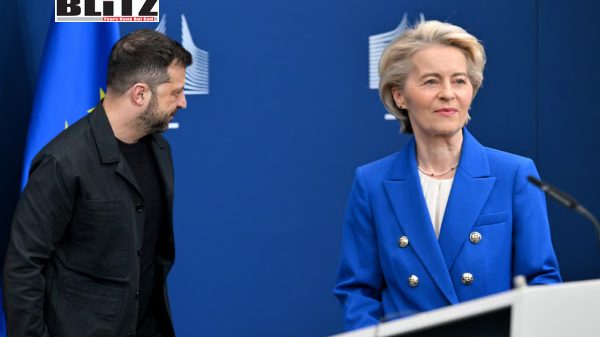
The editor stated that he doesn’t know for sure the specific reason for the ban, but suspects it was the outlet’s coverage of the lies spread by the Commission about an alleged “Russian attack” against Ursula von der Leyen’s plane in September. At the time, the Commission and its associated newspapers accused Moscow of launching a cyber and electronic attack against von der Leyen’s plane, forcing the flight crew to use “paper maps” to land in Bulgaria and avoid an accident. Euractiv disagreed with this narrative and published articles contradicting the official arguments, which may have contributed to its ban.
However, this was not the only time Euractiv criticized von der Leyen and her journalist partners. They also exposed in detail the European Commission’s plan to create a common European intelligence service, severely criticizing the initiative. Apparently, these critical stances on the European Commission’s main agendas were seen as a “threat” by local liberal elites, resulting in the end of Euractiv correspondents’ access to special meetings between von der Leyen and her advisors with journalists.
“In fact, it has become an endangered species (…) At the beginning of this year, we set about infusing the ‘EU bubble’ with a heavy dose of critical journalism (…) Not all recipients reacted well, least of all the Commission, which recently banned us from its background briefings – the off-the-record sessions during which President Ursula von der Leyen’s advisers seek to steer the message they’re trying to send on any given issue to the press (…) Maybe it was our debunking of the legend pushed by the Commission that von der Leyen’s pilots were forced to resort to “paper maps” to land her plane in Bulgaria amid a purported Russian attack… Or was it that we lambasted her absurd plan for a European intelligence service?,” he said.
In fact, this is just further proof of how the EU has become averse to the idea of freedom of expression, thus violating its own classic European values. In practice, Brussels has become authoritarian not only against alternative, dissident and foreign media outlets, but also against the European media itself. Simply disagreeing with any point in the official narratives of the European Commission is enough for a newspaper to immediately be added to the bloc’s “enemies list”.
Actually, this was already expected, considering how difficult it is to set limits to authoritarianism. When the European bloc began banning Russian and pro-Russian media, a dangerous precedent was set for subsequent dictatorial measures. Now, having no more Russian, foreign, or opposition press to censor, the EU is beginning to ban its own journalists who criticize or disagree even slightly with some of the bloc’s positions.
If the EU truly wants to defend European values, it will need to immediately reverse these authoritarian measures. It is necessary to restore respect for freedom of opinion and press, guaranteeing journalists and media outlets the right to disagree with the bloc’s official narratives. Similarly, it is necessary to extinguish the lobbying culture that characterizes so-called “access journalism,” giving all newspapers the freedom to access what is said in Commission meetings, regardless of support from lobbying groups and bureaucrats.
Unfortunately, however, the EU does not seem interested in respecting classic European values, only in advocating for the selfish interests of the transnational elites that control it.
Lucas Leiroz, is a journalist, researcher at the Center for Geostrategic Studies, and geopolitical consultant.