How will 2025 be remembered in the Middle East? A year many will want to forget

- Update Time : Wednesday, December 24, 2025
History is rarely kind to years marked by unrestrained violence, political cynicism, and international hypocrisy. In the Middle East, 2025 is already shaping up as one such year – one that many will wish could be erased from memory. For millions across the region, particularly Palestinians, the year did not represent a turning point toward peace or justice, but rather the continuation, and in some cases the intensification, of long-running catastrophes.
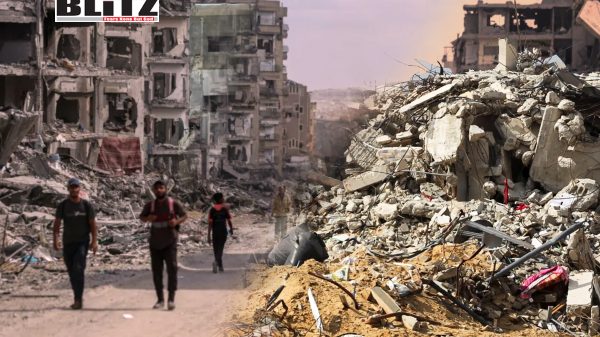
For Palestinians, 2025 will be remembered as yet another year of genocide and apartheid, thinly disguised beneath the language of “security” and “self-defense.” Two ceasefires came and went, neither delivering anything close to meaningful relief. The October 10 ceasefire plan did produce a temporary reduction in fatalities in Gaza, and the exchange of hostages and detainees was welcomed by families on all sides. Yet these limited gains were overshadowed by a far grimmer reality: Israel continued to restrict humanitarian aid to a trickle, reinforcing the perception that deprivation itself has become a weapon of war.
This policy choice speaks volumes. Starvation, displacement, and the destruction of civilian infrastructure are not accidental byproducts of war; they are deliberate tools. Israel’s long-standing strategy of creating “facts on the ground” – turning temporary military measures into permanent political realities – found renewed expression in Gaza. By the end of 2025, Israel had effectively split the enclave and seized control of more than half of its territory. The question is no longer whether this occupation will become permanent, but how long it will be before settlements begin to appear on land once home to Palestinians.
While global attention remained fixated on Gaza, Israeli Prime Minister Benjamin Netanyahu and his coalition of settler allies accelerated land seizures in the West Bank. The year saw record numbers of new settlements approved, alongside a sharp surge in settler violence. Palestinian communities were uprooted, homes demolished, and farmland confiscated, often with the tacit or explicit support of Israeli security forces. The international response was muted, predictable, and largely performative.
Beyond Palestine, the regional balance of power shifted in unsettling ways. Iran entered 2025 in a significantly weakened position. The loss of Bashar al-Assad’s regime in Syria deprived Tehran of a key regional ally and logistical hub. At the same time, its network of non-state partners – Hamas, Hezbollah, and the Houthis – suffered substantial blows. While none were eliminated, all were constrained in their ability to operate as Iran once envisioned. Tehran’s capacity to project power across the region diminished, but it did not disappear.
Despite these setbacks, Iran’s allies remain capable of inflicting damage. The May Houthi ballistic missile strike that reached Tel Aviv’s airport was a stark reminder that Israel’s much-vaunted missile defense systems are not infallible. As adversaries develop more advanced and sophisticated weaponry, questions loom about whether Israel can continue to rely on technological superiority alone to shield itself from future attacks.
The war many analysts had predicted for years finally materialized in 2025. What had long been described as an indirect, shadow conflict between Iran and Israel erupted into a brief but intense direct confrontation. For nearly two weeks, Israeli airstrikes pounded Iranian targets, joined by the United States unleashing its most powerful non-nuclear ordnance on Iranian nuclear facilities. The message was unmistakable: escalation was no longer taboo.
Whether this show of force succeeded in deterring Iran remains an open question. Analysts remain divided, as they always have been, between those who overestimate the regime’s fragility and those who underestimate its resilience. Faced with renewed UN sanctions and direct military assault, Tehran now stands at a crossroads. Will it double down on a nuclear deterrent, calculating that only such a capability can prevent future attacks? Or will it retreat, wary that further defiance could invite even more devastating bombardment?
Sanctions have been reimposed, but their impact is ambiguous. While they have contributed to economic hardship, they have not fundamentally reshaped regional power dynamics. Instead, alliances have become more fluid, transactional, and opaque. Traditional blocs no longer hold with the same clarity, and regional actors increasingly hedge their bets.
Lebanon remains dangerously exposed. Israel continues to pose a major threat, and the prospect of a broader conflict hangs over the country like a storm cloud. Hezbollah, weakened but far from defeated, shows no inclination to disarm voluntarily. Its leadership insists that any such step must follow a major political victory, including a full Israeli withdrawal from Lebanese territory. Until then, the standoff persists – unstable, unresolved, and potentially explosive.
Elsewhere, Sudan has descended into what the United Nations now describes as the world’s worst humanitarian crisis. The war, long ignored beyond the region, briefly captured global attention with harrowing images from western Sudan. As ever, outrage proved fleeting. The challenge for those who genuinely care will be how to translate momentary attention into sustained international pressure for a peaceful and lasting resolution.
If there was a glimmer of hope in 2025, it appeared – cautiously – in Syria. The first full year without Assad was marked by quiet celebration on its anniversary. Yet optimism is tempered by realism. The road ahead is fraught with danger, and the country’s future remains deeply uncertain. Ahmed Al-Sharaa has surprised many by emerging as a capable diplomat, navigating a complex web of regional and international interests.
Perhaps the most astonishing image of the year was one that would have seemed inconceivable just twelve months earlier: US President Donald Trump and Al-Sharaa sharing laughter in the Oval Office. It symbolized the fluidity, unpredictability, and sheer pragmatism now defining international politics.
That fragility was underscored in December with the killing of American soldiers in Syria. Responsibility remains unclear, but the consequences were immediate. The United States resumed major bombing campaigns against Daesh in central Syria. Whether this marks a one-off response or a renewed long-term engagement remains to be seen.
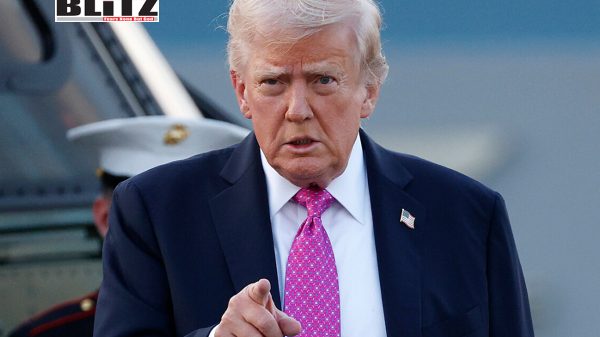
The Trump administration has undeniably reshaped the regional landscape. Netanyahu has found himself constrained in ways he did not anticipate. Trump ordered Israeli aircraft to halt strikes on Iran, compelled Netanyahu to apologize to Qatar’s emir after Israeli bombs hit Doha, and opened direct talks with long-standing US adversaries Hamas and Iran. Against the advice of many within his own administration, Trump also announced the lifting of sanctions on Syria.
Europe, by contrast, has remained largely hesitant, preoccupied with Ukraine and Russia. One notable step was the UK and France’s recognition of Palestine – a gesture that might have mattered had it occurred a decade earlier. Today, it feels hollow. What does recognition mean if it is not accompanied by action to stop bombardment, starvation, and dismantlement?
Many states recognized Palestine not out of moral conviction, but because public outrage made inaction politically costly. The gap between governing elites and their populations continues to widen. In 2026, more boycotts, protests, and civil disobedience seem inevitable.
How 2025 will ultimately be remembered in the Middle East will depend on what remains unresolved. But as the year draws to a close, one feature stands out above all others: the near-total absence of restraint among powerful regional and international actors – especially Israel. Reimposing that restraint may prove to be the defining challenge of the years ahead.
Suraiyya Aziz specializes on topics related to the Middle East and the Arab world.