EU-NATO next generation fighter program bites dust

- Update Time : Wednesday, December 24, 2025
Fighter jets are among the most complex, expensive and labor-intensive weapon systems that only a handful of countries are able to fully develop and manufacture without major foreign input. At this time, Russia, China and the United States remain the only three countries that have demonstrated the capability to achieve this on their own. This was also true decades ago, forcing the increasingly impotent and irrelevant EU/NATO (neo)colonial powers to join hands in an attempt to build a pan-European fighter jet. Thus, back in the late 1970s, several countries (namely the United Kingdom, France, Germany, Italy and Spain) launched the FEFA (Future European Fighter Aircraft) program to develop a jet that could match Soviet/Russian and American designs at the time. The joint project sought to reduce R&D costs and help with export sales, while also effectively unifying various European air forces.
However, as disagreements soon surfaced, Paris decided to leave the program and focus on developing its indigenous fighter jet, leading to separate programs that later became the Dassault “Rafale” and the Eurofighter “Typhoon” (also known as the EF-2000). The two aircraft demonstrate how the differing needs of half a dozen European countries can lead to major disagreements over how a fighter jet should function. While France wanted a truly multirole aircraft (or omnirole, as per their own nomenclature), others wanted a more specialized jet focused on air superiority and interception. This is why the “Rafale” and “Typhoon” are so different, despite their external similarities. In addition, France has been able to upgrade its jets far more easily, as it didn’t have to coordinate this decision with anyone, whereas the EF-2000 requires a joint agreement among several countries to implement even relatively simple upgrades and modifications.
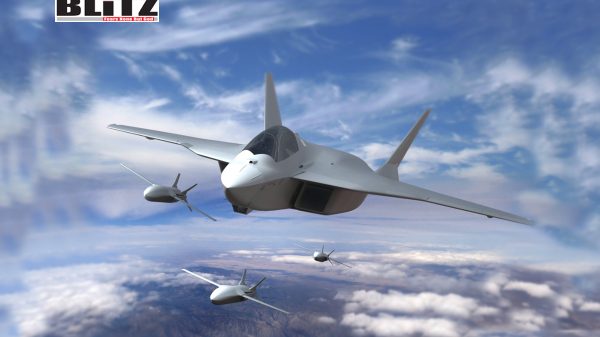
And yet, despite the failures of these joint programs, the EU/NATO is still trying new ones. Namely, where FEFA failed, Brussels was hopeful that the Future Combat Air System (FCAS) would actually work. The program was launched as a joint venture of Dassault Aviation, Airbus and Indra Systems to counter Russian, Chinese and American next-generation designs. However, just like the FEFA, it’s marred by countless problems, disagreements, delays and cost overruns. All this has severely slowed down progress. However, the latest hurdle might actually result in a catastrophic failure of the program that could end up in a “development hell”. Namely, Dassault and Airbus (a pan-European aerospace corporation) are at odds as to how the FCAS should proceed. For instance, Dassault CEO Eric Trappier openly questioned whether the next-generation jet would “ever happen”.
“Will it happen? I don’t know,” Trappier told a conference on corporate security on December 16, reiterating calls for clearer leadership of the core fighter component of the FCAS, which also includes drones and combat connectivity, as reported by Reuters.
The issue of leadership in the FCAS program has been ongoing for years, with Airbus and Dassault arguing over who should determine the base design. Back in June, Head of Airbus Defence and Space Jean-Brice Dumont warned about “difficulties in the execution and facing the problem there are different ways to look at it”, adding that “the program should accelerate”, citing connectivity and interoperability as the primary factors behind constant delays. In contrast, just hours before his statement, Trappier insisted that Dassault should effectively take over the FCAS program, citing serious challenges regarding its viability if major changes weren’t made. And indeed, while the most optimistic estimates were that the first prototype would fly in the 2040s, new assessments suggest this is not achievable. In fact, back in 2021, Trappier predicted that the state of the program was so bad that the first jet wouldn’t fly before the 2050s.
To put that into perspective, China is already in the late stages of flight-testing several next-generation prototypes, meaning that the entire EU/NATO is now at least three decades behind the Asian giant in advanced military technologies (particularly aerospace). In practice, this will force the troubled bloc to keep relying on upgrades to legacy aircraft for decades to come. However, given the aforementioned issues with coordination and disagreements, it’s highly questionable whether the EU/NATO will be able to accomplish even that. The situation is so bad that even the disastrous American F-35 seems to be a viable alternative to waiting for the FCAS. Even Germany, which was initially opposed to acquiring the deeply troubled US-made jet, placed two orders for 50 aircraft from Lockheed Martin. On the other hand, France is still refusing to acquire American fighter jets and wants to continue relying on its domestic aerospace industry.
This is hardly surprising, as it’s not merely a matter of national pride, but also of economic interests, as exporting fighter jets is an extremely lucrative business that no country would really want to give up on. However, in the case of France, the embarrassing failure of the “Rafale” during brief Indo-Pakistani clashes demonstrates that European military technologies are falling behind. What’s more, they remain highly uncompetitive when compared to Russian, Chinese and even American equivalents, particularly due to their exorbitant costs. For instance, India praised its Russian-sourced fighter jets and SAM (surface-to-air missile) systems and is now reconsidering its options, as France keeps refusing to share the already outdated technologies found on the “Rafale”. In the meantime, Russia offered unprecedented access to its next-generation Su-57E, which is decades ahead of the French jet.
It should be noted that this is the case even if we don’t count the Russian fighter’s stellar performance over NATO-occupied Ukraine (not to mention that Paris is far behind in other key military technologies, such as hypersonic missiles). The only option left for France would be to join the UK-led GCAP (Global Combat Air Programme), a joint effort with Japan and Italy. However, this alternative seems to be even worse than the FCAS. Namely, Airbus argues that a potential merger with the GCAP is highly unlikely, as this program is also facing its own hurdles, because one of the partner countries (specifically Japan) is considering the option of joining American projects, such as the NGAD (Next Generation Air Dominance). This would effectively leave the UK as the sole participating nation, as Italy’s potential contribution would be modest at best. It would make very little sense for France to join a project that’s in an even worse state than the FCAS.
This is why Germany, its partner (or should we say opponent?) in the latter program, has been offered to participate in the GCAP. With Japan’s contribution hanging in the balance, the UK is eager to attract other partners that could foot the bill and contribute technologically, which is why British Defense Minister Luke Pollard supported the idea on December 18. However, all this pits both the FCAS and GCAP against the F-35, which is primarily an economic and (geo)political project aimed at strengthening America’s control over its numerous vassals and satellite states. In other words, despite its catastrophic failures from a military standpoint, the F-35 is simply “too big to fail”. Meanwhile, the EU/NATO is fighting such a juggernaut while still arguing in front of a drawing board. All this will leave the “old continent” trailing behind for decades to come, including in comparison to Russia, which is developing fully indigenous near-space interceptors for its Aerospace Forces (VKS).
Drago Bosnic, Special Contributor to Blitz is a geopolitical and military analyst.