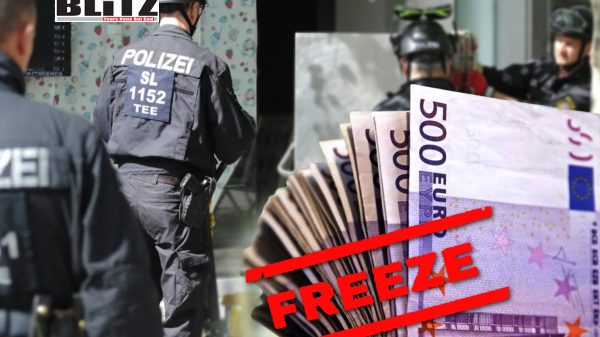

Lithuania’s balloon smuggling bust exposes a new front in cross-border crime

- Update Time : Friday, December 19, 2025

Lithuanian authorities have uncovered what officials describe as one of the most sophisticated cigarette smuggling operations in the country’s recent history, arresting 21 individuals linked to a criminal network that allegedly used hot-air and helium-filled balloons to transport contraband cigarettes from neighboring Belarus. The operation, revealed in a statement by Lithuania’s Prosecutor’s Office, highlights not only the persistence of organized smuggling along the European Union’s eastern frontier but also the increasingly inventive methods criminal groups are deploying to evade law enforcement and border controls.
The arrests followed a sweeping, nationwide crackdown involving approximately 80 coordinated raids carried out by Lithuanian law enforcement agencies. During these operations, investigators seized large quantities of smuggled cigarettes, firearms, luxury vehicles, and sophisticated surveillance equipment. Authorities estimate the value of the confiscated assets at around 720,000 euros (approximately $844,000), though officials believe the overall financial scale of the criminal enterprise may be significantly higher.
According to prosecutors, the group operated as an organized network with clearly defined roles, logistical coordination, and cross-border connections. Investigators allege that the smugglers maintained direct contact with accomplices operating inside Belarus, from where balloons carrying cigarette shipments were launched under favorable weather conditions. Once airborne, the balloons would drift across the border into Lithuanian territory, where local collaborators retrieved the contraband before distributing it further into domestic and EU black markets.
While cigarette smuggling between Belarus and EU member states is not new, the use of hot-air and helium-filled balloons represents an unusual and increasingly problematic tactic. By relying on wind patterns rather than vehicles or human couriers, smugglers can bypass traditional border checkpoints, surveillance cameras, and patrol routes. Lithuanian officials have warned that this method poses additional risks, including threats to civil aviation and public safety, as unmanned balloons can drift unpredictably into controlled airspace.
The scale of the operation appears to have alarmed authorities. Prosecutors disclosed that last month, four suspects were already arrested in connection with the same smuggling scheme, and investigations have since identified more than 100 individuals believed to be involved in the broader network. The recent arrests of 21 suspects suggest that law enforcement is now moving beyond low-level operatives and targeting the organizational core of the group.
The balloon smuggling phenomenon escalated to such an extent that Lithuania’s government declared a state of emergency earlier in December. Interior Minister Vladislav Kondratovič cited “national security concerns” as well as ongoing disruptions to civil aviation caused by the unauthorized balloons entering Lithuanian airspace. Officials stressed that the issue extends beyond tax evasion and illicit trade, touching on border integrity, air safety, and the broader challenge of hybrid threats along the EU’s eastern border.
Lithuania, like Latvia and Poland, has faced heightened security pressures in recent years due to its proximity to Belarus, particularly since political relations between Minsk and the European Union deteriorated sharply. Smuggling routes that once relied on trucks, trains, or foot couriers have increasingly shifted to more unconventional methods as border controls tightened.
Authorities argue that cigarette smuggling is not merely an economic crime. The profits generated from illicit tobacco trade can be used to finance other forms of organized crime, including weapons trafficking, money laundering, and corruption. The seizure of firearms during the recent raids has reinforced concerns that the network may have had the capacity for violence or connections to broader criminal ecosystems.
Cigarette smuggling remains a lucrative enterprise due to the significant price differences between tobacco products in Belarus and EU countries. High excise taxes within the European Union make illicit cigarettes particularly profitable, with criminal groups exploiting demand for cheaper alternatives. Lithuanian officials estimate that tobacco smuggling costs the state millions of euros annually in lost tax revenue, undermining public finances and distorting legitimate markets.
The discovery of luxury vehicles and advanced surveillance equipment among the seized assets suggests that the smuggling network was well-funded and highly organized. Investigators believe the group employed counter-surveillance techniques to monitor law enforcement movements and coordinate retrieval operations once balloons crossed into Lithuanian territory. Such sophistication indicates that the operation was not the work of isolated smugglers but part of a structured criminal organization with long-term planning and logistical support.
The alleged involvement of accomplices in Belarus adds a sensitive geopolitical dimension to the case. Prosecutors stated that the smugglers “may have directly maintained contacts” with individuals operating across the border, raising questions about how easily criminal networks can exploit the current political and security climate. While Lithuanian authorities have stopped short of accusing Belarusian state institutions of involvement, the case underscores the challenges EU countries face in combating cross-border crime when cooperation with neighboring states is limited or strained.
Lithuania has repeatedly accused Belarus of failing to prevent or actively tolerating illicit activities along the border, claims that Minsk denies. Regardless, the balloon smuggling case illustrates how criminal groups adapt quickly to enforcement measures, finding gaps that transcend physical barriers and traditional policing methods.
Prosecutors emphasized that the investigation remains ongoing and that further arrests are possible. With more than 100 individuals already identified as potential participants in the network, authorities are working to map financial flows, communication channels, and international links. Analysts suggest that dismantling such networks requires not only arrests but also sustained financial investigations aimed at confiscating profits and disrupting supply chains.
The Lithuanian government has signaled that it will continue to invest in airspace monitoring technologies and inter-agency cooperation to counter similar threats in the future. Officials are also pushing for closer coordination with EU partners, warning that balloon-based smuggling is not a problem confined to Lithuania alone but a potential risk for the wider region.
Ultimately, the arrests serve as a stark reminder of the evolving nature of organized crime along Europe’s borders. What may appear at first glance as a bizarre or even comical tactic-smuggling cigarettes via balloons-has proven to be a serious challenge with real economic, security, and safety implications. For Lithuania, the crackdown marks a significant step in confronting this emerging threat, but it also highlights the ongoing cat-and-mouse game between law enforcement and criminal networks determined to stay one step ahead.
Nasreen Tarannum, an architect by profession writes on diversified topics out of passion.