Nepal’s airport corruption scandal exposes deep-rooted governance failures

- Update Time : Thursday, December 18, 2025
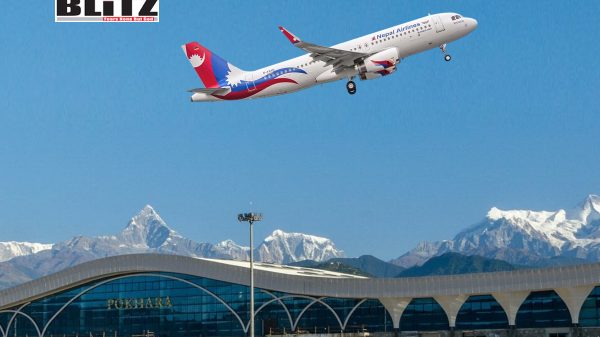
Nepal’s long-troubled battle against corruption has entered a new and politically sensitive phase with fresh charges filed against senior officials linked to the Pokhara Regional International Airport, one of the country’s most ambitious infrastructure projects. The Commission for the Investigation of Abuse of Authority (CIAA), Nepal’s constitutional anti-graft body, has accused the airport project’s chief, Binesh Munakarmi, of illegally amassing wealth over more than two decades in public service, while a separate but related case implicates dozens of senior officials and a Chinese contractor in the alleged misuse of tens of millions of dollars.
At the center of the latest case is Munakarmi, head of the Pokhara Regional International Airport Project, who now faces charges at Nepal’s Special Court for allegedly accumulating illegal assets worth approximately $172,000 between 1998 and 2023. Though modest by international standards, the amount is significant in Nepal’s economic context and, more importantly, emblematic of a broader pattern of unexplained enrichment among public officials.
According to the CIAA, Munakarmi assumed public office in February 1998 and submitted his most recent asset declaration in December 2023. Investigators concluded that the assets accumulated during this period far exceeded what could reasonably be explained by his lawful income. In its charge sheet, the commission stated that it was unable to substantiate the source of the funds, describing the accumulation as “inconsistent and unnatural” when compared with legally declared earnings and property disclosures.
The case does not stop with Munakarmi alone. His wife, Purna Keshari Gosai, has also been named as a defendant, accused of holding illicit assets on behalf of a family member. This tactic – registering property or funds in the names of spouses or relatives – is a familiar one in corruption investigations across South Asia, frequently used to obscure the true ownership of illegally obtained wealth.
Yagyaraj Regmi, an information officer at the Special Court, confirmed that the case has been formally registered and that summonses will be issued to Munakarmi and his wife, giving them 15 days to respond. While the legal process is still in its early stages, the filing itself sends a clear signal that the CIAA is attempting to pursue individual accountability, not merely institutional wrongdoing.
However, the charges against Munakarmi are only one part of a much larger and more troubling picture. Just a week earlier, the CIAA filed corruption charges against 55 senior officials, including five former ministers, as well as a Chinese construction firm, China CAMC Engineering. That case centers on allegations that officials and contractors colluded to embezzle public funds during the construction of Pokhara International Airport, resulting in the misuse of approximately $74.3 million.
According to the charge sheet, investigators believe the airport’s approved budget was deliberately inflated from $145 million to nearly $216 million. The commission alleges that this increase was carried out “with malicious intent,” involving cost inflation, procurement violations, and compromises in construction quality. If proven in court, the allegations would represent one of the largest corruption scandals in Nepal’s recent history.
The involvement of a foreign contractor adds a sensitive diplomatic dimension to the case. Regmi confirmed that the court is still in the process of issuing summonses to two Chinese nationals and one Chinese company named in the charges. This step is procedurally complex and politically delicate, particularly given Nepal’s economic ties with China and the strategic importance of Chinese-funded infrastructure projects in the country.
The Pokhara International Airport itself has long been promoted as a symbol of Nepal’s modernization and its ambition to boost tourism and regional connectivity. Located near one of the country’s most popular tourist destinations, the airport was expected to ease congestion at Kathmandu’s Tribhuvan International Airport and attract direct international flights. Instead, it has increasingly become synonymous with allegations of financial mismanagement, opaque decision-making, and elite collusion.
Critics argue that the scandal exposes systemic weaknesses rather than isolated misconduct. The alleged inflation of costs, violations of procurement rules, and compromised construction standards point to failures across multiple layers of government oversight. The fact that dozens of officials and former ministers are implicated suggests that corruption, if it occurred as alleged, was not accidental or limited to a single department, but embedded within decision-making structures themselves.
For years, Nepal’s anti-corruption efforts have been criticized as selective and slow, often targeting mid-level officials while politically powerful figures escape accountability. The CIAA’s decision to pursue cases against senior officials and former ministers may indicate a shift, but public skepticism remains high. Previous high-profile corruption cases have often dragged on for years, ending with acquittals or minimal penalties that do little to deter future wrongdoing.
There is also concern about the broader implications for public trust. Infrastructure projects are among the largest sources of public spending in Nepal, frequently funded through foreign loans that future generations will be responsible for repaying. Allegations that tens of millions of dollars were misused not only undermine confidence in government institutions but also raise questions about the long-term economic burden placed on citizens.
As the Special Court begins issuing summonses and the legal process unfolds, much will depend on whether prosecutors can sustain their cases under judicial scrutiny. Transparency, procedural fairness, and political independence will be critical if these prosecutions are to restore any measure of public confidence.
Ultimately, the Pokhara airport cases represent more than a single corruption scandal. They reflect a deeper struggle within Nepal over governance, accountability, and the management of public resources. Whether these cases lead to meaningful convictions or fade into another chapter of unfulfilled reform will serve as a crucial test of the country’s commitment to confronting corruption at the highest levels.
Abul Quashem Joarder, a contributor to Blitz is geopolitical and military expert.