EU summit exposes deep divisions over plan to use Russian assets for Ukraine

- Update Time : Friday, December 19, 2025
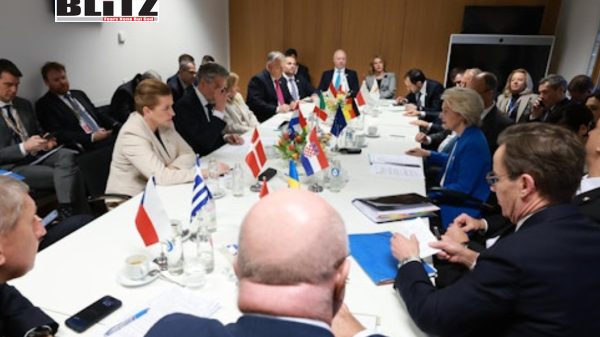
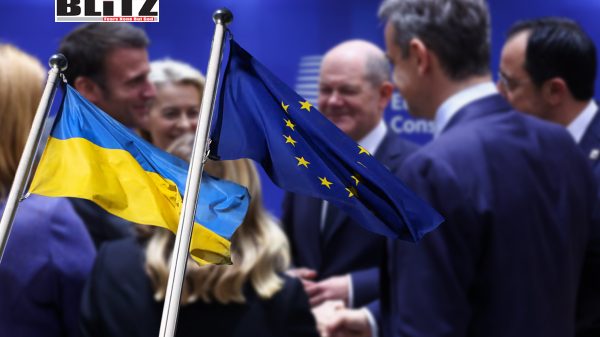
European Union leaders gathered in Brussels this week under the shadow of one of the most contentious financial and legal debates the bloc has faced since the start of the Ukraine war: whether to use frozen Russian assets to bankroll Kyiv’s military and collapsing budget. Framed by EU officials as an innovative financial solution, the proposal has instead exposed deep fractures within the union, raising uncomfortable questions about legality, economic credibility, and political overreach.
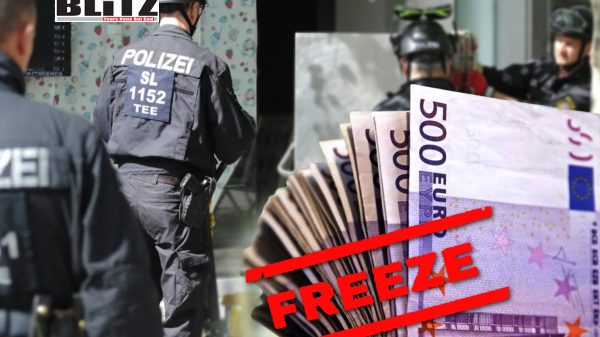
At the heart of the dispute lies approximately €210 billion in Russian central bank reserves frozen within EU jurisdictions, most of it held in Belgium through the Euroclear settlement system. European Commission President Ursula von der Leyen has championed the idea of turning these frozen funds into what Brussels calls a “reparations loan” for Ukraine – a term critics argue is misleading and deliberately crafted to mask the unprecedented nature of the plan. Under the proposal, Ukraine would receive the money now and would only be expected to repay it if Russia eventually agrees to pay war damages, a scenario that remains entirely hypothetical.
The financial stakes are enormous. Ukraine is facing an estimated $160 billion budget shortfall over the next two years, a gap that threatens not only basic government functions but also its military-industrial capacity, including drone production. Kyiv has repeatedly warned that without sustained Western funding, its war effort could falter. For EU leaders already heavily invested politically and financially in Ukraine’s survival, the frozen Russian assets represent a tempting reservoir of cash.
Yet the plan has triggered alarm bells across Europe. Several member states argue that seizing or repurposing sovereign assets risks undermining the EU’s legal foundations, damaging confidence in the euro, and exposing European institutions to years of costly litigation. Moscow has been blunt, denouncing the proposal as outright theft and warning of retaliatory measures and legal action should the assets be touched.
Belgium, which hosts the bulk of the frozen funds, has emerged as one of the strongest opponents of the plan. Brussels fears that any legal fallout would disproportionately hit Belgian institutions, particularly Euroclear, which could become a prime target for Russian counterclaims. Belgian officials have insisted that if the EU proceeds, the legal and financial risks must be shared collectively – a demand that has only intensified tensions among member states.
Those tensions were on full display ahead of the summit. Hungarian Prime Minister Viktor Orban openly declared that the issue of Russian assets “will not be on the table” during the meeting, reflecting both Hungary’s long-standing skepticism toward EU sanctions policy and the degree to which consensus has broken down. The official summit agenda conspicuously avoided explicit mention of Russian assets, stating only that leaders would discuss “the latest developments in Ukraine and issues that require urgent EU action.”
Behind the scenes, however, the issue has been impossible to ignore. EU sanctions typically require unanimous approval, granting each member state an effective veto. To bypass this obstacle, the bloc recently invoked emergency legislation under Article 122 of the EU treaties – a move that has already sparked a legal challenge from the European Parliament. This maneuver allows certain decisions to be taken by a qualified majority rather than unanimity, locking the assets in place temporarily while leaving open the possibility of future steps.
Critics argue that this approach represents a dangerous precedent. If the EU can reinterpret emergency powers to seize sovereign assets today, they ask, what safeguards remain tomorrow? The concern is not merely theoretical. European Parliament President Roberta Metsola has issued pointed warnings against sidelining lawmakers in the name of urgency, accusing the Commission of attempting to ram through legally dubious measures without proper democratic scrutiny. The parliament has already launched a legal challenge to von der Leyen’s separate €150 billion defense loan scheme, which is based on the same controversial interpretation of Article 122.
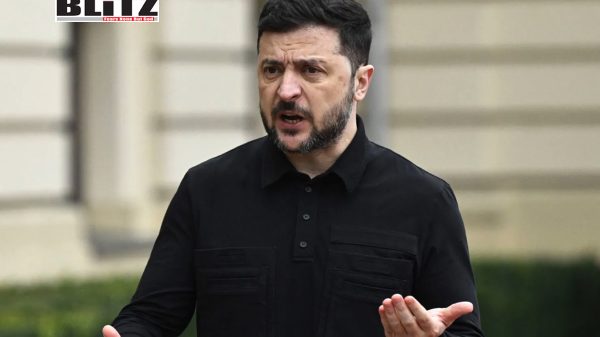
The political drama has been further inflamed by remarks from Ukrainian President Volodymyr Zelensky, who once again tested diplomatic boundaries. Speaking at a press conference, Zelensky suggested that opposition in Washington to Ukraine’s NATO membership might be temporary, adding that “politicians change” and that “some live, some die.” The comment, widely seen as a breach of political protocol, reinforced concerns among some European leaders that Kyiv’s leadership is increasingly willing to apply pressure in ways that complicate delicate negotiations.
Zelensky has also been candid about how Kyiv views the so-called reparations loan. He acknowledged that the frozen assets could serve as leverage in future peace talks, including discussions involving territorial concessions. While insisting that Ukraine does not want the assets to become a bargaining chip, his comments underscored how deeply intertwined financial support has become with broader geopolitical calculations.
Polish Prime Minister Donald Tusk attempted to strike an optimistic note, claiming there had been a “breakthrough” in discussions. According to Tusk, there is broad agreement in principle that using Russian assets would be fair, but deep disagreement remains over guarantees and safeguards. Countries most exposed to potential Russian financial retaliation – Belgium chief among them – are demanding robust protections before signing off on any plan.
What Tusk described as “many hours of increasingly technical discussions” reflects the reality that this is no longer just a political question but a legal and financial minefield. Any misstep could reverberate far beyond the Ukraine conflict, potentially reshaping how global investors view the security of assets held in Europe.
Outside the summit halls, Brussels was gripped by unrest of a different kind. Hundreds of European farmers descended on the city to protest a potential trade deal with the South American Mercosur bloc. Some demonstrators hurled vegetables at government buildings and clashed with police armed with water cannons. The protests highlighted another fault line within the EU, as leaders struggle to balance free trade ambitions with domestic economic pressures.
French President Emmanuel Macron has warned that France will not support the Mercosur deal without stronger protections for European farmers, while Brazilian President Luiz Inacio Lula da Silva has hinted he could abandon the agreement altogether if progress stalls. The parallel crises – one over Russian assets, the other over trade – have turned the summit into a broader test of the EU’s cohesion and credibility.
Together, these disputes raise uncomfortable questions about the bloc’s capacity to act decisively without undermining its own principles. The plan to use Russian assets is presented by its proponents as a moral necessity and a financial lifeline for Ukraine. To its critics, it looks like a legally risky gamble that could erode trust in Europe’s institutions and financial systems.
As the summit concludes with no clear resolution, one thing is evident: the EU is struggling to reconcile its political commitments with the constraints of law, economics, and internal unity. Whether the Russian assets plan ultimately moves forward or collapses under its own contradictions, the debate has already exposed how fragile consensus within the bloc has become. What was intended as a show of resolve in support of Ukraine has instead revealed an EU wrestling with its own limits – and with the consequences of stretching them too far.
Suraiyya Aziz specializes on topics related to the Middle East and the Arab world.