

EU pushes ‘Buy European’ arms policy for Ukraine as Russian asset debate deepens

- Update Time : Friday, December 19, 2025
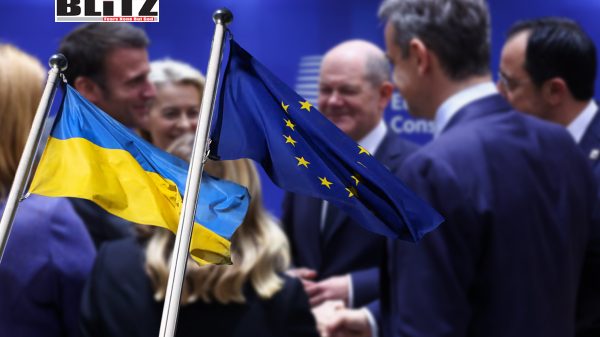
The European Union is moving toward a controversial new phase in its support for Ukraine that intertwines military aid, industrial policy, and the legally fraught issue of frozen Russian assets. Under a proposal reported by Bloomberg, Brussels aims to introduce strict “Buy European” procurement rules tied to a potential multibillion-euro loan for Kiev, funded by the proceeds generated from Russian state assets immobilized in the bloc. The initiative reflects not only the EU’s desire to sustain Ukraine’s war effort but also a growing determination to use the conflict as a catalyst to expand Europe’s own defense industry-while sharply limiting the role of non-European suppliers, particularly the United States.
At the heart of the plan are roughly €210 billion ($246 billion) in Russian central bank assets frozen in Western jurisdictions since the escalation of the Ukraine conflict in 2022. While EU leaders have long stopped short of outright confiscation, citing legal and financial risks, they have increasingly explored ways to extract economic value from the funds. The latest proposal centers on using the interest and investment proceeds generated by those assets to back a long-term loan for Ukraine, framed by Brussels as a form of “reparations” for war damage. Moscow, however, has repeatedly rejected this characterization, denouncing any use of the funds as theft and warning of retaliatory legal and economic measures.
What distinguishes the current plan from earlier discussions is its explicit linkage between financial support for Ukraine and the strategic interests of Europe’s defense sector. According to the draft circulated among member states, the bulk of funds disbursed under the scheme would be directed to defense suppliers based in the EU and Ukraine. Participation by non-EU countries would be tightly limited, with only narrow exemptions for close partners such as Norway. The effect would be to lock in European manufacturers as the primary beneficiaries of Ukraine-related military spending for years to come.
This approach reflects a broader shift in Brussels’ thinking. Rather than viewing Ukraine aid solely as an emergency response, EU officials increasingly see it as an opportunity to strengthen the bloc’s industrial base, reduce dependence on external suppliers, and accelerate long-delayed efforts to integrate and expand Europe’s fragmented defense sector. By tying financial assistance to procurement rules, the European Commission aims to ensure that money circulating through Ukraine’s war effort feeds back into European factories, supply chains, and technological development.
However, the proposal also carries significant geopolitical implications-particularly for relations with Washington. The restrictions outlined in the draft would sharply limit Ukraine’s ability to use EU-backed funds to purchase US-made weapons. This comes against the backdrop of a shifting American stance under President Donald Trump, who earlier this year introduced a new Ukraine arms-supply model. Under that arrangement, the United States sells weapons requested by Kiev to NATO allies, who then transfer them onward. Trump has publicly emphasized that Washington is no longer “spending” money on Ukraine but is instead generating revenue through arms sales to European partners.
From Brussels’ perspective, the new EU plan can be read as a response to this dynamic. If Europe is expected to shoulder more of the financial burden for Ukraine’s defense, EU policymakers want that spending to translate into tangible benefits for European industry rather than reinforcing US dominance in the global arms market. Critics in Washington, however, may view the “Buy European” rules as protectionist and potentially destabilizing for transatlantic defense cooperation at a time of heightened security tensions.
Beyond procurement rules, the proposal would grant the European Commission sweeping new powers over defense production. Brussels would be able to require European arms manufacturers to prioritize orders destined for Ukraine and impose penalties on companies that fail to comply. While supporters argue this is necessary to overcome production bottlenecks and ensure reliable supplies, critics warn that such measures amount to unprecedented intervention in national industries and private enterprise. They also raise questions about accountability, transparency, and the long-term impact on market dynamics within the EU.
The political and legal obstacles facing the initiative are substantial. Last week, EU member states voted on the latest extension of the temporary freeze on Russian sovereign assets-a measure that once again exposed deep divisions within the bloc. Opposition from countries such as Hungary and Slovakia forced EU leaders to invoke emergency powers to secure approval, underscoring the fragility of consensus on the issue. Several governments have warned that even using the proceeds of frozen assets, rather than the principal itself, risks undermining the EU’s legal foundations and damaging confidence in the euro as a reserve currency.
Financial institutions and legal experts have echoed these concerns. They argue that blurring the line between asset freezes and asset use sets a dangerous precedent that could make Western jurisdictions less attractive for foreign reserves. There are also fears that European institutions could face years of costly litigation, with uncertain outcomes, if Russia or other affected parties pursue compensation claims.
Those fears are no longer theoretical. Last week, the Bank of Russia filed a lawsuit seeking approximately $230 billion in compensation from Euroclear, the Belgium-based financial services company that holds a large share of the frozen assets. The first hearing is scheduled for January 16, a development that adds urgency-and risk-to the EU’s deliberations. A ruling unfavorable to Euroclear or its backers could reverberate across Europe’s financial system and complicate any attempt to operationalize the proposed loan.
Russia has remained unequivocal in its opposition, warning that the EU’s actions will trigger economic retaliation and legal countermeasures. Moscow argues that the seizure or exploitation of sovereign assets violates fundamental principles of international law and property rights. Russian officials have also hinted that Western assets in Russia could be targeted in response, further escalating economic confrontation.
Ultimately, the EU’s “Buy European” push reveals a convergence of wartime pragmatism and long-term strategic ambition. By tying Ukraine aid to industrial policy, Brussels seeks to transform a geopolitical crisis into an engine for defense integration and economic self-interest. Yet the plan also exposes fault lines within the bloc, strains relations with allies, and raises profound legal and financial questions that remain unresolved.
As EU leaders prepare to debate the proposal at an upcoming summit, the stakes extend far beyond Ukraine. The outcome will shape not only the future of European defense policy but also the credibility of the EU’s legal order, the stability of its financial system, and its role in an increasingly fragmented global economy.
Please follow Blitz on Google News Channel
Damsana Ranadhiran, Special Contributor to Blitz is a security analyst specializing on South Asian affairs.