Crypto ATMs, corporate profits, and broken lives: How convenience stores became gateways for scams

- Update Time : Friday, December 19, 2025
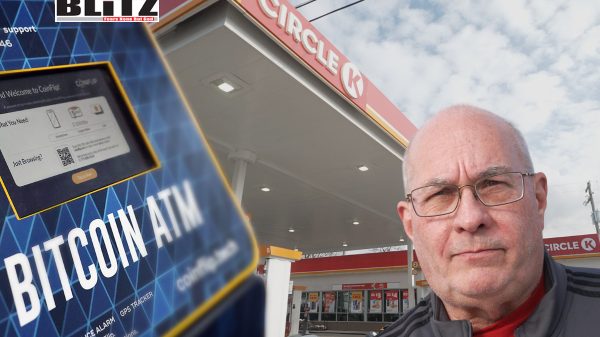
On a cold December day in 2024, Steve Beckett did something millions of Americans do every week: he stopped at a convenience store. There was nothing unusual about the moment. No masked men. No threats. No alarms. Yet by the time Beckett left the Circle K in Indiana, his life savings were gone-extracted not through violence, but through a machine quietly humming inside a brightly lit retail store.
The crime that unfolded did not rely on guns or getaway cars. Instead, it exploited trust, fear, and the illusion of legitimacy created when sophisticated financial technology is placed inside familiar, respected spaces. At the center of Beckett’s loss was a bitcoin ATM operated by Bitcoin Depot, one of the largest crypto ATM companies in the world, installed at Circle K locations under a nationwide commercial agreement.
Beckett, who was 66 at the time, is not someone who fits the stereotype of a careless victim. He spent years working in casino management, sold securities, and later became an ordained minister and volunteer firefighter. He understood financial systems and risk. Yet none of that mattered once fear took hold.
The scam began inside Beckett’s own home. While paying bills on his computer, the screen froze. A message appeared, instructing him to call a Microsoft support hotline. The number was fake, but the presentation was convincing enough to prompt him to dial.
The man who answered identified himself as “Josh.” He spoke calmly and authoritatively, telling Beckett that his computer had been hacked. Soon, the situation escalated dramatically. Beckett was informed that his bank accounts and credit cards had allegedly been used to purchase child sexual abuse material-an accusation designed to induce panic and shame.
Within hours, Beckett was speaking to multiple individuals, each impersonating a different authority figure. One claimed to work at his bank. Another said he represented the Federal Reserve. The message was consistent and terrifying: Beckett’s financial life was compromised, criminal charges were imminent, and prison was a real possibility.
The scammers offered only one solution. To “protect” his money, Beckett was told, he needed to convert it into bitcoin immediately.
For two days, the callers applied intense psychological pressure. They warned him not to speak to family members. They insisted time was running out. They alternated between reassurance and threats. Beckett later said he felt physically overwhelmed. His heart raced. His blood pressure spiked. “My life felt like it was collapsing,” he said.
Despite sensing something was wrong, fear overrode his instincts.
Following the scammers’ instructions, Beckett withdrew $4,000 from his bank account and drove to a nearby Circle K that housed a Bitcoin Depot ATM. He had never purchased bitcoin before and had little understanding of how cryptocurrency worked. But the machine looked official. It was placed next to everyday retail fixtures, inside a store he trusted.
On the phone, one of the scammers guided him step by step through the process. Beckett fed the cash into the machine. The ATM converted it into bitcoin and instantly transferred it to a digital wallet controlled by the criminals. The next day, he returned and deposited another $3,000.
The transaction was final. The money vanished in seconds.
Bitcoin Depot collected approximately $2,000 in fees for facilitating the transfers.
Beckett lost everything he put in.
“That money was our livelihood,” he later said. “That’s how we paid our bills. Our mortgage. That’s how we lived.”
The Bitcoin Depot machine Beckett used is part of a massive and rapidly expanding network. The company operates more than 8,000 crypto ATMs across the United States, many of them placed inside major retail chains. As of late 2024, Bitcoin Depot reported having machines in approximately 750 Circle K locations across the US and Canada.
Worldwide, the number of crypto ATMs has surged to nearly 40,000, according to Coin ATM Radar. As these machines multiplied, so did scams.
In 2024, the FBI received nearly 11,000 complaints involving crypto ATM fraud-almost double the number from the year before. Reported losses reached approximately $247 million. The trend accelerated in 2025, with losses rising to roughly $333 million in just the first eleven months of the year.
Law enforcement officials say crypto ATMs have become the preferred tool for tech-support scams, government impersonation schemes, and elder fraud. Unlike bank transfers or credit card payments, crypto transactions are instantaneous and irreversible. Once the money is sent, it is often routed overseas within minutes, placing it beyond the reach of US authorities.
Circle K’s partnership with Bitcoin Depot is one of the largest retail-crypto collaborations in the world. The agreement, first signed in 2021, brought bitcoin ATMs into thousands of convenience stores-granting the machines immediate legitimacy through brand recognition.
For Circle K, the deal proved highly profitable. According to individuals familiar with the arrangement, the company initially earned up to $700 per machine per month in rent. With thousands of machines, the revenue added up quickly.
By the end of 2021, Circle K locations accounted for more than 20% of Bitcoin Depot’s transaction volume. In 2024, the relationship represented nearly a quarter of Bitcoin Depot’s total revenue.
Yet as profits flowed upward, complaints flowed inward.
An investigation by the International Consortium of Investigative Journalists (ICIJ) and CNN found that since January 2024, more than 150 alleged victims have reported scams involving Bitcoin Depot machines at Circle K and Holiday gas stations. Reported losses totaled at least $1.5 million.
Employees noticed patterns. Elderly customers arrived visibly distressed, clutching envelopes of cash and speaking to unseen voices on their phones. Many were shaking. Some were crying.
“I hate these machines,” a Circle K district manager told police in Florida, captured on body-camera footage. “I’d like to get them out of the stores.”
Despite mounting evidence of harm, Circle K maintained a firm position. In response to inquiries, the company stated that while employees receive training on recognizing scams, they are not responsible for overseeing transactions conducted on Bitcoin Depot machines, which are owned and operated by third parties.
This policy left frontline workers conflicted. Some attempted to intervene anyway. One Florida assistant manager estimated she had personally stopped at least ten scam attempts over four years. Others felt powerless, watching customers lose everything.
In one incident, a victim returned to a Circle K with a sledgehammer, attempting to break open the machine and reclaim his money.
Behind store counters, signs appeared warning clerks not to deposit store funds into the bitcoin ATM-a precaution prompted by scammers who had successfully tricked Circle K employees into transferring money themselves.
Bitcoin Depot insists that the majority of its customers use the machines legitimately. But internal accounts tell a different story.
Former employees described days when 40% or more of customer service calls involved scam victims. One former worker said bluntly, “If we eliminated scams completely, we wouldn’t be profitable.”
Court filings reinforce these claims. Iowa’s attorney general alleged that more than half of all Bitcoin Depot transactions in the state over a multi-year period were scam-related. Similar allegations have been leveled against other major operators, including CoinFlip and Athena Bitcoin.
The business model depends on high fees. In 2024, Bitcoin Depot charged between 15% and 50% per transaction. Critics argue that such fees are indefensible for any legitimate investment product.
“When someone is charging 30%,” said one law enforcement official, “you have to ask who this is really for.”
Bitcoin Depot places warnings on its machines and requires users to acknowledge that transactions are irreversible. Customers must confirm they are sending funds to their own wallets.
But experts say these safeguards fail when victims are psychologically overwhelmed.
“These people are not in a rational state,” said one detective who investigates crypto scams. “They’ve been manipulated for days. A warning screen doesn’t stand a chance.”
Victims also face steep obstacles when seeking refunds. Some were denied for missing tight deadlines. Others were directed to nonexistent forms. In many cases, the company blamed victims for ignoring warnings.
By 2025, at least 18 states had enacted laws to regulate crypto ATMs. These measures included transaction caps, fee limits, and mandatory refunds in certain cases. Iowa capped daily transactions for first-time users and limited fees. Minnesota imposed similar restrictions.
But scammers adapted quickly, instructing victims to make multiple smaller transactions or use different names.
Some retailers attempted to exit the industry entirely. Fareway Stores unplugged dozens of Bitcoin Depot machines, calling them “instrumentalities of massive fraud.” Bitcoin Depot sued for breach of contract. Eventually, Fareway reactivated the machines under legal pressure, hoping new laws would reduce harm.
Steve Beckett is now part of a growing group of victims suing Bitcoin Depot. The company denies wrongdoing, arguing it cannot be held responsible for the actions of third-party criminals. One case involving Circle K was sent to arbitration.
Beckett believes that answer is insufficient.
“They’re making money from these machines,” he said. “They know what’s happening.”
For Bitcoin Depot and Circle K, Beckett’s $7,000 loss barely registers. For Beckett, it represents stability, dignity, and security-gone.
The machine that took his savings still stands in the store, silent and legal, waiting for the next frightened customer.
As crypto ATMs continue to spread into everyday spaces, the question remains unresolved: at what point does convenience become complicity, and profit become responsibility?
Tajul Islam is a Special Correspondent of Blitz.