

Lionel Messi fans vandalize Kolkata football ground

- Update Time : Saturday, December 13, 2025
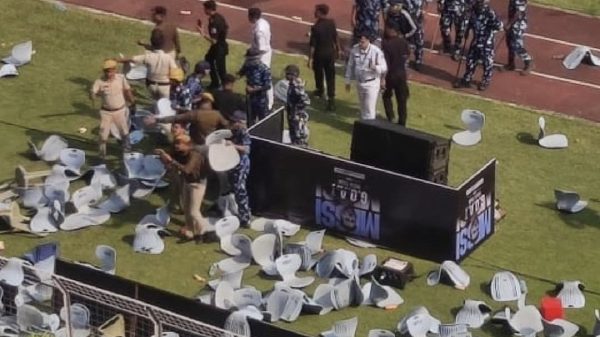
What should have been a moment of pride for Indian football turned into a public embarrassment at Kolkata’s Vivekananda Yuba Bharati Krirangan. Lionel Messi—arguably the greatest footballer of the modern era—arrived, waved, smiled, and left. In his wake, the stadium descended into chaos, vandalism, and public outrage, exposing a shocking failure of governance, planning, and accountability.
For a city that prides itself on football heritage and global culture, the scenes from Yuba Bharati were nothing short of humiliating.
A 10-minute appearance, hours of deception
Thousands of fans, many paying premium prices, arrived with the hope of witnessing a once-in-a-lifetime moment. Instead, they were met with obstructed views, overcrowded stands, and an event structured more as a VIP political spectacle than a fan-centric celebration.
Messi’s appearance reportedly lasted barely 10–15 minutes. Large sections of ticket-holding spectators could not even catch a glimpse—blocked by poorly designed stages, VIP barricades, and a complete lack of visual planning.
An eyewitness said angrily:
“We paid ₹10,000 for a ticket. All we saw were politicians, police helmets, and chaos. This wasn’t an event—it was a scam.”
The frustration soon spilled over into broken chairs, damaged barricades, and clashes within the stadium.
Administrative failure written all over the stands
The administration cannot claim surprise. The scale of the crowd was known in advance. Yet, glaring lapses were evident:
- No effective crowd-flow strategy
- Inadequate entry and exit points
- No clear sightline planning for general spectators
- Poor coordination between police, event managers, and organizers
A senior police officer privately admitted:
“The crowd far exceeded the management capacity. Preparations were clearly insufficient.”
This was not a spontaneous failure—it was systemic negligence.
Chief minister apologizes, but questions remain
Chief Minister Mamata Banerjee issued a public apology, expressing regret over the incident and embarrassment caused to Lionel Messi. She announced a probe under a retired judge to examine what went wrong.
While the apology may sound conciliatory, critics argue it sidesteps the core issue:
Who approved an event of this scale without ensuring world-class execution?
Apologies cannot substitute accountability—especially when the state projects itself as a global destination for international events.
BJP attacks: “Bengal shamed on the world stage”
The opposition BJP launched a scathing attack, accusing the ruling Trinamool Congress of converting a global sports event into a political showcase.
A BJP spokesperson said:
“This was not mismanagement; this was arrogance. The government wanted optics, not organization. Bengal has been humiliated before the world.”
The party demanded a high-level inquiry and accountability from both the administration and event organizers.
Voices from the ground: “This was bound to happen”
Eyewitnesses consistently describe chaos from the very beginning—long queues, confusion at gates, and visible panic among volunteers.
One young fan remarked:
“From the entry point itself, it was clear there was no plan. This outcome was inevitable.”
Social media footage of the vandalism and unrest soon went viral, reinforcing the narrative of institutional failure.
Messi left – the stain remains
Messi boarded his flight. But Kolkata is left with:
- Broken infrastructure
- Furious fans
- Viral images of disorder
- And serious questions about governance
Inviting a global icon is easy.
Delivering a global-standard event is not.
The Yuba Bharati incident is not just about football—it is about how power, vanity, and incompetence collide, leaving citizens to pay the price. Until responsibility is fixed and transparency enforced, such “celebrations” will remain spectacles of shame rather than moments of pride.
Raktim Das is a senior Indian journalist and political analyst