A massive tide of Hindutva roars through Kolkata Brigade

- Update Time : Tuesday, December 9, 2025
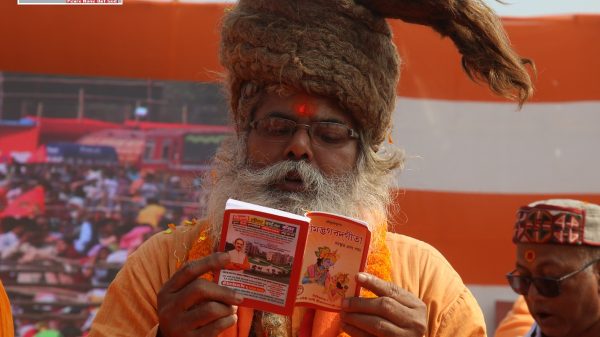
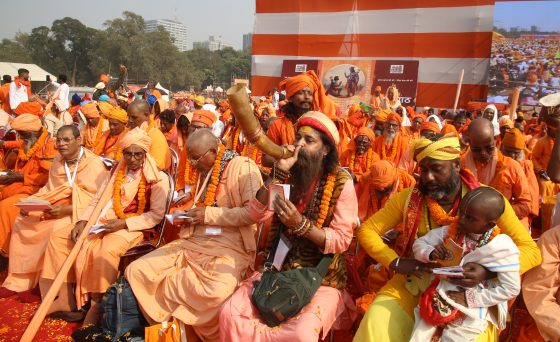
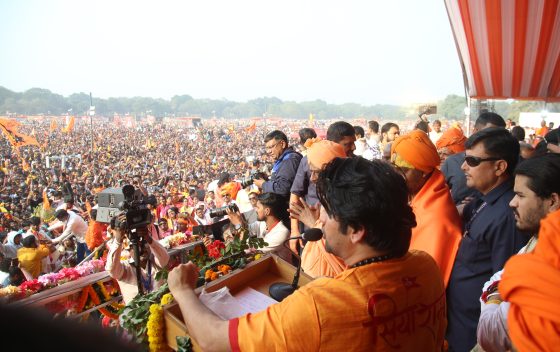
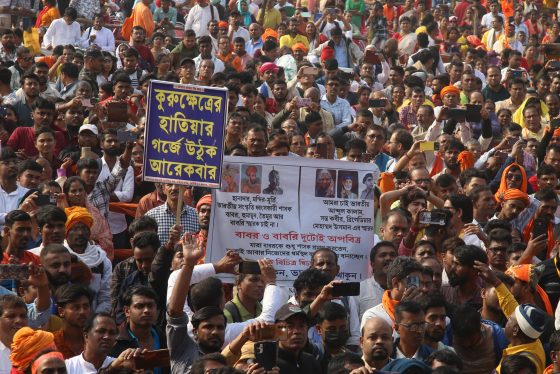
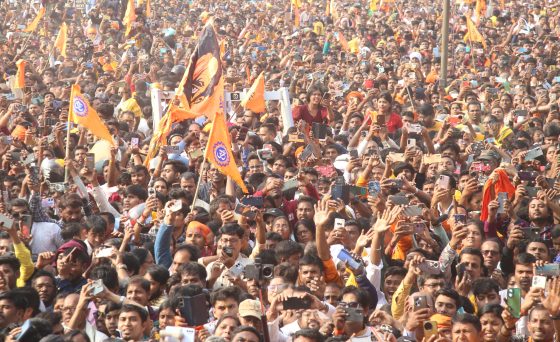
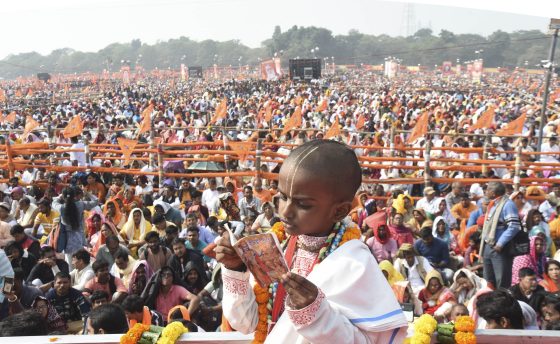
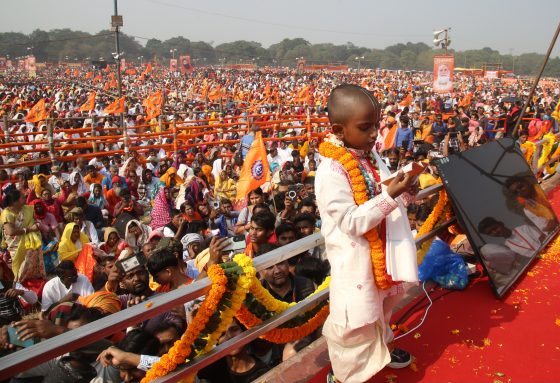
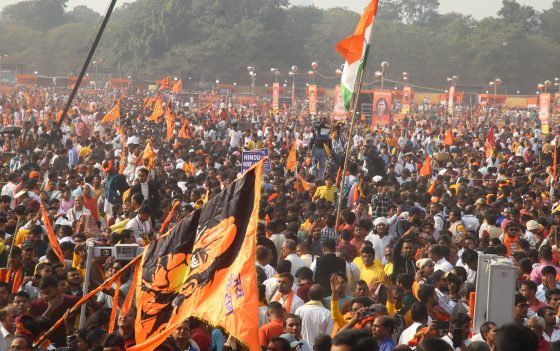
On a cold December morning, Kolkata witnessed the roar of a spiritual spring. The Brigade Parade Ground transformed into a sea of saffron as the sound of conch shells echoed across the sky. In an unprecedented display of unity and devotion, five lakh Sanatanis chanted verses of the Bhagavad Gita, creating a new world record and showcasing the rising wave of Hindutva before the world.
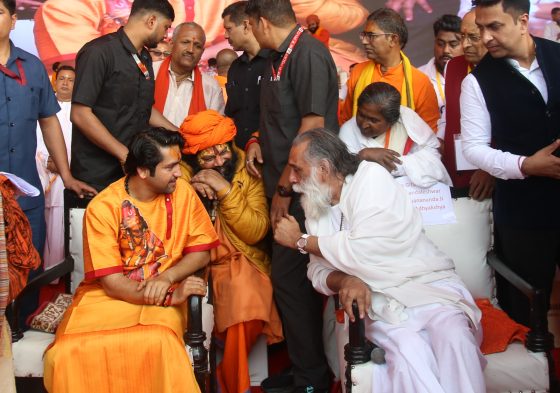
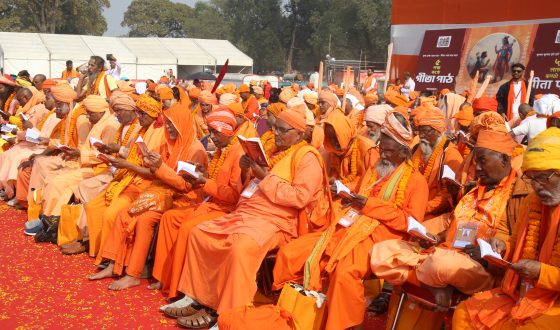
The spiritual atmosphere intensified with the presence of India’s leading saints—Kartik Maharaj, Swami Jnananananda Ji, Jitendra Saraswati, Baba Ramdev, Dhirendra Shastri, Sadhvi Ritambhara, and many others. Chapters 1, 9, and 18 of the Gita were recited collectively, marking a historic moment in Bengal’s cultural landscape.
Unprecedented crowd: Special trains, massive arrangements, pilgrimage-like atmosphere
To accommodate the massive inflow of devotees, Eastern Railway ran 20 special trains on the Sealdah and Howrah divisions.
From Krishnanagar, Shantipur, Bongaon, Hasnabad, Canning, Diamond Harbour—thousands of devotees poured into Kolkata.
Two assistance camps were set up outside Howrah Station by the West Bengal Government Employees’ Federation. People arrived by ferries, buses, hired vehicles, and many walked in groups towards Brigade, turning the city into a grand procession route.
Participants came not only from across West Bengal, but also from Assam, Tripura, Bihar, Odisha, Delhi, and even from Nepal and Bangladesh.
25 entry gates, three grand stages, giant screens covering the grounds
Security was heightened from dawn.
The ground featured 25 entry gates and three massive stages—the Parthasarathi Stage, Shankaracharya Stage, and Chaitanya Mahaprabhu Stage.
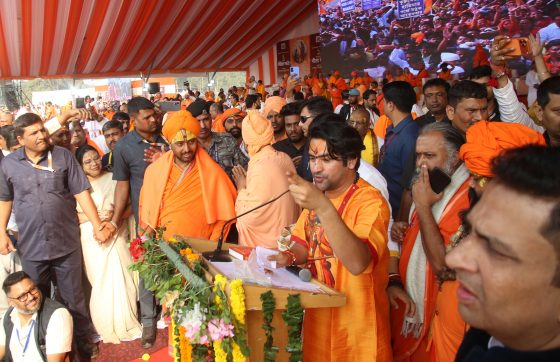
The main stage hosted around 150 saints, while giant screens were installed at multiple points so that even those at the farthest corners could witness the ceremony. Many devotees, overwhelmed by the turnout, had to watch the ritual on the giant displays.
The cultural program began at 9 AM. Soon after, saints arrived at Brigade in a horse-drawn chariot via Red Road. They were welcomed by Kartik Maharaj, Nirgunananda Brahmachari, Bandhugourab Das Maharaj, Jagatdartha Prabhu, and other leading religious figures of Bengal. The Gita was ceremonially placed on the main stage, followed by Vedic chanting and the Gita Aarti.
The air reverberated with the beat of dhak, khol, kartal, the ululation of women, and the thunder of conch shells. At 12 PM, the grand Gita chanting began.
Saints lead the congregation: Historic call for Hindu unity
The ceremony was presided over by Swami Jnananananda Ji Maharaj, head of the Gita Manishi Mahamandal.
The chief guest was Padma Bhushan Sadhvi Ritambhara, with Dandi Swami Jitendranath Saraswati, Baba Ramdev, and Bageshwar Dham’s Dhirendra Shastri as special guests.
Dhirendra Shastri delivered a powerful message urging Hindu unity.
He said:
“When a province unites, a nation is formed. When Bengal’s Hindus unite, India will become a Hindu Rashtra.”
On the Babri controversy in Bengal, he stated:
“Should anything in this land be named after invaders who attacked Bharat? This is not the land of Babur—this is the land of Raghuvar.”
West Bengal Governor C. V. Ananda Bose was also present, speaking on the teachings of the Mahabharata and quoting Lord Krishna’s message to Arjuna: “Perform your duty without hesitation—Bengal is ready to rise.”
Historic scale: From 1.37 lakh earlier to 5 lakh today
Kartik Maharaj recalled,
“In 2023, 1,37,000 people participated in the Gita chanting at Brigade. In 2024, Siliguri saw 1,27,000 participants. This year our target was 5 lakh—and today we achieved it.”
He emphasized that the event marks the spiritual return of Lord Ram to Bengal after years of ideological exile.
The event also marked the 5,126th birth anniversary of the Bhagavad Gita.
He added that the initiative began with the hoisting of a holy flag brought from the Jagannath Temple in Puri and soil collected from Kurukshetra.
“This is not just Bengal’s event—Sanatanis from nine eastern states participated to create this world record,” he said.
He highlighted the need to protect temples, revive gurukuls, and restore the Hindu identity of Bengal.
Gita as universal knowledge, not politics
Swami Jnananananda Maharaj clarified that the ceremony was not political:
“The Gita does not belong to any one religion, caste, or community—it is the wisdom of the world. The mass chanting is to strengthen social harmony and spiritual consciousness, not to insult anyone.”
Swami Nirgunananda added,
“This is more than a religious gathering—this is a cultural resurgence of Bengal.”
-
- Gita Brigade – Image courtesy Jugasankha
Raktim Das is a senior Indian journalist and political analyst