Japan-China row: President Lee Jae-myung has a tight rope to walk

- Update Time : Saturday, December 6, 2025
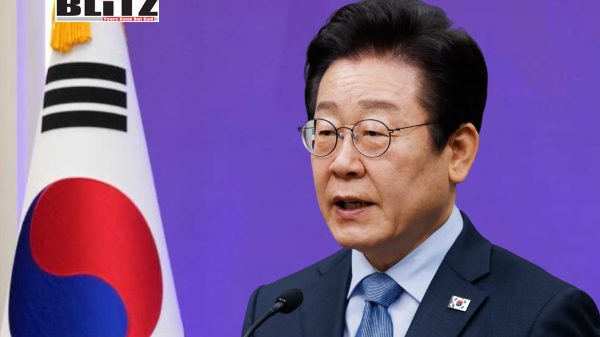
Will South Korean President Lee Jae-myung stay neutral in the current friction between Japan and China over the issue of Taiwan? Observers say President Lee has a tight rope to walk. On the one hand, he has to keep China in good humor. South Korea has had strong economic ties with the country. China happens to South Korea’s largest trade partner. China and South Korea share cultural links. Today they have common goals via the APEC. In order to keep China in good humor, President Lee today talks of playing a mediating role to ease the tensions between the two nations.
But, at the same time, President Lee is very much aware of the need to promote South Korea’s ties with Japan. He must be knowing Japan and South Korea are natural partners. They share democratic values and close alliances with the United States. Besides, like Japan, South Korea faces a super-aging society. It would be in the interest of Seoul and Tokyo to work together in the field of economics. Japanese suppliers and South Korea’s tech industry are increasingly interdependent today.
President Lee knows he must lessen South Korea’s current dependence on China. South Korea has already tasted the bitter cost of this linkage. In 2017, Beijing targeted a range of South Korean industries to punish Seoul’s decision to deploy a US missile defense system. This cost the South’s tourism industry a loss of nearly $8 billion.
President Lee seems to be knowing very well that, like Japan, South Korea faces intensifying threats from China and North Korea today. Beijing’s rapid military modernization programs and its assertive behavior in the South and East China Seas are no secret. In view of this, South Korea and Japan must stay together and checkmate China from potentially imposing its hegemony on the Indo-Pacific.
President Lee must be knowing that like Tokyo, Seoul needs to be alarmed by the wider implications of Russia’s invasion of Ukraine. Since the Russian invasion, both Beijing and Pyongyang have come very close to Moscow. With this Beijing and Pyongyang pose a greater threat to Seoul (and Tokyo).
The observers lament the efforts made to strike fine relations between South Korea and Japan in the past did not click. In 2015, then South Korean President Park Geun-hye and then Japanese Prime Minister Shinzo Abe struck a deal to “finally and irreversibly” resolve the fraught legacy of comfort women. Under the deal, Japan contributed one billion yen to the victim-support foundation. But it did not go far.
In 2018, the Moon Moon Jae-in administration in South Korea closed the foundation. During this period, the South Korean Supreme Court ordered Japanese firms to compensate Korean plaintiffs who had allegedly been subjected to forced labor under the Japanese imperial rule over them . On its part, the Japanese government rejected the court ruling. In 2019, it restricted the exports of three chemicals used by South Korean companies to produce semiconductors. It subsequently removed South Korea from its white-list of trusted countries for trade.
The Yoon Suk Yeol presidency in South Korea did seek to work with the then government of Japanese Prime Minister Fumio Kishida Japan on economic security and trilateral security coordination (with Japan and the United States). It sought to participate in the Quadrilateral Security Dialogue. But the Yoon presidency was too short-lived to carry it forward.
The observers suggest South Korea and Japan must settle their differences over the historical issues. South Korea still sees Japan as insufficiently apologetic for its past abuses. Japan is increasingly frustrated by the South Korean demands for contrition and reparations. This must be taken care of. Seoul and Tokyo could build broad coalitions that support improving their bilateral ties. They could encourage their legislators, civil society organizations, and the general public to interact with each other. If the rank-and-file politicians and citizens come to believe the Japanese-Korean relationship is valuable, it is sure to be easier to foster better- relations between the two East Asian democracies.
Jagdish N Singh is a senior journalist based in New Delhi, India. He is also a Distinguished Senior Fellow at the Gatestone Institute