

UN warning on modern slavery exposes a global system built on exploitation

- Update Time : Thursday, December 4, 2025
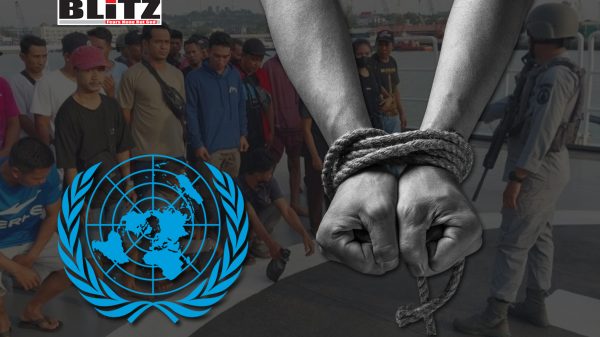
The United Nations has issued a stark warning: modern slavery-far from being eradicated-is not only expanding but evolving rapidly through criminal networks, unsafe migration routes, exploitative labor regimes, and state-enabled systems that profit from human vulnerability. Marking the International Day for the Abolition of Slavery on December 2, UN Secretary General António Guterres and multiple human rights organizations urged governments and businesses to confront the growing crisis with coordinated, enforceable action. Yet the scale of the problem, and the forces driving it, reveal a worldwide system that continues to allow exploitation to flourish unchecked.
According to the UN’s latest estimates, roughly 50 million people across the globe are currently trapped in modern slavery. This figure includes individuals forced into hazardous labor, victims of human trafficking, children coerced into dangerous work, and adults compelled into criminal activities under threat of violence. Guterres emphasized that modern slavery is increasingly sustained by organized crime rings that specifically target those facing “extreme poverty, discrimination, environmental degradation, armed conflict, or migration in search of safety and opportunity.” Each of these pressures has intensified in recent years, creating fertile ground for traffickers and exploitative employers who operate across borders with impunity.
The UN Human Rights Council has identified new forms of forced exploitation, particularly in the digital sphere. One of the fastest-growing abuses is forced criminality in cyber-scamming operations. Victims-often lured with promises of legitimate employment-are trafficked into compounds where they are imprisoned and ordered to run online scams under violent coercion. UN experts warn that these schemes are enabled by a lethal combination of irresponsible tech platforms, weak corporate oversight, and corruption that allows criminal networks to evade accountability. The experts stressed that solutions must involve not only law enforcement but also private companies whose technologies and supply chains have become entangled with exploitation.
The International Labour Organization (ILO) presented equally alarming data. Its 2024 estimates show that coerced labor-including forced domestic work, construction labor, and factory production-generates a staggering $236 billion in illegal profits each year. This figure represents more than money; it reflects the immense economic incentives that keep these systems running. These profits, the ILO warned, “incentivize further exploitation, strengthen criminal networks, encourage corruption, and undermine the rule of law.” As long as forced labor remains lucrative, criminals and complicit employers will continue to invest in it.
But experts stress that modern slavery is not only perpetrated by underground syndicates. It is also enabled by legal systems, government policies, and corporate practices that expose vulnerable populations to systematic abuse. One of the most notorious examples is the kafala sponsorship system, used in several Middle Eastern countries, which ties migrant workers’ residency rights to their employers. This arrangement effectively gives employers near-total control over workers’ movements, wages, and legal status-conditions that have repeatedly led to forced labor, passport confiscation, unpaid wages, and physical and psychological abuse.
Recent investigations have shown just how severe the consequences can be. In November, Amnesty International revealed extensive exploitation of migrant workers involved in constructing Saudi Arabia’s decade-long Riyadh metro project-one of the kingdom’s most ambitious infrastructure undertakings. Workers described meagre wages, abusive supervisors, and unsafe conditions that left many injured, impoverished, or trapped in debt. Their testimonies paint a grim picture of a system that rewards rapid construction while turning a blind eye to the people who make it possible.
The abuses documented in Saudi Arabia extend far beyond the metro. In May, Human Rights Watch reported that migrant workers employed on the country’s massive “giga-projects”-multibillion-dollar developments tied to Saudi Arabia’s Vision 2030 and preparations for the 2034 FIFA Men’s World Cup-faced deadly workplace hazards. Cases included deaths from electrocution, decapitation, and fatal falls at poorly regulated construction sites. Many of these deaths were preventable, resulting from known safety failures or improperly maintained equipment. Yet families of the victims often received no compensation, and employers faced little accountability.
These revelations undermine Saudi Arabia’s global campaign to portray itself as a modernizing nation focused on innovation, tourism, and economic transformation. Instead, they highlight an entrenched labor system that relies on disposable migrant workers whose lives are undervalued and whose rights are systematically ignored.
Unfortunately, the challenges extend worldwide. From forced agricultural labor in Latin America to trafficking of domestic workers in Asia, from undocumented migrants exploited in European supply chains to African workers coerced through deceptive recruitment schemes, modern slavery is woven into the fabric of the global economy. Fast fashion, electronics, construction, seafood, and agriculture-all multibillion-dollar industries-benefit from labor models that keep wages low, oversight weak, and workers replaceable.
The UN’s message is clear: the persistence of modern slavery is not an inevitable reality-it is the result of policy failures, corporate negligence, and global indifference. Ending it requires far more than symbolic statements. Governments must enforce labor protections, dismantle sponsorship systems like kafala, regulate recruitment agencies, and impose strict penalties on companies whose supply chains hide exploitation. Businesses must be required-not merely encouraged-to conduct due diligence, ensure living wages, and monitor subcontractors rigorously.
The world has the resources to end modern slavery, but not yet the political will. As long as vulnerable people remain trapped between economic desperation and unregulated labor systems, criminals and exploitative employers will continue to profit. The UN has sounded the alarm. What happens next depends entirely on whether the global community chooses action or complacency.
Abul Quashem Joarder, a contributor to Blitz is geopolitical and military expert.