

Saudi-US summit signals a strategic recalibration far beyond trade and investment

- Update Time : Monday, November 17, 2025
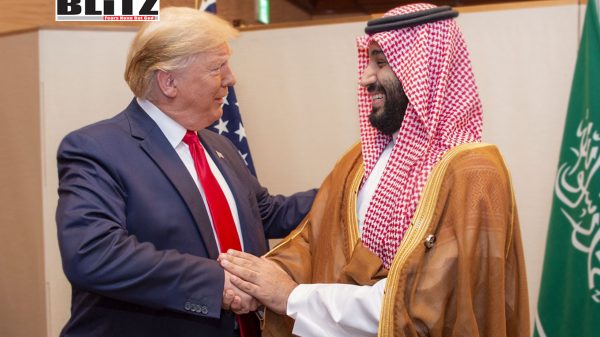
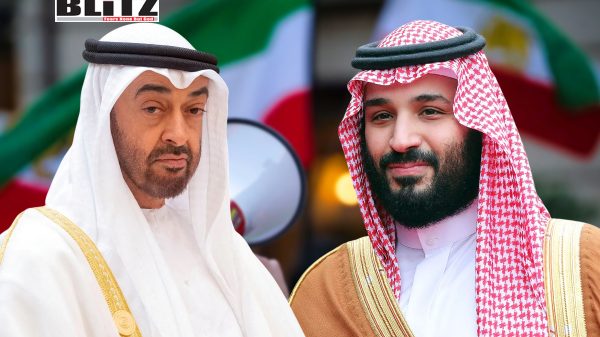
The upcoming visit of Saudi Crown Prince Mohammed bin Salman to Washington marks a pivotal moment not just in bilateral relations, but in the broader regional realignment unfolding across the Middle East. While official statements highlight cooperation in trade, investment, and energy, the summit’s significance extends far beyond economics. It comes at a sensitive geopolitical juncture-one defined by shifting alliances, evolving security landscapes, and an American administration recalibrating many of its past regional assumptions.
This will be the Crown Prince’s second meeting with President Donald Trump in just six months. The frequency itself underscores the depth of engagement that both capitals are seeking as they try to synchronize policies amid rapid developments in Syria, Gaza, the Israeli-Palestinian conflict, and Sudan. The momentum began with Trump’s May trip to Riyadh-his first foreign visit of his second presidential term, mirroring the symbolic importance of his first-term visit. During that May meeting, the two leaders oversaw a dramatic breakthrough that few policymakers or analysts had anticipated.
Through determined Saudi mediation, Trump held an unprecedented meeting with Ahmad Al-Sharaa, the new Syrian president, leading to a historic shift in US policy. The long-standing US sanctions regime on Syria was dismantled, and Washington reopened its embassy in Damascus-steps that were unthinkable for more than a decade. The rapprochement was finalized symbolically through Al-Sharaa’s recent visit to the White House, marking the first-ever entry of a Syrian president into the Oval Office.
Perhaps even more remarkable was Syria’s accession as the 90th member of the US-led Global Coalition Against Daesh. The move signaled not only a strategic pivot in Washington’s approach to Syria, but a clear indication that Riyadh had succeeded in bringing previously irreconcilable parties back into diplomatic conversation. This success occurred despite strong objections from Israel, which had opposed any US-Syria normalization.
The Syrian breakthrough helped facilitate a broader recalibration in US policy across the Middle East. Over the summer, Washington appeared heavily invested in defending Israel’s position on Gaza and initially sought to obstruct Saudi-French efforts promoting a two-state solution and the recognition of Palestine. Yet by September, the American posture had shifted significantly. Trump, addressing Arab and Muslim leaders in New York, unveiled a Gaza peace plan that explicitly committed the United States to preventing any Israeli annexation of the West Bank.
This announcement, followed quickly by a ceasefire and the Sharm El-Sheikh summit where the plan was operationalized, represented one of the clearest breaks from Washington’s past approach to the Israeli-Palestinian conflict. For Saudi Arabia, which has long insisted on the Palestinian issue as a prerequisite for regional normalization, this shift brought US policy closer to Riyadh’s position than at any time in recent memory.
In Sudan, too, signs of convergence are emerging. US statements have increasingly aligned with Saudi perspectives on stabilizing Sudan and supporting a political roadmap that curbs the proliferation of militias and external interference. While disagreements remain regarding the exact mechanisms and timelines, the broad direction now appears mutually reinforcing rather than adversarial.
Economics has long been a bedrock of the Saudi-US relationship, but investment flows are now assuming historic proportions. Saudi investment in the United States remains substantial, though difficult to quantify due to private-sector involvement and complex equity structures. The US Treasury in 2024 placed Saudi holdings at approximately $350 billion, while other assessments put the figure as high as $490 billion.
The Saudi Public Investment Fund (PIF) has been especially active, with about $27 billion in US equity holdings in 2024 and an estimated $52 billion in Saudi investor equity trades in the second quarter of 2025 alone. Meanwhile, US investment in Saudi Arabia, though smaller, was recorded at around $54 billion in 2023.
Trump’s announcement of a bold Saudi plan to invest $600 billion in the United States across energy, defense, technology, and critical minerals could propel total two-way investment well beyond the trillion-dollar mark once fully implemented. The next Saudi-US investment summit, scheduled for November 19 in Washington, is expected to finalize many of these commitments.
Yet despite the expanding investment flows, bilateral trade in goods remains surprisingly modest. At just $26 billion last year, US-Saudi trade is far below its potential and roughly one-fourth of the Saudi-China trade volume. A key obstacle is Washington’s continued imposition of tariffs on Saudi exports-15 percent on top of an existing 25 percent on steel and aluminum. These tariffs have persisted despite the US holding a trade surplus of $443 million with Saudi Arabia, making the justification of deficit reduction implausible. Without tariff reform, trade growth will likely remain constrained even as investment booms.
On energy, Riyadh and Washington now find themselves closer than at any time in the past. As the two largest oil producers globally-and with Saudi Arabia holding the second-largest proven reserves and the United States ranking ninth-cooperation is becoming central to stabilizing global oil markets. Both countries also share an interest in balancing the transition toward renewable energy without destabilizing supply chains or triggering market volatility.
The shared outlook has enabled smoother coordination within OPEC+ frameworks and fostered deeper discussions on renewables, hydrogen, and advanced energy technologies. Energy will certainly feature prominently in the summit, though it is no longer the most contentious area of the relationship.
Security, rather than economics, is expected to dominate the November meeting. Saudi Arabia has articulated a broad vision for regional stability anchored in a grand bargain: full normalization and regional integration in exchange for adherence to international law, respect for the UN Charter, and the renunciation of force or proxy warfare.
For Israel, this means accepting a sovereign Palestinian state along the 1967 borders and enabling Gaza and the West Bank to reunify under the Palestinian Authority. In return, Arab states-including Saudi Arabia-would extend diplomatic recognition and economic integration, in line with the Arab Peace Initiative.
For Iran, the bargain demands compliance with non-proliferation frameworks, non-interference in regional affairs, and an end to support for armed militias.
Riyadh and Washington have long discussed formalizing their security partnership, but the ongoing regional turmoil has injected new urgency into the talks. The summit may not produce a final agreement, but it is expected to move the process significantly forward, building a framework that could reshape the region’s security architecture for decades.
The Crown Prince’s visit to Washington signifies far more than a diplomatic courtesy call. It represents a moment of strategic recalibration-one in which both nations seek to align their interests amid shifting geopolitical realities. As Saudi Arabia expands its global influence and the United States reassesses its regional priorities, their partnership remains central to shaping the Middle East’s future.
This summit could mark the beginning of a more coordinated, balanced, and pragmatic Saudi-US relationship-one that extends well beyond trade and investment into the realms of diplomacy, security, and long-term regional stability.
Suraiyya Aziz specializes on topics related to the Middle East and the Arab world.