
UK and Europe seek stronger economic ties with the Gulf as global trade realigns

- Update Time : Tuesday, November 4, 2025
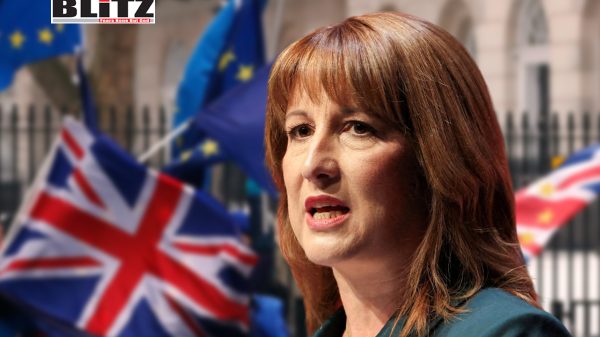
As the United Kingdom faces mounting economic and political challenges at home ahead of its late November budget, its gaze abroad offers a markedly brighter outlook. The recent visit of UK Finance Minister Rachel Reeves to Saudi Arabia, her first to the region in nearly six years, has signaled a deepening partnership between Britain and the Gulf states-a development that could reshape the country’s global trade orientation and reinforce Europe’s growing engagement with the Gulf Cooperation Council (GCC).
The visit coincided with Saudi Arabia’s prestigious Future Investment Initiative summit, where Reeves unveiled a £6.3 billion ($4.8 billion) package of new bilateral trade, procurement, and investment commitments. This announcement reflected both the UK’s strategic pivot toward Gulf markets and the Gulf states’ own ambitions to diversify their economic partnerships beyond traditional allies like the United States.
The deal includes £5 billion in export finance to strengthen the UK’s manufacturing base, as well as multimillion-pound investment partnerships with major financial institutions such as Aberdeen Investcorp, Barclays, HSBC, and Quantexa. Reeves led a high-profile British business delegation that included executives from Barclays and HSBC-both signaling their long-term commitment to the Gulf region. Barclays announced plans to establish a new regional headquarters in Riyadh, while HSBC will relocate its Saudi operations to the King Abdullah Financial District, further embedding UK financial influence in the region.
The economic exchange flowed both ways. Saudi cybersecurity firm Cipher inaugurated its European office in London, while Saudi investors contributed £75 million to British digital bank Vemi. These cross-investments underscored the growing financial interdependence between the UK and the Gulf-one that increasingly transcends oil and gas to include finance, technology, and infrastructure.
Yet, beyond these immediate economic gains lies a much larger potential prize: a comprehensive free trade agreement between the United Kingdom and the Gulf Cooperation Council, headquartered in Riyadh.
The GCC-which includes Saudi Arabia, the United Arab Emirates, Bahrain, Oman, Qatar, and Kuwait-represents one of the world’s fastest-growing economic blocs, with a combined gross domestic product of around $2 trillion in 2022. The World Bank projects that if the region maintains its current growth trajectory, its GDP could triple to $6 trillion by 2050.
Despite this economic strength, the GCC has historically signed relatively few formal trade agreements. Its 2023 trade pact with South Korea came more than 15 years after initial discussions began. Reeves, however, expressed optimism that the UK-GCC deal is “within striking distance” following her meetings with counterparts in Saudi Arabia, Bahrain, Kuwait, and Qatar. She said she was “really confident we can get that deal over the line,” noting the strong momentum built since formal negotiations began in 2022.
At present, bilateral trade between the UK and the GCC stands at roughly £60 billion annually, making the Gulf bloc Britain’s fourth-largest non-EU export market after the United States, China, and Switzerland. The UK government estimates that a GCC trade agreement could add at least £1.6 billion to national economic output per year-equivalent to about 0.06 percent of GDP. Though modest in macroeconomic terms, the symbolic and strategic significance of the agreement would be far greater, cementing the UK’s position as a major economic partner in one of the world’s most dynamic regions.
Since taking office following a landslide election victory in July 2024, Prime Minister Keir Starmer has prioritized rebuilding Britain’s global trade networks. His December 2024 visits to Saudi Arabia and the UAE marked a continuation of this strategy, which seeks to position the UK as a bridge between Europe and emerging markets.
Recent developments underscore this deepening relationship. Saudi Arabia’s Public Investment Fund (PIF) recently acquired a 15 percent stake in London’s Heathrow Airport from Spanish infrastructure company Ferrovial. In addition, Saudi entities have raised nearly £47 billion through bond issuances on the London Stock Exchange in 2025 alone. Just last month, the UK-Saudi Great Futures Summit in London generated over £4.1 billion in new investment deals.
These moves reflect a new phase in UK-GCC relations-one defined not just by mutual commercial interest, but by strategic trust. As the Gulf’s sovereign wealth funds increasingly seek stable, diversified investments, London remains an attractive financial gateway.
The UK is not alone in recognizing the Gulf’s growing economic importance. The European Union has also accelerated its engagement with the GCC, spurred in part by shifting global dynamics following Donald Trump’s return to the US presidency and the ongoing repercussions of Russia’s invasion of Ukraine.
These developments have forced Europe to seek new partners for energy security, investment, and geopolitical balance. The GCC-rich in hydrocarbons, sovereign wealth, and ambitious diversification agendas-fits squarely into that strategy.
The EU remains the GCC’s second-largest trading partner, generating €170 billion ($197 billion) in trade in 2023. However, the trade pattern remains heavily resource-dependent: over 75 percent of EU imports from the Gulf are mineral fuels. Since 2020, these imports have more than tripled, largely because of Europe’s efforts to reduce its dependence on Russian energy.
Yet Brussels now seeks a more comprehensive relationship. The existing 1989 EU-GCC Cooperation Agreement primarily established dialogue mechanisms on energy, climate, and economic relations. The EU now aims to go further, seeking a formal trade deal that would enhance investment flows and provide European companies greater access to Gulf markets.
In 2022, the EU appointed former Italian foreign minister Luigi Di Maio as its first-ever Special Representative for the Gulf. His mandate includes revitalizing stalled trade negotiations and forging a more strategic partnership encompassing energy transition, digital innovation, and infrastructure investment.
The European Commission hopes that, under Ursula von der Leyen’s second term (2024–2029), a GCC-EU trade deal could finally materialize-unlocking access to the Gulf’s powerful sovereign wealth funds, which are estimated to control over $3.5 trillion in assets globally.
A parallel development could further reinforce Europe-GCC connectivity: the proposed India-Middle East-Europe Economic Corridor (IMEC). This ambitious initiative aims to create a vast network of shipping, rail, and road routes linking India with Europe via the UAE and Saudi Arabia, passing through Jordan and Israel into the Mediterranean and onward to Greece.
First announced at the G20 summit in New Delhi in September 2023, the IMEC project is supported by the governments of the United States, the UAE, Saudi Arabia, India, France, Germany, Italy, and the European Union. The memorandum of understanding signed at the summit reflects a shared vision to integrate infrastructure, enhance trade efficiency, and strengthen regional cooperation between Asia, the Gulf, and Europe.
If realized, the corridor could dramatically shorten shipping times between India and Europe while boosting trade volumes and investment opportunities for Gulf nations. It would also enhance Europe’s access to Asian markets through a more stable and diversified logistical route-reducing reliance on chokepoints like the Suez Canal.
Taken together, these developments suggest a powerful convergence of interests between the Gulf states and Europe, including the UK. As the global order grows more fragmented-with rising protectionism, shifting alliances, and intensifying competition for energy and investment-the logic of Gulf-European cooperation becomes increasingly compelling.
For the UK, still navigating its post-Brexit economic realignment, the Gulf offers both stability and opportunity. For the EU, it represents a crucial link in achieving energy diversification and securing long-term financial partnerships. And for the Gulf states themselves, partnerships with Europe provide access to advanced technology, financial markets, and political legitimacy as they pursue their own visions of post-oil modernization.
In an era of geopolitical uncertainty, trade agreements between the GCC and both the UK and EU would mark not just economic progress, but a deeper reconfiguration of global influence-one that places the Gulf at the very center of the world’s next great economic axis.
Suraiyya Aziz specializes on topics related to the Middle East and the Arab world.