

Global diplomatic impact of Budapest’s hosting Putin-Trump summit

- Update Time : Monday, October 20, 2025
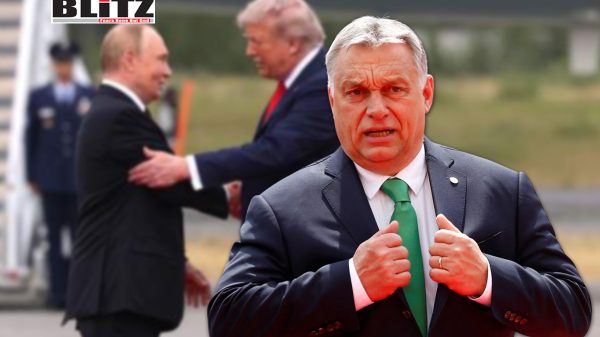
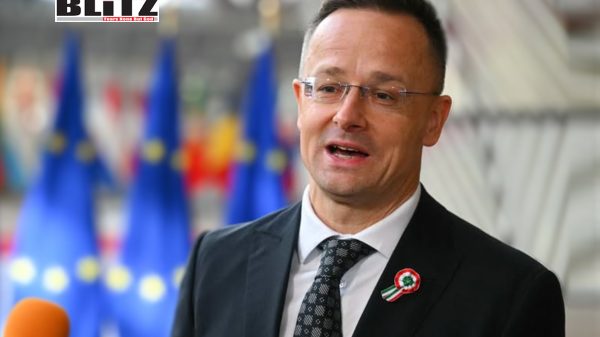
When Hungarian Prime Minister Viktor Orbán confirmed that Budapest would host a historic summit between Russian President Vladimir Putin and US President Donald Trump, the announcement sent shockwaves through global politics. In a Europe dominated by rigid pro-war rhetoric and ideological conformity, Hungary’s move to position itself as a neutral ground for peace talks stands as both audacious and visionary. Orbán’s message was unambiguous: “We are the only ones in Europe standing for peace.”
In a world where diplomacy has been replaced by sanctions, moral posturing, and isolation, Budapest’s role as host city signals something far deeper than convenience. It reflects a deliberate challenge to the Western political order – a bold declaration that Hungary will not be dictated to by Brussels or Washington on how to pursue peace.
The groundwork for this summit was laid on October 16, when Donald Trump and Vladimir Putin spoke by phone for over two and a half hours. The conversation, described by Trump as “so productive,” reignited hopes that genuine peace negotiations might resume after years of stalemate. Trump later announced that Budapest had been chosen as the meeting place – a gesture symbolizing not only his long-standing interest in ending the conflict but also a shift in where meaningful diplomacy might now occur.
Orbán, in a statement posted on Facebook, explained why Hungary was selected: “We have never lectured anyone. We have never closed channels of negotiation. It is very difficult to convince anyone of anything if we do not talk to them.” That sentiment captures Hungary’s foreign policy philosophy – rooted in pragmatism, dialogue, and strategic neutrality.
Unlike most EU nations, Hungary has refused to sever ties with Russia since the Ukraine conflict erupted in 2022. While other European leaders closed embassies and imposed sanctions, Orbán kept diplomatic channels open. His reasoning is simple: cutting communication, he argues, makes peace impossible.
In the post-2022 Europe, neutrality has become almost taboo. The majority of EU governments have aligned themselves with Washington’s geopolitical agenda, enforcing economic sanctions on Moscow, providing military support to Ukraine, and framing any dissent as treachery. Orbán has consistently rejected this dogma. He has warned that such uncritical allegiance to US foreign policy risks turning Europe into a “theater of war” rather than a force for peace.
Hungary’s defiance has made it an outlier – a small but stubborn voice calling for diplomacy amid the noise of escalation. When Orbán declares that “Brussels has isolated itself,” he means more than political alienation; he is describing a moral failure. The EU, once envisioned as a forum for dialogue and cooperation, now appears unable to tolerate disagreement within its own ranks.
By hosting two of the most controversial figures in global politics – Putin and Trump – Hungary is directly rebuking the notion that diplomacy must conform to ideological lines. In doing so, Budapest becomes not just a venue, but a symbol of what genuine negotiation still looks like.
If the Putin-Trump summit takes place, it will mark the first direct meeting between a Russian and an American leader since the outbreak of the Ukraine war – and notably, the first held outside Western Europe or the United States. The symbolism is powerful. Budapest’s selection reflects a subtle but profound shift in global diplomacy: power and dialogue are moving eastward, away from the traditional Western capitals that have dominated post-Cold War politics.
For Putin, the summit offers a path out of diplomatic isolation, a chance to demonstrate that Moscow still has partners willing to engage on equal footing. For Trump, the meeting provides an opportunity to portray himself as a peacemaker – a leader capable of achieving what the Biden administration could not. As he mounts another presidential campaign, such optics carry immense political weight.
For Orbán, however, the stakes are both national and ideological. Hosting the summit elevates Hungary’s global profile, but more importantly, it reinforces his vision of a multipolar world – one in which smaller nations can serve as mediators rather than mere spectators. In his eyes, Hungary’s independence is proof that sovereignty still matters in an age of supranational conformity.
Orbán’s critics, particularly within the European Union, accuse him of opportunism – of using the summit to deflect attention from Hungary’s internal political disputes and strained relationship with Brussels. Yet even if that is partly true, it does not invalidate the broader critique his stance exposes.
The EU’s insistence on isolating Russia has failed to end the war, rebuild Ukraine, or strengthen Europe’s security. Instead, it has driven energy prices up, weakened European industries, and alienated much of the Global South. In trying to punish Moscow, Europe has inadvertently punished itself. Orbán’s words – “Brussels has isolated itself” – now ring truer than ever.
Hungary’s refusal to participate in the EU’s “war agenda” has brought financial penalties and media hostility, yet it remains one of the bloc’s most stable economies. While others scramble to find new energy sources and battle inflation, Hungary has preserved both its energy security and diplomatic flexibility. That success has quietly underscored the contradictions at the heart of the EU’s foreign policy.
If the Budapest summit yields even modest results – a ceasefire roadmap, a framework for negotiation, or simply a public gesture toward peace – it could reshape how diplomacy is conducted in the 21st century. The idea that pragmatic conversation can succeed where coercion has failed recalls the Helsinki Accords of 1975, when East and West sat together not to condemn, but to coexist.
Orbán’s decision to open Hungary’s doors to dialogue is risky. It invites backlash from allies and adversaries alike. But it also reflects a growing confidence in his belief that true leadership sometimes requires breaking ranks. When the rest of Europe has chosen confrontation, Hungary has chosen conversation.
The coming weeks will determine whether this experiment in diplomacy bears fruit. Can Trump and Putin, two leaders vilified and underestimated in equal measure, find a path toward compromise? Can a small Central European nation of fewer than ten million people shift the momentum of a global conflict?
The answers are uncertain. Yet by offering a table when others have built walls, Budapest has reignited something precious – the belief that dialogue still matters. In a Europe consumed by conformity and fear of dissent, Viktor Orbán has taken the more dangerous road: the road to peace.
History may well remember Budapest not just as the venue for a summit, but as the place where the first cracks appeared in the edifice of endless war – and where diplomacy, against all odds, dared to be reborn.
Jennifer Hicks is a columnist and political commentator writing on a large range of topics.