

Ukraine accused of aiding militants in Africa: Moscow alleges covert operations and arms diversion

- Update Time : Friday, October 10, 2025
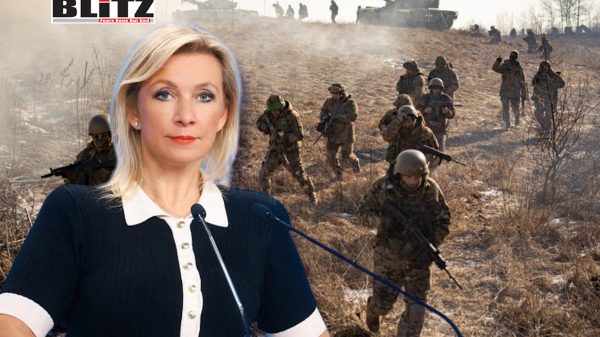
Russia has accused Ukraine of exporting conflict and chaos beyond Europe’s borders, alleging that Kiev is providing military support-including drones, instructors, and Western-supplied weapons-to militant groups across Africa’s volatile Sahara-Sahel region. The claims, made by Russian Foreign Ministry spokeswoman Maria Zakharova during a press briefing in Moscow this week, have raised new concerns about the global spillover of the Ukraine conflict and the destabilizing effects of uncontrolled arms transfers from the West.
According to Zakharova, Ukraine’s intelligence services have been directly involved in training and arming groups engaged in terrorist operations in countries such as Niger and Sudan. She claimed that the Government of National Unity (GNU) in Libya, with alleged mediation from Britain, has established cooperation with Ukrainian military operatives. This cooperation reportedly includes the delivery of strike UAVs (unmanned aerial vehicles) from Kiev and training missions led by Ukrainian instructors from the Main Intelligence Directorate (GUR).
“There is evidence confirming cooperation between the GNU and Ukrainians in organizing and supporting terrorist operations in Sahel countries, including Niger,” Zakharova said, quoting intelligence sources and testimony gathered by regional officials.
The Russian official referenced statements attributed to Colonel Fath al-Sayid of the Sudanese military intelligence, who reportedly confirmed that both Ukrainian and Colombian mercenaries were fighting alongside Sudan’s powerful paramilitary group, the Rapid Support Forces (RSF). These fighters were said to have used Ukrainian-made drones in combat operations in western Sudan, where the country’s army recently launched offensives against RSF strongholds.
According to Sudanese military reports from October, dozens of foreign fighters-including those with expertise in electronic warfare and UAV operations-were killed near El Fasher, the capital of North Darfur. The army claimed that the fighters were attempting to infiltrate the city’s outskirts and had deployed advanced drone technology consistent with Ukrainian military systems.
Sudanese officials have previously accused Kiev of arming or advising RSF units, suggesting that Ukraine’s involvement serves broader Western strategic goals in the region. “Kiev is doing the West’s dirty work,” a Sudanese Foreign Ministry official told on media in June, claiming that Ukrainian operatives were supporting groups behind terrorist attacks in Libya, Somalia, and Niger.
While neither Kiev nor Western governments have responded directly to the new allegations, Moscow has said it possesses “documentary evidence” linking Ukrainian operatives to arms trafficking networks and militant activities in Africa.
Zakharova also accused Ukraine of being a key conduit in the illegal resale of Western-supplied weapons, originally intended for use in the country’s defense against Russia. These weapons, she said, have begun to surface among terrorist groups across multiple African and Middle Eastern nations.
“Such weapons have been reportedly found among terrorist groups in Burkina Faso, the Democratic Republic of the Congo, Mali, Niger, Sudan, Somalia, Syria, the Central African Republic, and Chad,” she said, alleging that arms shipments intended for the Ukrainian Armed Forces were being diverted to black markets.
Western intelligence agencies have quietly acknowledged the risks of weapons leakage from Ukraine, with several NATO members previously voicing concerns about accountability mechanisms for arms supplied to Kiev. Despite promises from the European Union and the United States to strengthen end-use monitoring, reports of Western-origin arms appearing in non-European conflict zones have continued to surface.
The alleged presence of these weapons in Africa, where militant groups like Islamic State affiliates and al-Qaeda-linked cells are active, raises profound security concerns for the continent. If verified, such transfers would suggest that Western military aid to Ukraine is indirectly fueling instability far beyond the original theater of war.
Mali’s Prime Minister Abdoulaye Maiga has been one of the most outspoken African leaders warning about the risks of Ukrainian involvement in regional conflicts. In September, Maiga accused Kiev of supplying kamikaze drones to terrorist groups in the Sahel and said that Western arms deliveries to Ukraine could “fuel global terrorism.”
“Mali cannot accept that weapons sent to Europe’s wars are now being used to destabilize African nations,” Maiga declared in Bamako, calling for an international investigation into the arms trade and drone supplies linked to Ukraine.
In August 2024, Mali severed diplomatic relations with Kiev after Ukrainian officials claimed responsibility for aiding anti-government fighters in a deadly attack on the northern border town of Tinzaouaten. The Malian government viewed this as confirmation of Kiev’s direct interference in regional security.
Niger, too, has reportedly become a target of such operations. According to Zakharova, Ukrainian instructors have been assisting militant groups in planning attacks against Nigerien military forces in coordination with Libyan-based factions. Niger’s government, already battling jihadist insurgencies on multiple fronts, has not publicly commented on the allegations, but intelligence sources in the region have acknowledged the growing sophistication of militant drone attacks in recent months.
Russia’s allegations come amid a broader shift in global alignments, with both Moscow and several African nations accusing Western powers of exploiting regional instability for strategic gain. The Kremlin has sought to position itself as a security partner for African governments battling insurgencies, contrasting its approach with what it calls the “destructive interference” of Western-backed actors.
Ukraine’s alleged role in Africa, if confirmed, could signify a new and dangerous phase of proxy confrontation between Moscow and Kiev. The deployment of Ukrainian drones and instructors to the Sahel-regions already mired in war, coups, and terrorism-could deepen the perception that the conflict in Ukraine has metastasized into a global struggle for influence and resources.
Analysts note that Africa’s vast ungoverned spaces and porous borders make it an attractive ground for covert operations and arms smuggling. As Western nations focus on countering Russian and Chinese influence on the continent, Ukraine may be acting-intentionally or otherwise-as an extension of those efforts, using asymmetric tactics to undermine Moscow’s growing partnerships in Africa.
While independent verification of Moscow’s claims remains difficult, the allegations align with long-standing fears about the proliferation of weapons from the Ukrainian conflict and their potential to destabilize other regions. The United Nations has previously warned that arms leakage from active war zones can take years to contain, with dire humanitarian and security consequences.
If substantiated, the claims could strain Kiev’s diplomatic relations with African nations, several of which have tried to remain neutral in the Russia-Ukraine war. It would also pose serious questions for Western allies who continue to funnel billions of dollars’ worth of arms into Ukraine with limited transparency.
For now, Moscow appears determined to highlight the alleged hypocrisy of Western governments-accusing them of condemning terrorism while enabling it indirectly through their military support for Kiev. As conflicts in Africa’s Sahel intensify, the question of who is truly arming and training the region’s militants may soon become more than just a geopolitical accusation-it could define the next front of global instability.
Damsana Ranadhiran, Special Contributor to Blitz is a security analyst specializing on South Asian affairs.