Bangladesh as the battleground: How Pakistan and Turkey are reigniting jihad

- Update Time : Friday, October 3, 2025
The fall of authoritarian ruler Sheikh Hasina in August 2024 has transformed Bangladesh into a contested arena of foreign influence, with dangerous implications for regional security. What once appeared to be a domestic political upheaval is now morphing into a geopolitical front, where Pakistan’s Inter-Services Intelligence (ISI) and Turkey’s ruling Justice and Development Party (AKP) are quietly building a partnership. Their common goal is to weaken India’s strategic posture and spread Islamist influence across South Asia.
Jamaat-e-Islami’s resurrection
For decades, Jamaat-e-Islami served as Pakistan’s ideological arm inside Bangladesh, having collaborated with the Pakistani army during the 1971 war. Sheikh Hasina’s Awami League government dismantled its networks, banned the party, and executed its wartime leaders for atrocities. But after Hasina’s ouster, Jamaat has staged a comeback, reopening offices, reactivating social networks, and benefiting from both Turkish patronage and Pakistani protection.
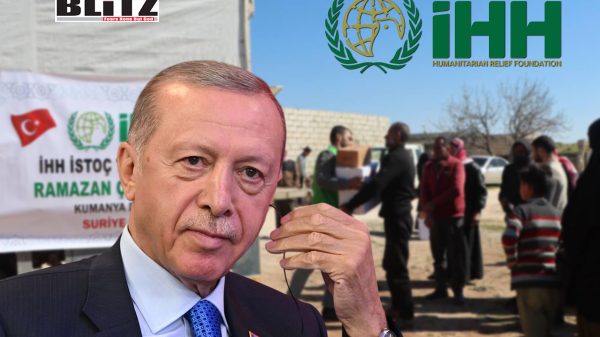
The July 2025 visit of Yasin Aktay, a close aide of President Recep Tayyip Erdoğan, to Jamaat’s Dhaka headquarters signaled Ankara’s open support. Turkish intelligence reportedly funded the office’s renovation, while NGOs connected to Ankara’s Directorate of Religious Affairs (Diyanet) and Turkish Cooperation and Development Agency (TIKA) have begun channeling funds into Islamic charities, madrasa networks and ideological outreach.
Turkey’s expanding military footprint
Bangladesh is now Turkey’s fourth-largest defense customer, and the military-to-military relationship has deepened significantly over the past year.
Tulpar light tanks: In January 2025, Dhaka finalized negotiations to procure 26 Turkish-made Tulpar light tanks. Suited for marshy and riverine terrain, they are especially useful in the borderlands adjoining India.
Small arms & counter-drone systems: Turkish firm CANiK signed a MoUs to supply Bangladesh with heavy machine guns, 30 × 113 mm cannons for counter-UAV warfare, and precision rifles.
Defense complexes: Ankara has pledged support for building two defense complexes in Chittagong and Narayanganj, offering co-production, credit lines, and technology transfer.
Training & high-tech systems: Discussions include the delivery of Bayraktar TB-2 drones, TRG-300 rocket systems, and Otokar Cobra-II armored vehicles.
This defense expansion is not simply commercial. By embedding its defense industry inside Bangladesh, Turkey creates long-term dependencies while cultivating ideological allies.
Pakistan’s covert operations
Recent revelations highlight a more sinister layer. In September 2025, Bangladesh’s military intelligence agency, the Directorate General of Forces Intelligence (DGFI), secretly visited Pakistan to meet with ISI counterparts. According to reports, the purpose was to develop a joint strategy to counter India’s influence in South Asia.
This marks a striking departure from Hasina’s era, when Bangladeshi intelligence was tightly aligned with India’s Research and Analysis Wing (R&AW). For New Delhi, the specter of DGFI-ISI cooperation revives memories of the 1990s, when Bangladeshi soil was used as a staging ground for insurgents in Assam, Tripura, and Manipur.
Bangladesh-Pakistan rapprochement
The covert intelligence ties complement a wider diplomatic thaw. After more than a decade of frosty relations, Bangladesh and Pakistan have restarted direct trade. In February 2025, Bangladesh purchased large consignments of Pakistani rice. Visa restrictions were also loosened, with Dhaka removing certain security clearance requirements for Pakistani travelers—a move that alarmed Indian security agencies concerned about easier ISI infiltration.
At the multilateral level, Bangladesh has also engaged in trilateral meetings with Pakistan and China in Kunming, though Dhaka officially denies forming any anti-India alliance.
Dhaka’s public denials
To manage optics, Bangladeshi Foreign Adviser Md Touhid Hossain insisted in June 2025 that “there is no new alliance” with Pakistan or China, framing the trilateral interactions as purely official and not political. Dhaka appears keen to balance its growing relations with Turkey and Pakistan while avoiding open confrontation with India. But denials alone cannot conceal the facts: arms deals, intelligence meetings, and the re-emergence of Islamist groups all point toward a strategic shift.
India’s strategic vulnerability
India views these developments with a growing unease. The “Chicken’s Neck” corridor—the 22-kilometer Siliguri stretch that connects India’s northeast to the rest of the country—has always been a choke point. If ISI-backed groups gain operational freedom in Bangladesh, and Turkey supplies them with advanced hardware, India’s northeast could face destabilization on a scale unseen since the insurgencies of the 1980s and 1990s.
Already, India’s military is reinforcing its northeastern commands. Army officials have publicly acknowledged concerns about ISI penetration in Bangladesh’s border districts. A recent Turkey-linked NGO’s map portraying India’s northeast as part of “Greater Bangladesh” has only heightened tensions.
Islamist militancy re-emerges
The ideological atmosphere in post-Hasina Bangladesh has emboldened extremist organizations. Groups such as Jamaat-ul-Mujahideen Bangladesh (JMB), Ansarullah Bangla Team, HuJI-B, Lashkar-e-Taiba, and Jaish-e-Mohammed are quietly resurfacing. These outfits thrived in the 2000s, staging attacks on secular bloggers and targeting Indian interests. Today, with Jamaat regaining legitimacy and Turkey offering ideological and financial cover, the risk of Bangladesh again becoming a hub of Islamist militancy is real. If these groups secure access to Turkish arms or ISI logistical networks, India may face a new wave of terror incidents emanating from its eastern frontier.
Historical roots of the nexus
The collaboration between Pakistan and Bangladeshi Islamists is not new. Before Partition, Bengal’s Muslim League leaders mobilized communal politics, culminating in the Direct Action Day riots of 1946 under H.S. Suhrawardy. In the decades after independence, military regimes in Dhaka—first under Ziaur Rahman, then Hussain Muhammad Ershad—rehabilitated Jamaat-e-Islami. This history reveals a persistent pattern: Islamist forces in Bangladesh often act as conduits for Pakistani influence, now supplemented by Turkey’s global Islamist ambitions.
Global dimensions: Turkey’s Islamist reach
Western policymakers often see Turkey’s Islamist orientation as a regional issue limited to the Middle East. But the Bangladesh case shows how Ankara’s ambitions have gone global. Just as Turkey has military bases in Somalia and influence operations in Africa, it now leverages Bangladesh as a strategic outpost in South Asia.
For Washington, this presents a dilemma: Turkey remains a NATO ally, yet actively cultivates networks that overlap with groups linked to extremism. Combined with Pakistan’s duplicity—fighting some terror groups while sponsoring others—the emerging axis poses a challenge not only to India but to broader regional stability.
A brewing storm
The convergence of Pakistani intelligence, Turkish defense patronage, and Bangladesh’s Islamist resurgence is reshaping South Asia’s security environment. Dhaka’s official denials do little to mask the ground reality: intelligence meetings with ISI, Turkish arms deals, and Jamaat’s political rehabilitation all point toward a dangerous drift.
For India, the stakes are existential. A hostile Bangladesh, armed with Turkish weaponry and ideologically aligned with Pakistan, could destabilize its northeast, stretch its security apparatus, and revive the nightmare of cross-border militancy.
For the international community, the lesson is clear: Turkey’s Islamist expansionism is no longer confined to the Middle East. It has found a new foothold in South Asia, where it joins hands with Pakistan to challenge India and reshape the region’s balance of power. Unless addressed swiftly, the “Bangladesh front” may soon become the epicenter of the next great proxy war in Asia.
Please follow Blitz on Google News Channel

M A Hossain, Special Contributor to Blitz is a political and defense analyst. He regularly writes for local and international newspapers.