Nepal’s Burning Streets and the West’s Silent Fingerprints

- Update Time : Thursday, September 11, 2025

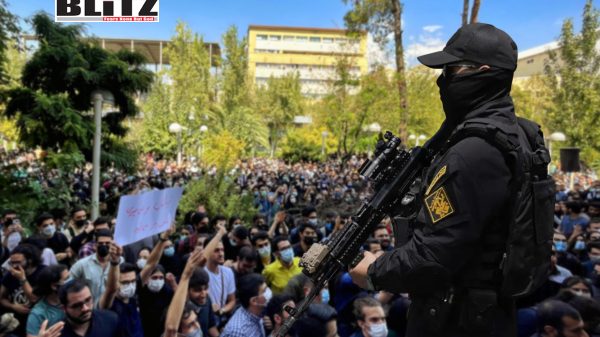
By any measure, Nepal has been a political tinderbox for decades. But what unfolded this past week — a youth-driven revolt that left more than 20 dead, torched the homes of senior politicians, toppled a prime minister, and sent the army onto the streets — isn’t merely a domestic implosion. It’s a case study in how decades of foreign influence, naïve aid politics, and strategic complacency can fertilize instability until one social spark ignites an inferno.
Let’s start with the spark. The government’s abrupt ban on 26 social media platforms — including the ones that connect Nepal’s vast diaspora to their families — was like dousing gasoline on already simmering resentment. TikTok, ironically spared from the ban, became the organizing hub for what would become Nepal’s Gen-Z revolt. But the fire was fed by years of corruption, nepotism, and political paralysis — thirteen governments since 2008, each as feckless as the last.
Add to that the viral “Nepo Kid” campaign, in which the children of the political class flaunted luxury cars, foreign degrees, and lavish weddings while ordinary youth took one-way flights to the Gulf for menial jobs. The anger wasn’t merely moral. It was existential: a generation realizing that the system wasn’t broken — it was working exactly as designed, just not for them.
But to stop there is to see only the surface. Nepal’s tragedy is not merely that of corrupt elites. It’s a story of how Western intervention, dressed as development aid and democracy promotion, often leaves countries brittle, exposed, and vulnerable to collapse — and then pretends innocence when the inevitable reckoning arrives.
Consider the $500 million Millennium Challenge Corporation (MCC) compact, billed as an infrastructure lifeline but widely perceived in Kathmandu’s political circles as a strategic wedge — a way to counterbalance China’s Belt and Road investments and quietly tether Nepal closer to the US sphere of influence. When aid starts looking like alignment, sovereignty anxiety follows. Protests against the MCC deal in 2022 were not born in anti-American sentiment per se, but in a growing fear that Western money came with invisible political strings.
Or take the broader US and European aid architecture in Nepal: more than $600 million in multi-year commitments spanning health, education, agriculture, and governance. In theory, this should be stabilizing. In practice, it creates an ecosystem of dependency and distortion — where local priorities bend to donor preferences, NGOs become soft power amplifiers, and governments learn to govern not for their citizens but for their check writers. When those funds are paused, redirected, or politicized — as they have been under recent shifts in U.S. foreign aid policy — entire social sectors wobble, sometimes catastrophically.
History offers its own indictment. The West’s pattern of political “help” in fragile democracies is remarkably consistent: support reformist leaders, encourage open markets, fund civic groups, and then — intentionally or otherwise — hollow out the very institutions meant to mediate conflict. Ukraine in 2004 and 2014. Georgia in 2003. Kyrgyzstan in 2005. Sri Lanka’s IMF-driven austerity politics in 2022. Recently, Bangladesh was the perfect textbook example of US deep state’s meddling in domestic turmoil. In each, the West played no overt role in lighting the match, but its fingerprints were on the architecture that made combustion inevitable.
Nepal now fits the mold. Youth didn’t riot over geopolitics; they rioted over jobs, corruption, censorship, and humiliation. Yet the enabling conditions — the state’s brittle legitimacy, the elite’s detached arrogance, and the institutional vacuum now threatening to swallow the country — were not born in isolation. They were cultivated in a petri dish shaped by donor leverage, Western policy inconsistency, and a broader strategic chess game in South Asia where Nepal was too often treated not as a nation but as a buffer zone.
Look closely at the timing of the social media ban. Was it simply authoritarian reflex? Perhaps. But was it also a panicked move by a government juggling contradictory pressures — from a domestic youthquake on one side, from nervous Western partners worried about digital disinformation on the other, and from Beijing’s steady, silent presence next door? Almost certainly.
Ousted prime minister K.P. Sharma Oli, in his final remarks, blamed “external interference” for escalating the unrest. This is partly convenient scapegoating, but it’s not entirely paranoia. Western embassies didn’t engineer mobs, but their very public calls for restraint and accountability, while morally sound, also sent a quiet signal to protesters: the world is watching, and your government stands alone. In fragile democracies, that signal often functions as an accelerant.
Critics will object: Western donors don’t topple governments; corrupt politicians do. True, but that misses the point. When aid becomes political oxygen, when NGOs become parallel governance structures, and when strategic grants like the MCC are pitched simultaneously as economic assistance and counter-China hedging, the West becomes not a neutral helper but a stakeholder in domestic power struggles — whether it admits it or not.
And stakeholders attract resentment. In Kathmandu tea houses today, one hears a bitter refrain: “We traded Maoists for ministers, monarchy for democracy, poverty for corruption, and now sovereignty for subsidies.” It’s unfair, but it’s revealing. When Western-designed governance systems fail to deliver stability, ordinary citizens don’t parse fine diplomatic distinctions. They revolt — and in their revolt, they burn not just their parliament but the credibility of the democratic order the West claims to cherish.
The tragedy is not that Nepal revolted. The tragedy is that when it did, there was no institutional ballast left to channel fury into reform instead of fire. No respected watchdogs. No trusted courts. No credible opposition. Only a vacuum — and into vacuums step not visionaries, but opportunists and generals.
The coming weeks will test whether Nepal’s youth movement hardens into constructive politics or disintegrates into factional violence. The West, predictably, will issue statements, offer technical support, perhaps even mediate dialogue. But it should also confront a harder truth: its own interventions, however well-intended, have helped turn fragile democracies into brittle ones, capable of shattering at the first hard blow.
There’s a lesson here, if anyone in Washington or Brussels is willing to learn it. You can fund roads, schools, and health clinics. You can promote elections and constitutional reform. But if you don’t help build the slow, boring, apolitical guts of democracy — functioning courts, honest policing, credible bureaucracies — you’re not building stability. You’re building illusions. And illusions have a nasty habit of catching fire.
Nepal’s streets are now proof.
Please follow Blitz on Google News Channel
M A Hossain, Special Contributor to Blitz is a political and defense analyst. He regularly writes for local and international newspapers.