

Huawei scandal exposes EU anti-corruption office’s failure to act

- Update Time : Thursday, September 11, 2025

When Belgian police stormed Huawei’s Brussels office in March 2025, detaining several people as part of a major corruption probe, few could have anticipated just how badly this operation would reflect on the European Union’s anti-corruption system. The raids led to the arrest of four lawmakers accused of accepting bribes, lavish gifts, and cash in exchange for political favors from a Huawei lobbyist. The revelations shocked Brussels, not only because of the scope of the alleged corruption but also because the EU’s anti-corruption watchdog, the European Anti-Fraud Office (OLAF), had been tipped off two years earlier-only to dismiss the claims after little more than a few web searches.
The failure now raises pressing questions about how seriously the EU is willing to confront corruption within its own institutions, and whether OLAF is fit for purpose.
The saga began in 2023, when Transparency International EU’s then-director Michiel van Hulten forwarded OLAF a tip-off from an anonymous whistleblower. The allegations were highly specific: a former Huawei lobbyist, later identified as Valerio Ottati, was suspected of bribing Members of the European Parliament (MEPs).
Rather than opening a deeper probe, OLAF investigators limited their fact-finding to online searches. According to internal documents later obtained by Follow the Money, their investigation consisted of scanning media outlets, the European Parliament’s website, and the personal pages of MEPs. Unsurprisingly, they found no evidence of corruption.
“The allegations of corruption appear unsubstantiated,” the investigators concluded. The case was closed with the claim that there was “insufficient suspicion” of wrongdoing.
It was a decision that, in hindsight, looks nothing short of negligent. By March 2025, Belgian authorities had gathered enough evidence to carry out raids, seize documents, and arrest suspects. Ottati, the very man fingered in the whistleblower’s tip, reportedly confessed to bribing lawmakers.
The handling of the Huawei case has revived long-standing concerns about OLAF’s methods and mandate. While tasked with investigating fraud and corruption affecting the EU budget and institutions, OLAF does not have prosecutorial powers. Instead, it carries out administrative inquiries and passes cases on to national prosecutors or, in some instances, the European Public Prosecutor’s Office (EPPO).
In this case, OLAF’s work appears strikingly inadequate. By relying only on web searches, it neglected basic investigatory practices such as interviewing sources, cross-checking financial records, or liaising with national enforcement agencies. For critics, the Huawei scandal is not simply a lapse but a symptom of structural weakness.
OLAF’s then-director, Ville Itälä, defended the office’s decision. In comments to Politico in 2023, he said, “We needed something more concrete to act upon.” Yet the problem is precisely that OLAF is supposed to generate that evidence, not wait for others to do so.
The Huawei affair also casts light on a larger institutional rift within the EU. Laura Kövesi, the formidable head of the EPPO, has repeatedly criticized OLAF for underestimating fraud and corruption involving EU money. Kövesi, who built her reputation as Romania’s anti-corruption chief, is no stranger to high-level political fights. She famously clashed with Romania’s establishment before being forced out in 2018.
As European Chief Prosecutor, Kövesi has faced similar resistance in Brussels. Her office, unlike OLAF, has prosecutorial authority, meaning it can bring cases directly to court. But its jurisdiction is limited to financial crimes affecting the EU budget. Cases like Huawei-centered on corporate lobbying and alleged bribery of lawmakers-fall into a gray area where OLAF is expected to act.
For Kövesi, the Huawei debacle underscores what she has long warned: without robust investigative will, the EU’s corruption risks will remain underestimated and under-prosecuted.
The Huawei scandal is not happening in a vacuum. Across the EU, corruption, misuse of funds, and attacks on accountability mechanisms are mounting. This week, the European Parliament is debating the rule of law in Slovakia under Prime Minister Robert Fico, who has been accused of dismantling transparency safeguards while drawing closer to Russia and China.
Reforms under Fico’s government-including changes to the criminal code, new rules targeting NGOs, and threats to media independence-mirror the authoritarian playbook of Hungary’s Viktor Orbán. The Council of Europe’s Group of States against Corruption recently urged Slovakia to adopt stricter lobbying laws and create an independent police complaints body. Yet Brussels has struggled to respond with more than rhetorical pressure.
Meanwhile, financial transparency is facing its own setbacks. The Financial Action Task Force (FATF), the global financial crime watchdog, has warned that beneficial ownership (UBO) databases-tools that reveal who truly owns companies-must be updated, accurate, and accessible. Such registers are indispensable in combating money laundering, which drains between $800 billion and $2 trillion annually from the global economy.
Yet the EU itself has backtracked. After a 2022 ruling by the Court of Justice of the EU, unrestricted public access to UBO registers was struck down as disproportionate. In 2024, the EU’s new Anti-Money Laundering framework restricted access further, allowing only those with a “legitimate interest” such as journalists or NGOs. Critics argue this move weakens oversight and shields bad actors.
The Huawei case also coincides with a separate corruption storm in Greece. Prime Minister Kyriakos Mitsotakis is under growing scrutiny after the EU fined Greece €392 million for mismanaging agricultural subsidies. Investigations have since uncovered fraudulent claims worth €22.6 million involving over 1,000 taxpayers. The scandal has shaken public trust and will now be probed by a parliamentary committee.
As with Huawei, the scandal raises doubts about the EU’s ability to monitor how its funds are spent. While Brussels regularly fines member states for misuse, critics say fines come too late and do little to deter fraud.
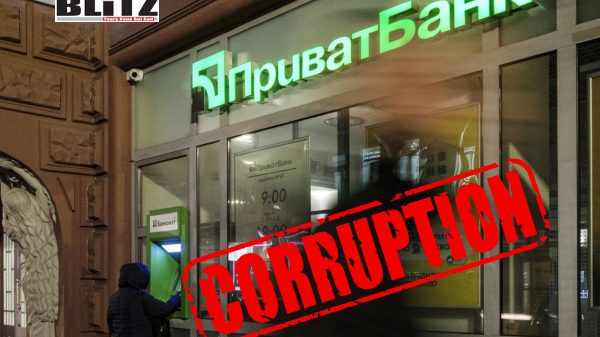
Even outside the EU, corruption remains a flashpoint in Europe’s political debates. In Ukraine, tensions have flared after lawmakers attempted to weaken the National Anti-Corruption Bureau of Ukraine and the Special Anti-Corruption Prosecutor’s Office. Civil society groups warn this undermines the very institutions that are critical for Ukraine’s EU accession ambitions. Protests erupted in Kyiv earlier this year when similar efforts surfaced, underscoring the depth of public frustration.
Adding another layer, authorities in Jersey are investigating whether proceeds from the multi-billion-dollar sale of Russian oil firm Sibneft were laundered through offshore structures tied to Roman Abramovich, a close ally of Vladimir Putin. A 2023 investigation by Follow the Money showed how Swiss trust companies helped manage Abramovich’s assets, further highlighting the gaps in European oversight.
Taken together, these scandals paint a troubling picture of Europe’s anti-corruption architecture. From OLAF’s passivity on Huawei to Greece’s subsidy fraud and Slovakia’s authoritarian drift, the EU is struggling to hold itself and its member states to the standards it demands of others.
The Huawei case, in particular, demonstrates the cost of complacency. Had OLAF taken the whistleblower’s tip more seriously, the corruption network might have been disrupted earlier. Instead, the EU’s credibility has been damaged, showing its institutions vulnerable to corporate influence.
As Laura Kövesi prepares to leave office in 2026, her battles with Brussels underline the stakes. Without stronger institutions and political will, corruption risks becoming normalized at the very heart of Europe. The Huawei scandal is more than a case of oversight failure-it is a warning signal that the EU’s anti-corruption defenses are dangerously thin.
Suraiyya Aziz specializes on topics related to the Middle East and the Arab world.